Navigating air travel can be overwhelming for anyone, but for passengers with hearing impairments, it presents unique and often frustrating challenges. Understanding garbled announcements, identifying boarding zones, or catching last-minute gate changes can feel impossible without consistent and accessible communication tools. This is especially true when systems lack visual cues or when audio delivery is fast, muffled, or drowned out by ambient airport noise.
Understanding the Core Challenge for Hearing-Impaired Travelers
Public announcement systems are notoriously hard to understand — even for passengers without hearing issues. For those with hearing impairments, like one traveler flying from Raleigh-Durham International Airport (RDU), the inability to hear boarding group announcements due to the absence of a digital display created an unsettling experience. Voices projected through P.A. systems often sound muffled or distorted, akin to the indecipherable adults in Peanuts cartoons.
Passengers who are hard of hearing frequently express that in-flight announcements are no better. Accents, rapid speech, and poor audio quality all contribute to the difficulty. As one frequent flyer put it: “We have a blwoviy fight approaching aldnfldslasfj, and another iomro after that…” — a humorous yet all-too-relatable expression of the confusion these messages cause.
Leveraging Delta’s App and Accessible Services
Delta Air Lines offers an option for passengers to register accessibility needs, including hearing assistance, through its app or during flight booking. By selecting “Deaf or Hard of Hearing” in the Special Services section, travelers can flag their needs in advance. However, reports are mixed on its effectiveness.
Many passengers note that marking this in the app often results in a wheelchair being sent — an inappropriate response for those with hearing, not mobility, issues. Worse still, flight attendants frequently do not follow up or inquire further about individual needs.
Passengers suggest the following best practices:
- Register your hearing impairment in the app before the flight.
- Enable notifications on your phone and smartwatch to receive real-time updates (though note, alerts are often delayed).
- Reinforce your needs in person at the gate and onboard.
The Power of Direct Communication at the Gate
Technology alone cannot solve all access issues. In fact, the most reliable strategy remains face-to-face communication. When approaching the gate, travelers are encouraged to discreetly inform gate agents that they are hard of hearing and will not hear boarding announcements. Clear, polite communication allows agents to:
- Wave you over when your boarding group is called.
- Offer you the option to preboard, giving you time to inform flight attendants.
- Provide updates or accommodate other assistance methods based on your preferences.
Carrying a printed card also helps. A brief, courteous note such as:
“Hi! My name is [Passenger Name], and I’m seated in 2A. I am hearing impaired and may not understand announcements. Please let me know directly about any safety or gate updates. Thank you!”
…can prevent misunderstandings and offer flight crews a simple way to support without delay or confusion.
In-Flight Communication: Tips and Tools
Once onboard, the struggle doesn’t end. Flight attendant announcements are often delivered in a rush, and the P.A. systems inside aircraft cabins are outdated. Add engine noise and passenger chatter, and it’s a recipe for miscommunication.
Many passengers with hearing loss recommend:
- Informing the flight attendant personally upon boarding about your hearing impairment.
- Asking to be personally notified in the event of important announcements (e.g., diversions, delays, emergencies).
- Enabling captions if available on seat-back entertainment screens.
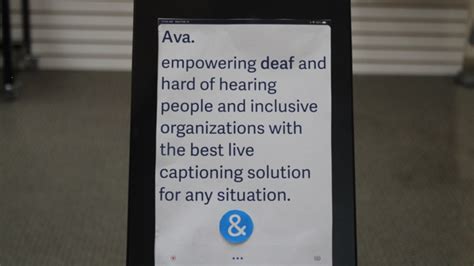
Apps such as Ava provide live transcription from ambient audio and are particularly useful when the IFE system is interrupted for announcements. By running Ava on a phone or tablet during boarding and flight, passengers can often catch the gist of critical messages.
When Systems Fail: The Inconsistency of Visual Cues
Even when travelers are proactive, inconsistencies in Delta’s communication infrastructure can leave them at risk of missing essential updates. At some airports, visual boarding cues are present; at others, they’re absent or poorly updated. Several users report that even when the Delta app states, “We’ll tell you when your boarding group is called,” the notification is delayed — sometimes until after they are seated.
This lack of uniformity creates anxiety for many passengers, especially those who rely on visual information. Moreover, in the absence of updated gate screens or audible cues they can understand, passengers must depend entirely on other travelers or guesswork.
Using Hidden Disability Aids for Extra Support
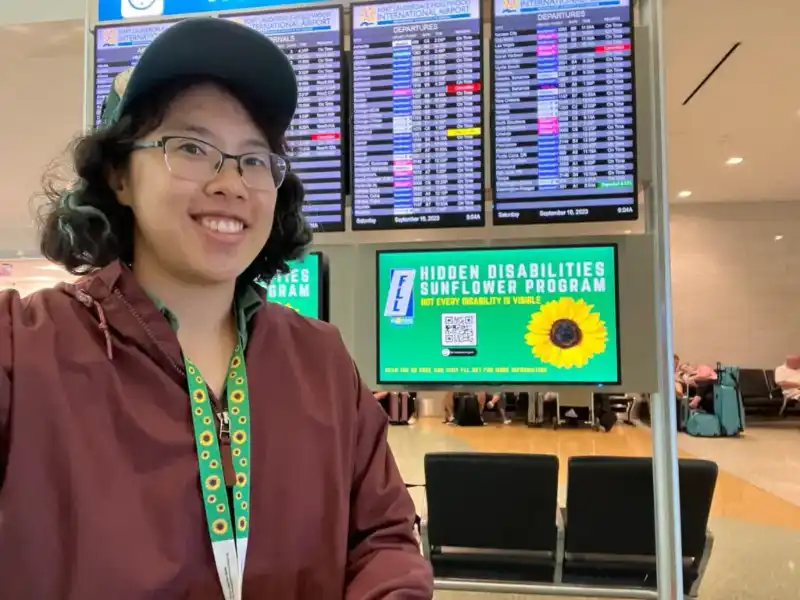
One discreet but effective tool is the sunflower lanyard, available at some airport information desks after security. Wearing this lanyard signals to staff that the wearer has a hidden disability and may require additional support.
This small item opens the door for:
- Gate agents to provide non-verbal boarding cues
- Flight attendants to offer proactive support
- Security and airport staff to offer accommodations without needing explanations
The Human Factor: The Need for Better Training
A recurring theme among travelers is that unclear speech from airline staff remains a major barrier — not just for hearing-impaired individuals but for everyone. Fast-talking gate agents, thick accents, and rushed instructions affect a broad swath of passengers, including:
- Non-native English speakers
- Elderly travelers
- Individuals with auditory processing disorders
Calls have been made for Delta and other airlines to implement:
- Elocution training for customer-facing staff
- Accent awareness and reduction workshops
- Speech pace control training, encouraging clear, slow delivery
Such improvements would offer universal benefits — reducing confusion, improving efficiency, and enhancing accessibility.
A Practical Strategy for Hearing-Impaired Travelers Flying Delta
A structured plan helps reduce the stress of traveling with hearing loss. Here is a detailed protocol based on real-world experiences:
- Before Your Flight
- In the Delta app, go to Special Services and select “Deaf or Hard of Hearing.”
- Enable app push notifications and wearable alerts.
- Print or prepare a short communication card if needed.
- At the Gate
- Approach the gate agent early and explain your needs.
- Request a visual cue or permission to preboard.
- Ask if there will be any gate changes or delayed announcements.
- During Boarding
- Watch the crowd or digital boards, if available.
- If preboarding, use that opportunity to introduce yourself to the lead flight attendant.
- Onboard
- Explain to the flight attendant what type of communication works best.
- Ask if they can relay safety or rerouting updates directly.
- Keep Ava or other transcription apps active, especially during takeoff and approach.
- If Service Fails
- File a complaint with the DOT/ACAA regarding inaccessible communication.
- Provide feedback to Delta’s customer service for better service implementation.
Standing Up for Better Accessibility
Despite efforts from individuals and scattered airport initiatives, the systemic issues persist. As one user noted after being met repeatedly by wheelchair assistance they never requested: “I’m deaf. I’m not crippled.” The mismatch between what passengers need and what airlines deliver is stark. One comparison made clear: WestJet flight attendants took time to ask what accommodations were needed, while Delta crews often failed to engage altogether.
Better systems require:
- Consistency across all gates and airports in displaying real-time visual information
- Captioning in-seat screens during announcements
- Regular feedback loops between passengers and airline staff
Conclusion: Simple, Humane Changes Make All the Difference
For travelers with hearing impairments, small gestures mean everything. A wave from a gate agent. A card acknowledging communication preferences. A clearly spoken sentence from a flight attendant. When tech solutions lag, these human-centered approaches build bridges.
Delta, and the broader airline industry, must view these accommodations not as “special treatment” but as standard protocol for equitable access. With the right balance of technology, training, and traveler advocacy, flying can become a more inclusive experience for all.