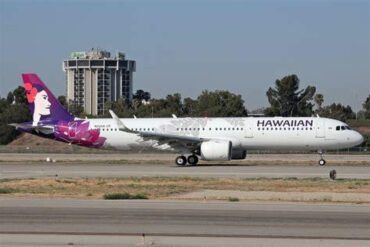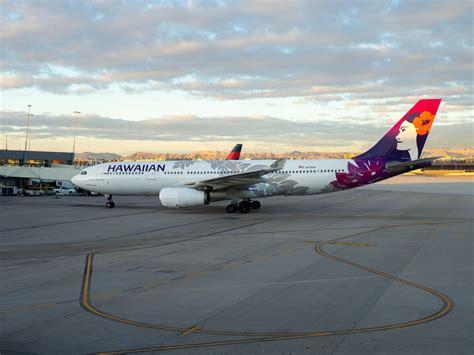
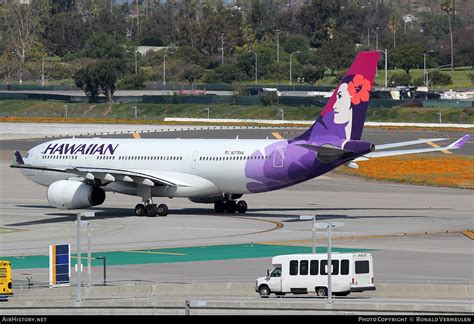
Seven flight attendants became ill after a mystery odor was reported aboard a Hawaiian Airlines Airbus A330 during a flight from Los Angeles to Honolulu, yet the aircraft returned to passenger service just over 10 hours after landing. The incident has raised questions because the source of the odor has not been publicly disclosed, while the same aircraft, registration N375HA, has experienced previous odor-related incidents.
The event occurred on September 24, 2026, aboard Flight AS803, an Alaska Airlines-marketed service operated by Hawaiian Airlines. The Airbus A330-200 departed Los Angeles International Airport (LAX) at 10:12 a.m. local time with 252 passengers and nine crew members. During the nearly six-hour transpacific flight to Honolulu, an unusual odor was detected in the cabin.
Seven flight attendants subsequently reported symptoms including nausea and headaches. The aircraft continued to its planned destination rather than diverting, landing at Honolulu International Airport at 12:57 p.m. local time. Medical personnel evaluated the affected crew after arrival and released them.
Hawaiian Airlines A330 Crew Illness After Cabin Odor
Hawaiian Airlines stated that seven flight attendants were evaluated by medical personnel following the arrival. The airline also said that no guests required medical treatment, although reports from Honolulu emergency medical services indicated that some passengers may have felt unwell.
The difference between the airline’s statement and the broader reports makes the exact scope of the symptoms difficult to establish. What is clear is that seven crew members required medical assessment, making the event more significant than a routine report of an unpleasant cabin smell.
The precise point during the flight when the odor first appeared has not been disclosed. There has also been no public explanation identifying whether the smell originated from the aircraft’s environmental control system, an engine-related source, another mechanical component, or something inside the cabin.
That uncertainty is particularly notable because N375HA was inspected after landing and subsequently returned to flight operations. Hawaiian had indicated that the aircraft would undergo an inspection before returning to service, but neither Hawaiian nor Alaska Airlines had publicly provided details of the inspection or its findings at the time of the report.
N375HA Returned to Passenger Service After About 10 Hours
The aircraft remained at Honolulu for approximately 10 and a half hours after arriving from Los Angeles. At 11:34 p.m., it departed as Flight AS808 for Harry Reid International Airport in Las Vegas.
Flight-tracking information subsequently showed that N375HA continued operating normally, completing several additional flights. After reaching Las Vegas, the A330 returned to Honolulu on Friday before operating a round trip involving Tokyo Haneda Airport on Friday and Saturday. It later operated a service to San Francisco.
The relatively rapid return to service is noteworthy because the source of the odor remained undisclosed. However, the fact that an aircraft returns to commercial operations after an inspection does not by itself establish that an earlier odor event was either serious or insignificant. Maintenance personnel determine whether an aircraft is suitable for continued operation based on the findings available to them.
N375HA is approximately 11 years old. Hawaiian received the aircraft in January 2015, and it is powered by two Rolls-Royce Trent 772B engines. The aircraft is one of 24 Airbus A330-200s in Hawaiian’s fleet and can carry up to 278 passengers in a two-class configuration.
Hawaiian A330 Previously Returned to Tokyo After Odor
The latest incident is also notable because N375HA has experienced previous odor events. On June 23, 2025, the aircraft was operating Hawaiian Airlines Flight HA864 from Tokyo Haneda to Honolulu when the pilots detected an odor in the cockpit shortly after departure.
The crew declared an emergency and returned to Tokyo, landing approximately 30 minutes after takeoff. That incident therefore involved a very different operational response from the September 2026 event, with the aircraft returning to its departure airport rather than continuing across the Pacific.
N375HA was also involved in an odor event in 2023. On that occasion, a flight attendant reported an odor near the front of the cabin. Maintenance personnel subsequently identified and replaced a damaged air duct.
Why Aircraft Fume Events Attract Attention
Unusual odors aboard commercial aircraft can have numerous possible sources. Modern airliners such as the A330 use engine bleed air as part of the system that supplies conditioned air to the passenger cabin. Under certain circumstances, mechanical problems can allow substances such as oil or hydraulic fluid to enter the air supply and create unusual smells or fumes.
That does not mean every odor is caused by contaminated bleed air. Cabin odors can originate from many other sources, including galley equipment, cleaning products, electrical components, overheated materials, or maintenance-related issues. Identifying the source therefore requires an aircraft-specific investigation rather than assuming a particular mechanical cause.
The September 24 incident is especially relevant because it occurred only days after another reported fume event involving a Delta Air Lines flight from Kahului to Honolulu. In that case, both pilots reportedly used oxygen and the aircraft diverted to Honolulu, while passengers were subsequently treated for symptoms including headaches and nausea.
For N375HA, however, the available information remains limited. The aircraft continued to Honolulu, underwent an inspection, and returned to passenger service later the same day. No public explanation has yet identified the source of the September odor, leaving the precise cause of the crew illnesses unresolved.