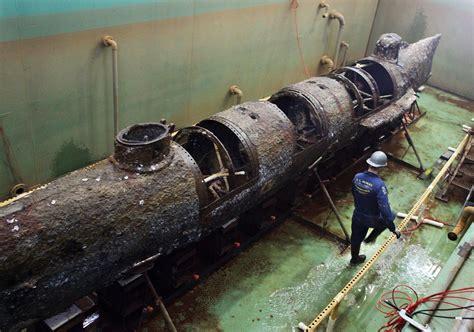
The story of the H.L. Hunley, a Confederate submarine from the American Civil War, reads like a blend of technological daring and human tragedy. Launched in the 1860s, the Hunley was a pioneering vessel in naval warfare, representing one of the earliest attempts to bring underwater combat into strategic reality. On February 17, 1864, this 40-foot hand-cranked submarine achieved an unprecedented feat: it successfully sank the USS Housatonic, marking the first time a submarine destroyed an enemy warship in combat. Yet, the Hunley’s victory was pyrrhic. The vessel vanished immediately after the attack, plunging both itself and its eight-man crew into a century-long historical mystery that would challenge generations of researchers.
The recovery of the Hunley in 1995, and its subsequent salvage in 2000, provided historians with a tangible connection to this enigmatic chapter of military history. When the submarine was raised, the crew was found in an astonishingly serene state, seated at their stations as if frozen in time. There were no signs of frantic attempts to escape, no evidence of struggle—an eerie tableau that defied conventional understanding of human instinct during a disaster. This haunting discovery intensified curiosity about not just the submarine itself, but the fate of the men who had risked their lives aboard it.
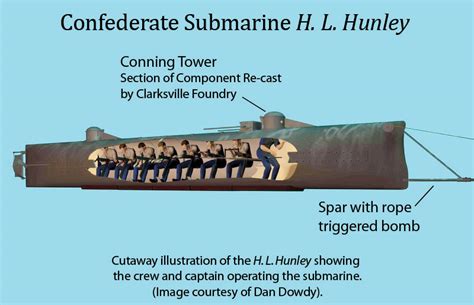
For more than two decades, the question of why the crew remained at their stations persisted. Numerous theories emerged, ranging from suffocation to structural collapse, but none offered a definitive explanation. It wasn’t until 2017 that a breakthrough study by researchers at Duke University provided a plausible answer. Using detailed 1/6th scale models of the Hunley and its spar torpedo, the team demonstrated that the very weapon which destroyed the USS Housatonic had also doomed the submarine. The 135-pound black powder charge affixed to a 16-foot spar created a shockwave so powerful that it reverberated back into the Hunley, inflicting fatal injuries almost instantaneously on the crew. According to the research, each crew member had merely a 16% chance of survival—a grim statistic that explained the eerie stillness of their final moments.
The Hunley’s story illuminates the harsh realities of early submarine warfare. Unlike modern nuclear submarines with complex safety systems, 19th-century vessels like the Hunley operated at the frontier of engineering knowledge. Every mission carried immense personal risk, and the line between innovation and catastrophe was perilously thin. The spar torpedo itself was a bold technological gamble: a relatively small explosive designed to pierce enemy hulls while leaving the attacking vessel unscathed. In practice, the explosive dynamics of confined underwater detonations were poorly understood, with the tragic fate of the Hunley’s crew revealing just how deadly these limitations could be.
Beyond its technical significance, the Hunley offers a poignant human story. The calm composure of the crew has been interpreted as a testament to discipline, courage, and the rigorous training demanded of submarine operators even in the 1860s. It also underscores the stark contrast between human endurance and the unforgiving forces of physics—a reminder that innovation often comes with unpredictable costs. For historians, archaeologists, and naval enthusiasts, the Hunley is not merely a relic; it is a symbol of the perilous intersection of ambition, technology, and fate.
The lessons from the Hunley extend to modern naval engineering as well. Its recovery allowed researchers to study early submarine construction, corrosion patterns, and crew ergonomics, providing insights that inform both historical scholarship and contemporary underwater design principles. Furthermore, the mystery of its crew humanizes the story, offering a sobering perspective on the courage and vulnerability inherent in naval exploration. The H.L. Hunley reminds us that behind every historical milestone lies a human dimension that can be as captivating—and as tragic—as the technological achievement itself.
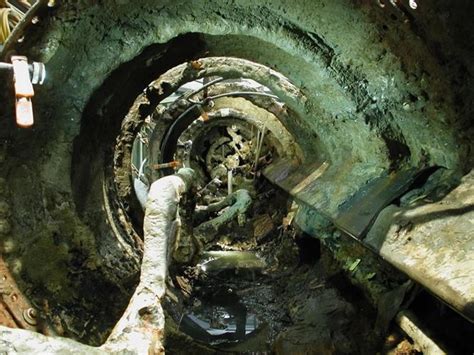
Over 100 years after it sank, the H.L. Hunley continues to captivate the imagination. Its rediscovery and the resolution of its crew’s fate blend meticulous scientific investigation with profound historical storytelling. The submarine’s legacy is not simply in its battlefield success but in the enduring mystery and the ultimate sacrifice of the men who piloted it. In unraveling this tale, history preserves both a remarkable technological achievement and a deeply human story, a narrative of innovation shadowed by loss, and a century-long testament to the perils and heroism of early submarine warfare.