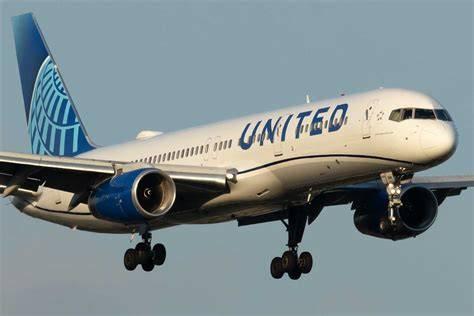
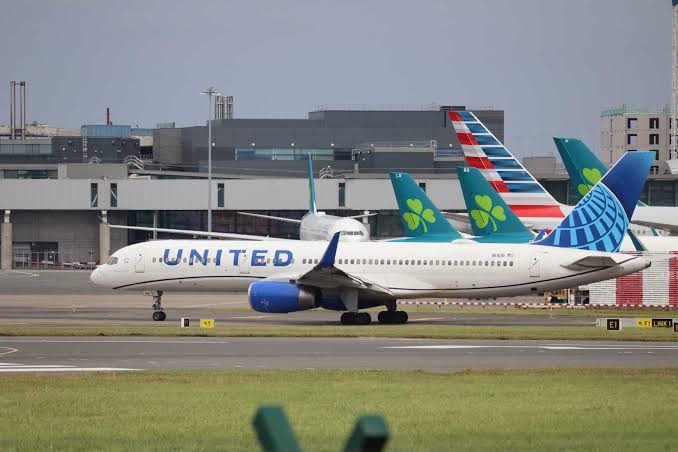
United Airlines flight UA316 returned to Dublin Airport on Sunday after a strong fuel odor developed inside the cabin shortly after the Boeing 757-200 reached its cruising altitude. The incident occurred on the scheduled service from Dublin Airport (DUB) to Newark Liberty International Airport (EWR), turning what should have been a routine transatlantic flight into a short return journey lasting less than an hour.
The aircraft, registered N14118, had departed Dublin approximately 35 minutes behind schedule at 2:10 PM local time on October 4, 2026. According to flight-tracking information and reports from The Aviation Herald, the crew detected the unusual smell after the aircraft leveled off at approximately 31,000 feet. Although there was reportedly no indication of an actual fuel leak, the odor was strong enough to cause concern among those onboard.
Several passengers and members of the cabin crew reportedly experienced headaches and required medical attention after the aircraft landed. Faced with an unexplained odor in the cabin during a long overwater flight, the flight crew chose to return to Dublin rather than continue toward the United States.
United Flight UA316 Turns Back to Dublin
UA316 is a daily United Airlines service linking Dublin with Newark. The route normally has a scheduled block time of around seven hours and 45 minutes, with a planned departure at 1:35 PM and arrival in New Jersey at 4:20 PM local time. On this occasion, however, the Boeing 757 never made it beyond the western coast of Ireland.
After the odor became apparent, the aircraft reversed course and headed back toward Dublin. The decision was particularly significant because the aircraft was carrying considerably more fuel than it would normally have at landing. A transatlantic Boeing 757 departing Ireland for New Jersey would ordinarily still have a substantial amount of fuel onboard after only a short period in the air.
The crew therefore advised air traffic control that the aircraft would be making an overweight landing at Dublin. The situation was not caused by an inability to operate the aircraft safely at a higher landing weight, but by the operational circumstances surrounding the return. Boeing 757s do not have a fuel-dumping system, meaning the crew could not simply jettison the excess fuel before landing.
The aircraft had spent only 53 minutes in the air when it touched down at Dublin at approximately 3:03 PM. That short flight time meant there had been little opportunity to burn off the fuel loaded for the planned Atlantic crossing.
Medical Assistance Requested After Landing
The return to Dublin was followed by a medical response on the ground. Before landing, the crew requested medical assistance from air traffic control, allowing emergency personnel to prepare for the aircraft’s arrival. Several paramedics subsequently met the Boeing 757 on the apron.
Reports indicate that multiple passengers and crew members were assessed for symptoms including headaches. The reported symptoms added another layer of urgency to an already unusual situation, although the available information did not establish that exposure to fuel vapors was responsible for the reported medical complaints.
The absence of an identified fuel leak is also important. A fuel odor inside an aircraft cabin can have several possible causes, and an odor alone does not necessarily mean that fuel is escaping from a tank or fuel line. Nevertheless, investigating an unexplained smell during flight is a serious operational matter, particularly when passengers and crew are reporting physical symptoms.
United Airlines was contacted for further information regarding the incident. At the time of the initial report, additional details concerning the source of the odor and the aircraft’s technical inspection had not been released.
Boeing 757 Remained in Dublin Overnight
Following the overweight landing, UA316 was canceled, leaving the Boeing 757 on the ground in Dublin while the situation was investigated. Flight-tracking information showed N14118 remaining at the Irish airport almost 24 hours after its return.
The aircraft was subsequently expected to operate another United service, designated UA3929, at approximately 7:18 PM local time. That represented a delay of more than four hours compared with the aircraft’s originally planned 3:00 PM departure. The aircraft was also scheduled to continue onward to San Francisco the following morning, subject to operational and maintenance requirements.
The sequence illustrates how a relatively short technical concern can have consequences extending well beyond the original flight. An aircraft returning after an abnormal event must be inspected, cleared for further operation, and potentially undergo additional maintenance or operational checks before passengers can be carried again.
United’s Aging Boeing 757 Fleet Faces Replacement
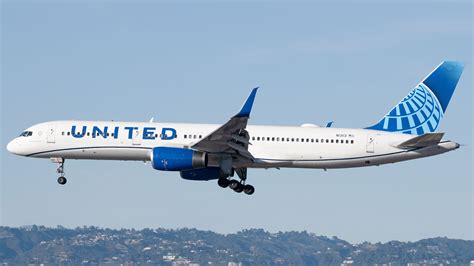
The incident also highlights the changing role of the Boeing 757 in United Airlines’ fleet. N14118 is nearly 30 years old, while the carrier’s remaining 757-200 fleet has an average age of approximately 29.7 years.
According to ch-aviation data cited in the reference material, United has 40 Boeing 757-200s remaining, including 36 active aircraft and four inactive examples. Historically, the airline operated substantially more of the type, with another 99 aircraft having served the carrier over the years.
N14118 itself is configured with 176 seats across three travel classes, making the aircraft particularly useful for routes requiring more capacity and range than conventional narrowbodies while retaining the operational flexibility of a single-aisle aircraft.
United’s remaining 757s are now its oldest narrowbody aircraft and the second-oldest aircraft family in its overall fleet by average age, behind the Boeing 767-300ER. Their long service lives reflect how valuable the 757 has been to United, particularly on transatlantic routes where its combination of range, capacity and performance has remained difficult to replace.
Airbus A321XLR Will Change United’s Transatlantic Narrowbody Fleet
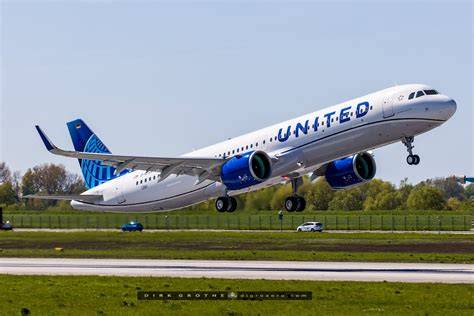
The Boeing 757’s future at United is increasingly tied to the arrival of the Airbus A321XLR. The airline has ordered 50 examples of the long-range narrowbody, although only two had been delivered according to the information available at the time of the incident.
The A321XLR offers United a modern replacement for many missions historically associated with the 757. Its long-range capability allows the airline to operate thinner transatlantic routes with a newer, more fuel-efficient aircraft while providing a modern passenger cabin and updated onboard systems.
For United, the transition will not happen overnight. The 757 remains an important part of the network, and aircraft such as N14118 can continue flying long international sectors despite their age. However, events such as the Dublin return demonstrate the operational realities of maintaining a fleet whose average age is approaching three decades.
The Dublin incident ultimately ended without the Boeing 757 continuing across the Atlantic, but the unusual fuel odor, medical response and overweight landing made UA316 a notable example of why flight crews can quickly change plans when an unexplained cabin condition develops. The decision to return to Dublin after only 53 minutes kept the aircraft close to a suitable airport and allowed passengers and crew to receive assistance on the ground rather than continuing a seven-hour transatlantic journey with an unresolved problem.