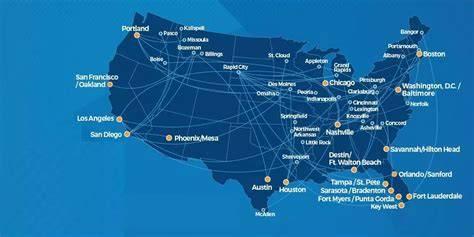
Allegiant Air has cut 25 routes from its schedule, restructuring how the Las Vegas-based ultra-low-cost carrier connects dozens of American cities. The changes stretch from November 2025 through August 2026 and touch seasonal leisure markets, long-standing West Coast bases and several major hub airports. Three routes that last operated in November 2024 are absent this month, while every month from January to August 2026 carries at least one cancellation. Some of the affected services will survive as summer-only flights, but others mark a permanent exit from certain airports entirely.
How Allegiant’s Winter Schedule Lost 25 Routes
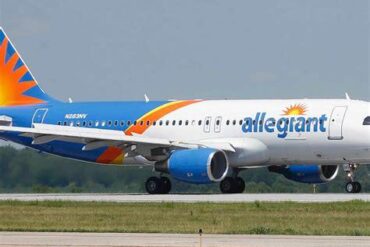
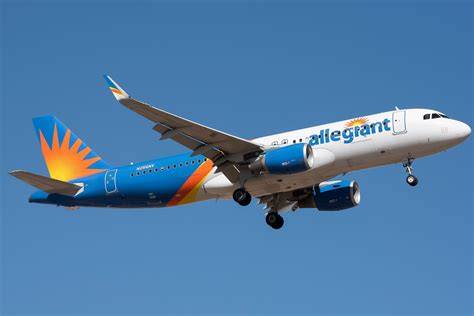
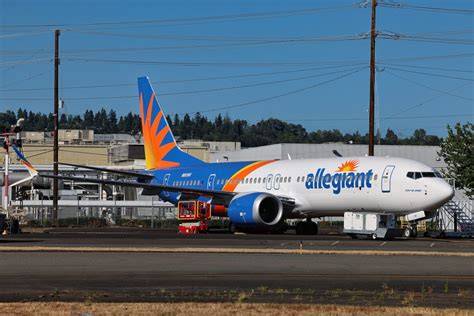
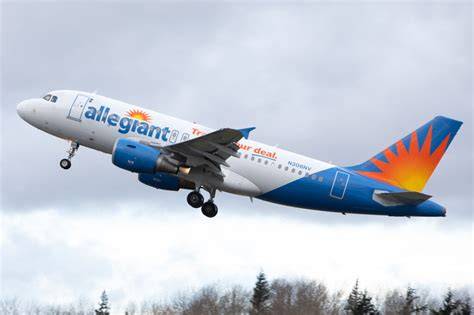
Allegiant Air operates a strict domestic network, flying no-frills nonstop service to vacation and secondary destinations using a fleet of more than 120 aircraft split between the Airbus A319, A320 and Boeing 737 MAX 7 and MAX 8-200. Cirium schedule data for 2025 and 2026 compared against this winter’s timetable shows the airline has removed 25 routes in total, a deliberate reduction rather than an accounting error. November 2025 alone lost Myrtle Beach to Niagara Falls, Phoenix to Asheville and Sarasota to Portsmouth, three markets that depend heavily on seasonal leisure demand and thin year-round traffic.
The airline frames these decisions around seasonal demand and a leisure-first strategy, redeploying aircraft where winter bookings justify the flying. Routes that perform in July but struggle in January become summer-only propositions, reducing exposure to weak shoulder-season load factors.
The January Cuts and Allegiant’s Full Los Angeles Exit
January 2026 brings the deepest single-month trimming, with Bellingham to Los Angeles, Nashville to Peoria, Cincinnati to Los Angeles and Las Vegas to Boise disappearing from the schedule. Those last three cuts complete the airline’s full withdrawal from Los Angeles International Airport, a significant moment for a carrier that historically avoided high-cost primary hubs. LAX’s landing fees, terminal costs and slot constraints make it an expensive proposition for an airline whose entire model rests on fares low enough to stimulate demand in markets major carriers ignore.
April and May 2026: Fort Lauderdale and the Oakland Withdrawal
The spring schedule continues the pattern. April 2026 removes Fort Lauderdale to Traverse City and Orlando/Sanford to Columbia, while May 2026 strips out eight more services: Bellingham to Oakland, Bellingham to Palm Springs, Fort Lauderdale to Columbia, Fort Lauderdale to Huntington, Fort Lauderdale to Savannah, Las Vegas to Chattanooga, Punta Gorda to New Orleans and Phoenix to Pittsburgh. Fort Lauderdale has now lost three nonstop services since earlier this year, and Bellingham, a longtime Allegiant base, lost two West Coast routes as part of the broader retreat.
May also confirms the airline’s ultimate withdrawal from Oakland San Francisco Bay Airport, ending service at a facility that once gave Allegiant a foothold in the crowded Bay Area market. Oakland’s absence leaves travelers in that region dependent on other carriers or longer drives to alternative airports.
August 2026 Route Cuts Across Eight Markets
August 2026 removes Asheville to Chicago Midway, Bellingham to Burbank, Nashville to Akron/Canton, Washington Dulles to Savannah, Jacksonville to Des Moines, Las Vegas to Lexington, Portland to Idaho Falls and Sarasota to Nashville. These routes sit in the Northern Hemisphere summer season, yet they are currently unscheduled, suggesting the airline sees insufficient margin even during peak travel months or intends to reassess closer to departure.
Why Allegiant Is Cutting 25 Routes
The pattern across all 25 cancellations points to a consistent strategy: Allegiant is abandoning routes tied to major hub airports, which carry high landing and operating costs, in favor of regional alternatives that let the airline profit on low fares. Low fares require low operational costs and high aircraft utilization, and primary airports such as LAX and Dulles work against both. Secondary and regional fields charge less, turn aircraft faster and support the high-frequency, point-to-point model that keeps Allegiant’s cost per available seat mile among the lowest in the US industry.
Seasonality reinforces the logic. Allegiant’s network is built around leisure demand, and routes serving cold-weather destinations or business-oriented city pairs often fail to fill seats outside peak periods. Converting weak winter routes into summer-only service protects revenue during strong months while avoiding losses during weak ones, and it frees aircraft for markets with proven year-round appeal.
What Travelers Should Do Next
Passengers holding tickets on any of the 25 affected routes should check their reservations immediately, since Allegiant typically rebooks travelers or issues refunds when a route disappears entirely. Travelers planning winter or spring trips should verify schedules before booking, particularly on Fort Lauderdale, Bellingham, Phoenix and Nashville departures, where multiple services have been trimmed. Communities that lost nonstop Allegiant service, including Los Angeles, Oakland and several smaller markets, will need to weigh connecting flights, alternative carriers or longer drives to retain access to the airline’s low fares.