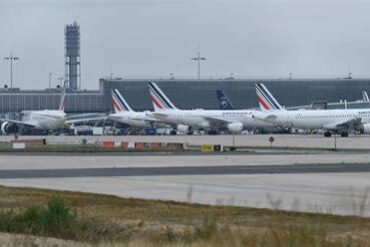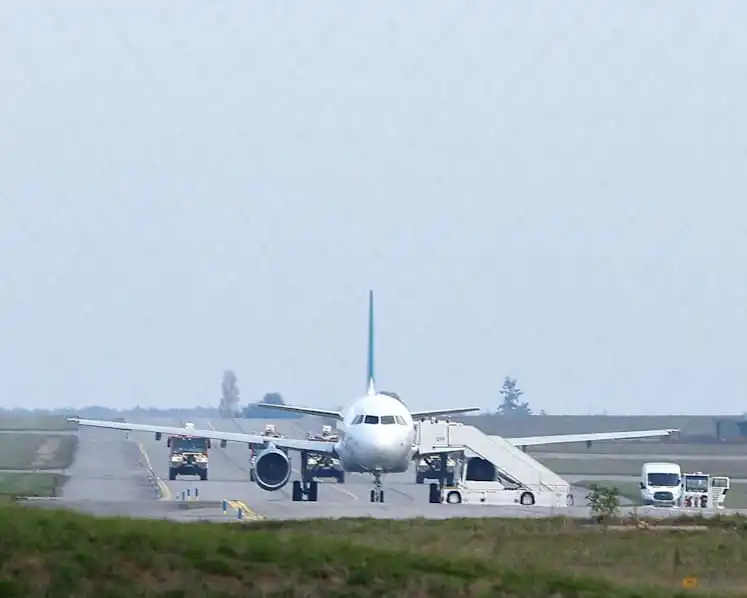
A fresh wave of bomb threats struck European aviation on Friday, marking the third day out of five this week that hoax alerts have disrupted commercial air travel across the continent. Friday’s incidents included a Ryanair flight in the Mediterranean region, four aircraft flying over French territory, and a Wizz Air service diverted mid-journey, according to Simple Flying. The alerts follow a chaotic Thursday that saw at least 25 flights disrupted, several aircraft escorted by fighter jets, and one passenger jet forced to land at a military base.
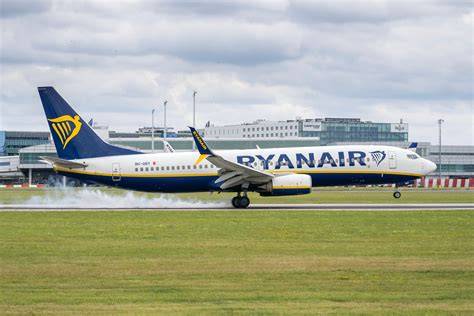
Friday’s Disrupted Flights: Ryanair and Wizz Air Incidents
The most detailed incident involved Ryanair flight FR 8196, scheduled from Rome Fiumicino Leonardo da Vinci International Airport (FCO) to Lisbon’s Humberto Delgado Airport (LIS). An anonymous phone call to FCO’s control tower claimed an explosive device was aboard the aircraft. The jet departed FCO a few minutes late at 5:48 AM local time and touched down in Lisbon 32 minutes late at 8:27 AM local time. Although the flight was not diverted, the delay and subsequent security checks show the threat still extracted a cost from passengers and crew. Authorities investigated after the safe landing but have not confirmed finding explosives onboard. Simple Flying has contacted Ryanair for further comment.
The French Prime Minister’s office confirmed bomb threats against four aircraft flying over French territory. The office stated that all four aircraft landed safely, with security services now investigating both the potential presence of explosive devices and the wider campaign behind the alerts.
A Wizz Air flight from Václav Havel Airport Prague (PRG) to Rome Fiumicino was also disrupted, with the aircraft diverted to Venice Marco Polo Airport (VCE). The diversion reflects the caution airlines and controllers apply whenever a threat is assessed as credible enough to justify rerouting.
Irish Government Warns of a “Likely Coordinated Campaign”
This morning, the Irish Government issued a warning that the waves of bomb threats amount to a “likely coordinated campaign.” The statement, released after threats were also made against Irish media organizations, reminded perpetrators that hoax threats against the media and transport infrastructure cause “fear, distress, and disruption” with no positive purpose. The government nonetheless acknowledged that it remains unknown whether the hoaxes are the work of a centralized group or of disparate individuals. The Gardaí, Ireland’s police force, is working alongside the nation’s Defence Force, as well as cyber and aviation authorities, to identify those responsible. Irish authorities have also been coordinating with counterparts in other European nations that have faced similar threats.

Inside the Response: How Bomb Threats Are Handled in the Air
The precision of the response during a bomb threat is rarely visible to passengers. Britain’s Sky News spoke with Michele Robson, a former air traffic controller, who explained that upon receiving a threat, controllers alert their supervisor, who then brings in government agencies and the military to assess the credibility of the threat. Those agencies determine the appropriate action based on the assessed threat level. Robson observed that the grounding and diverting of aircraft indicate that judgments of high credibility have been made in these cases. Military aircraft stand ready when needed while controllers speak directly to the pilot to establish intentions. The pilot may opt to land immediately if the threat is deemed highly credible.
Once decisions are made, they are relayed to the pilot and the destination airport. After touchdown, passengers and crew are disembarked, potentially questioned, while bomb experts and sniffer dogs search the aircraft. That procedural rigor shows why even unsubstantiated threats produce delays, diversions, and cascading disruption across schedules.
A Week of Escalating Disruption Across European Skies
The repeated waves of threats have converged with a growing suspicion of a coordinated campaign to cause maximum disruption across Europe, though no group has claimed responsibility. Thursday’s tally of at least 25 disruptions — including fighter jet escorts and a jet landing at a military base — underscores the operational burden placed on airlines, airports, and air navigation services. The French and Italian Air Forces have each scrambled fighter jets in response to commercial aviation threats this week. With threats now hitting on three of five days, European aviation finds itself contending with a sustained pattern of disruption whose origins remain opaque even as the operational toll mounts.