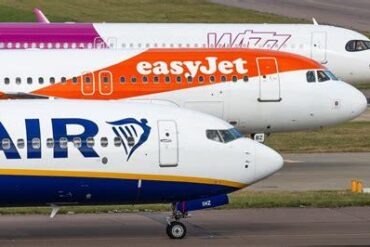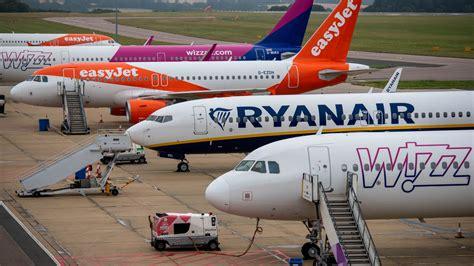
Europe’s low-cost carriers have long promised affordable travel, enticing millions with ultra-low ticket prices. But behind the seductive €9.99 fares lies a growing hidden fee crisis that’s quietly transforming budget travel into a costly gamble. A new investigation has exposed how Wizz Air, Ryanair, and EasyJet are spearheading a wave of stealth charges that can more than triple a traveler’s final airfare — all without warning.
The Budget Travel Mirage: How Hidden Fees Became the Norm
The allure of Europe’s budget airlines once rested on the simplicity of pay-as-you-go flying. But the reality in 2025 is far more complicated. Passengers booking a flight with Wizz Air, Ryanair, or EasyJet are increasingly finding themselves ensnared in a maze of ancillary fees, tacked on at every stage of the booking process.
From paying to check in, to mandatory charges for basic carry-on luggage, these extras often feel less like options and more like requirements disguised as upgrades.
A startling new report by Tradingpedia has lifted the veil, quantifying the true cost of flying with these carriers. What it found is nothing short of alarming: Wizz Air leads with €245 in hidden fees per passenger, followed closely by Ryanair at €234, and EasyJet at €213. These costs are not tied to luxury services. Instead, they reflect essential travel needs — baggage, boarding, infant travel, and rebooking.
Wizz Air’s Unseen Charges: A Breakdown of Europe’s Costliest Budget Ticket
Topping the chart, Wizz Air’s €245 in average extras includes:
- €100 for checked baggage, even on medium-haul flights.
- €21.50 for online check-in, despite being a standard digital service.
- €10 for online booking, which contradicts the cost-saving nature of digital platforms.
- €80 in rescue fees should you miss your flight — often due to delays or technical issues.
- €32 for an infant ticket, despite industry norms of near-free infant travel.
These charges are embedded subtly in the process, revealed only at the final checkout step, when reversing course would cost time and potentially the base fare. This tactic, critics argue, is a strategic manipulation of consumer psychology.
Ryanair and EasyJet: Nearly as Expensive, Equally Opaque
Ryanair, infamous for its a la carte model, clocks in just behind Wizz Air with a €234 average surcharge per booking. Travelers face:
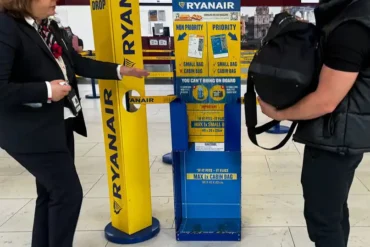
- €25 for carry-on baggage, a former staple of even the leanest airline fare.
- €100 for rescue booking, leaving passengers stranded or shelling out again.
- Unspecified payment processing fees, added at the very end of payment when it’s too late to reconsider.
EasyJet, long considered the “premium” budget choice, is no less guilty. Its €213 in average extra costs includes:
- €130 for a rescue fee, among the highest in the market.
- €25 per person for group bookings, meaning a family of four pays €100 before even selecting seats.
- €31 for flying with an infant — essentially charging babies to sit in a parent’s lap.
The Hidden Fee Hierarchy: Who’s Worse and Who’s Wiser
Not all European carriers embrace this pricing model. British Airways and Norwegian stand out for minimal ancillary fees and greater pricing transparency:
- British Airways charges just €75 in additional fees per passenger.
- Norwegian averages €84, often including seat selection and carry-ons in the base fare.
- Jet2, while not a legacy carrier, keeps extras low at €107, making it an outlier among leisure airlines.
These airlines tend to prioritize upfront honesty, creating a more trustworthy passenger experience and, as surveys suggest, enjoying higher loyalty and satisfaction ratings.
What Are Passengers Really Paying For?
Delving deeper into the specific charges, the so-called budget model reveals some shocking truths:
- Rescue Fees – Wizz Air (€80), EasyJet (€130), and Ryanair (€100) penalize passengers harshly for missing flights, even when delays are out of their control.
- Infant Travel Fees – A parent with a baby could pay over €30 on Wizz or EasyJet, a charge that defies standard expectations.
- Group Booking Fees – Booking as a family or with colleagues? Prepare to pay up to €25 extra per person.
- Payment Processing – Ryanair routinely applies card payment fees, a relic most retailers abandoned years ago.
Together, these costs reshape what it means to fly budget in Europe. A headline price may tempt, but what lies beneath is a pricing architecture engineered to extract value.
The Systemic Consequences: Misleading Markets and Consumer Confusion
The rise of unbundled pricing has distorted how fares are perceived and compared. When one airline includes bags and check-in, while another hides those services behind fees, direct comparison becomes impossible. Consumers are misled by illusory low prices, believing they’ve found a deal.
This lack of price parity has led to calls for regulation. Critics argue that the current environment not only confuses consumers, but rewards deceptive pricing. As a result, airlines that hide more fees can appear cheaper, even when the final cost is significantly higher.
EU Watchdogs Demand Action as Backlash Grows
The backlash has now reached Brussels. Consumer advocacy groups from Germany, France, and Spain have jointly submitted formal complaints to the European Commission, urging an inquiry into hidden surcharges — particularly hand luggage fees, which many argue should be treated as basic entitlements.
The European Aviation Safety Agency (EASA) has acknowledged the problem, and internal discussions are reportedly underway about mandating fare transparency — similar to rules in the U.S. requiring airlines to display full prices, including all mandatory charges.
Travelers, meanwhile, are taking to social media, forums, and news outlets to vent their frustration. Budget airlines, once darlings of frugality, are now being painted as profiteers.
Are Budget Airlines Still a Bargain?
For years, low-cost carriers were seen as disruptive innovators, offering choice and flexibility. But as fees pile up, many are questioning whether the “unbundled” model has gone too far. A recent poll by Skyscanner revealed that over 63% of European travelers now consider hidden fees the top frustration when booking flights.
What’s more, the gap between budget and traditional carriers is narrowing. A €250 all-inclusive fare with Lufthansa may now be cheaper than a €30 Ryanair base fare that balloons to €280 after fees.
It’s not just about cost. It’s about predictability, trust, and dignity — values that are eroding under the current pricing structures.
What Happens Next: Possible EU Reform and Consumer Defense
If the European Commission acts on these complaints, the industry could see sweeping changes:
- Mandatory upfront pricing: Base fares would be required to include all essentials — at minimum, a carry-on, check-in, and infant seat.
- Ban on payment fees: Airlines may be forced to absorb card transaction costs.
- Clearer disclosures: Booking interfaces could face regulations to clarify what is and isn’t included.
Until then, passengers must stay vigilant. Reading the fine print, choosing airlines with better transparency, and sharing fee experiences online can help pressure carriers to adjust.
Budget travel in Europe isn’t dead — but its definition is under siege. For now, the price you see isn’t the price you pay. And the real cost of that “cheap flight” might only become clear at the gate.