Alaska Airlines’ first summer across the Atlantic was far more than a collection of new European routes. It was a carefully structured test of how the carrier could use different aircraft, schedules, and levels of financial commitment to build an international network from Seattle. In the space of just one month in spring 2026, Alaska went from having no transatlantic service to operating nonstop flights to Rome, London, and Reykjavík, using both Boeing 787-9 widebodies and Boeing 737 MAX 8 narrowbodies.
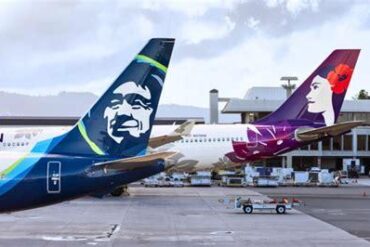
The transformation was made possible by Alaska’s 2024 merger with Hawaiian Airlines. Before that combination, Alaska had spent its 93-year history without operating a widebody aircraft. Hawaiian brought the Boeing 787-9 Dreamliner into the wider Alaska Air Group fleet, along with trained crews, established maintenance infrastructure, and the premium Leihōkū Suites cabin. That immediately changed what Alaska could do from its Seattle-Tacoma International Airport hub.
Rather than treating every European route as the same kind of expansion, Alaska effectively created three separate fleet strategies. London became the permanent widebody commitment, Rome became the seasonal widebody experiment, and Reykjavík became the narrowbody transatlantic test. Together, the three services allowed Alaska to explore European demand while using its existing aircraft resources instead of launching a massive new fleet acquisition program.
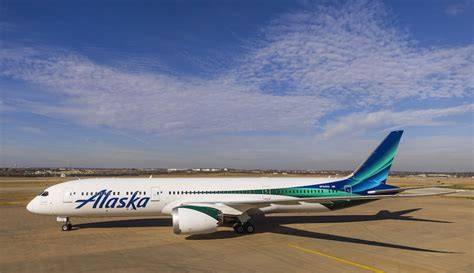
Alaska Airlines’ Three Transatlantic Fleet Strategies From Seattle
Alaska’s European launch unfolded remarkably quickly. The airline began Seattle-Rome service on April 28, 2026, followed by Seattle-London Heathrow on May 21 and Seattle-Reykjavík Keflavík on May 28. Yet the significance of those three launches was not simply the number of destinations.
Each route was designed around a different operating model. Rome was a daily seasonal 787-9 service scheduled from late April through October 23. London was a daily, year-round 787-9 operation, requiring Alaska to support the route through both the lucrative summer period and the quieter winter season. Reykjavík, meanwhile, used a 737 MAX 8 for a shorter seasonal operation from May 28 through September 7.
That distinction matters because the aircraft assigned to a route can reveal how much an airline is willing to commit. A year-round widebody service requires substantial confidence in demand and yields. A seasonal widebody route reduces winter exposure while still providing a premium long-haul product. A narrowbody transatlantic flight can open another market while consuming far fewer scarce widebody resources.
Alaska therefore did not simply add three European destinations. It created a practical laboratory for determining which kinds of international flying could work from Seattle.
London Heathrow Is Alaska’s Permanent Widebody Bet
Alaska’s Seattle-London Heathrow route is the clearest signal that its international ambitions extend beyond a one-season experiment. The service began on May 21, 2026, using the Boeing 787-9, and operates daily throughout the year.
That schedule places Alaska in direct competition with three established operators: British Airways, Delta Air Lines, and Virgin Atlantic. All three already operate year-round Seattle-Heathrow service, giving Alaska an immediate challenge on one of the world’s most established transatlantic city pairs.
Alaska nevertheless has an important structural advantage: Seattle is its primary hub. The airline can feed the London flight with passengers originating across its domestic network rather than relying only on travelers starting in Seattle. Customers from cities such as Portland, Boise, Sacramento, and San Jose can connect through Seattle while remaining within Alaska’s network.
That connecting traffic is particularly important during the winter. Summer Europe demand can fill aircraft with leisure travelers, but maintaining a daily 787 through the less busy months requires a broader customer base. Business travel, visiting friends and relatives, local Seattle traffic, and connecting passengers all become important components of the route’s economics.
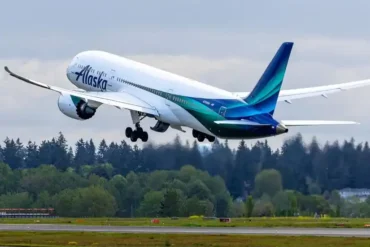
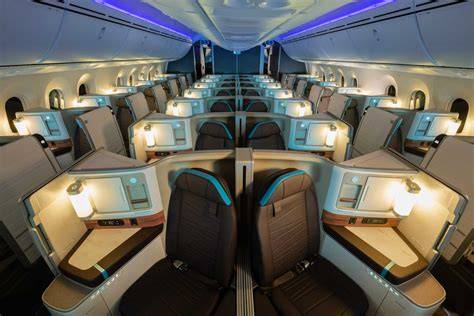
The aircraft itself also gives Alaska a competitive premium product. Its 787-9s inherited from Hawaiian feature Leihōkū Suites, with lie-flat seats and direct aisle access in a 1-2-1 business-class arrangement. That gives Alaska a long-haul business-class product designed to compete directly with premium cabins already offered by established operators on the route.
Alaska has also connected its international expansion with a larger investment at its Seattle hub. The airline announced plans for a new global Alaska Lounge at Seattle-Tacoma International Airport, scheduled to open in late 2027. The facility is intended to become Alaska’s largest lounge in Seattle, strengthening the infrastructure around the growing long-haul operation.
London therefore represents more than another destination on a route map. It requires Alaska to commit an aircraft every day, support the service in both peak and off-peak seasons, and compete directly against airlines with decades of experience in the market.
Rome Is Alaska’s Seasonal 787 Experiment
The Seattle-Rome route presents a different proposition. When Alaska launched Seattle-Rome Fiumicino on April 28, 2026, it became the airline’s first-ever transatlantic service. Unlike London, however, the route was scheduled only for the spring and summer travel period, ending October 23.
That seasonal structure gives Alaska substantially more flexibility. The airline can capture strong European leisure demand without immediately committing a widebody aircraft to Rome throughout the winter. For a new city pair, that is an important distinction.
Seattle and Rome had not previously been connected by nonstop service. Alaska therefore entered a market without an established nonstop competitor or a long history of observed demand. The airline had to determine whether enough travelers would choose a direct Seattle-Rome flight to support a large aircraft.
The market did not remain uncontested for long. Delta Air Lines responded by adding four weekly Seattle-Rome flights for summer 2026. Alaska operates daily, meaning the two carriers together provide roughly 11 weekly nonstop departures between the Pacific Northwest and the Italian capital.
Delta’s entry changed the commercial environment almost immediately. Alaska was no longer testing whether Seattle-Rome demand existed in isolation; it was testing whether its service could attract enough passengers when another major US airline offered a competing nonstop option.
The Rome route also has a wider network purpose. Alaska can use Seattle as a connecting point for passengers traveling from Hawaii to Europe. Travelers from Honolulu, Maui, and Kona can potentially connect through Seattle instead of using gateways such as Los Angeles, San Francisco, or airports on the US East Coast.
That makes Rome particularly interesting as an experiment in network connectivity rather than simply point-to-point tourism. If the seasonal service produces sufficiently strong demand, revenue, and load factors, Alaska could eventually have a case for extending it beyond the summer.
For now, however, the seasonal schedule limits the airline’s exposure. Alaska gets to measure the market before deciding whether Rome deserves the same year-round commitment given to London.
Reykjavík Uses the 737 MAX 8 Instead of a 787
Reykjavík is perhaps the most revealing of Alaska’s three fleet choices because it demonstrates how the airline can expand internationally without assigning another scarce 787.
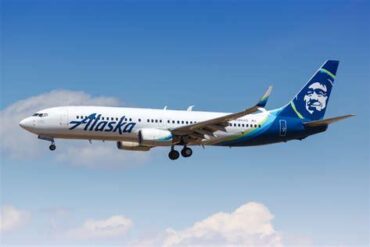
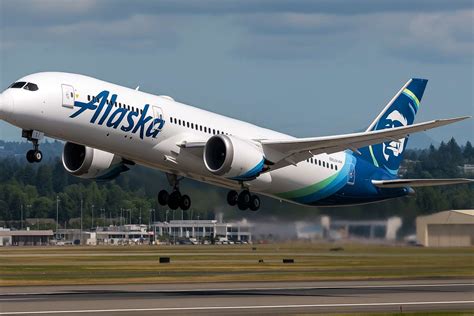
The Seattle-Reykjavík Keflavík route launched on May 28, 2026, and operates daily on a seasonal basis through September 7. Alaska uses the Boeing 737 MAX 8, an aircraft already central to its domestic fleet.
The route covers approximately 2,500 nautical miles, or about 4,630 kilometers. That is comfortably below the 737 MAX 8’s published range of roughly 3,550 nautical miles. The aircraft therefore has the range necessary for the crossing while retaining room for operational requirements such as fuel reserves, weather conditions, and potential diversions.
For Alaska, the fleet logic is straightforward. Its 787-9 aircraft are limited in number and are needed for longer routes such as London and Rome. Deploying another 787 to Iceland would consume widebody capacity that could otherwise support a route where a narrowbody aircraft cannot realistically substitute.
Alaska, by contrast, operates a very large fleet of 737 aircraft. The MAX 8 is therefore a much more readily available resource. Using one aircraft for seasonal Reykjavík service does not create the same opportunity cost as assigning a 787.
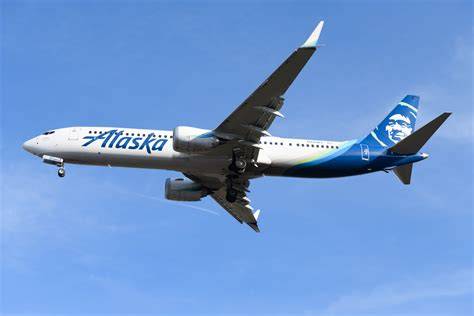
The route was also timed around a major travel event. Alaska marketed the service toward travelers planning to see the August 12, 2026, total solar eclipse, which was visible in totality from Iceland. That gave the seasonal route a distinctive demand driver beyond conventional summer tourism.
Reykjavík also provides Alaska with access to a broader European network through its partnership with Icelandair. Keflavík functions as Icelandair’s major connecting hub, allowing Alaska passengers to continue onward to numerous European destinations without Alaska having to operate those flights itself.
The arrangement illustrates another important part of Alaska’s international strategy: the carrier does not need to fly every European segment with its own aircraft. Partnerships can extend the effective reach of a route while allowing Alaska to concentrate its limited widebody fleet on markets where nonstop service is most valuable.
Why the Hawaiian Merger Changed Alaska’s Fleet Options
None of these transatlantic strategies would have been possible in their current form without the Hawaiian Airlines merger completed in September 2024.
Before the merger, Alaska had no widebody aircraft. That meant the airline could build a strong domestic and North American network but had limited options for operating nonstop services from Seattle to distant international markets.
Hawaiian changed that almost overnight. Its 787-9 Dreamliners gave Alaska access to an aircraft capable of flying long distances from Seattle without requiring the airline to place a new aircraft order and wait years for deliveries.
The importance of that shortcut extends beyond the aircraft themselves. The inherited fleet came with established maintenance programs, experienced personnel, and a premium cabin already designed for long-haul operations. Alaska could therefore focus on integrating the aircraft and developing routes instead of creating an entirely new widebody operation from scratch.
The result was an unusually rapid international expansion. Alaska went from zero transatlantic routes in early 2026 to three by the end of May. It accomplished that while relying primarily on aircraft it already controlled: the 787-9s obtained through Hawaiian and the 737 MAX 8s already present in Alaska’s fleet.
Athens and Paris Will Expand the 787 Strategy
Alaska’s European experiment does not stop with its first three routes. The airline has already announced Athens and Paris for summer 2027.
Seattle-Athens is scheduled to begin May 12 with three weekly Boeing 787-9 flights, operating seasonally through October. It will become the longest route Alaska has ever operated and will provide a nonstop connection between the US West Coast and the Greek capital.
Seattle-Paris Charles de Gaulle follows on May 25 with five weekly 787-9 flights, also operating seasonally. Paris gives Alaska another major European gateway alongside London Heathrow and strengthens its ability to connect passengers from the Pacific Northwest and other parts of its domestic network with Europe.
The two launches also show that Alaska is continuing to use the seasonal widebody model beyond Rome. Rather than immediately turning every European route into a year-round operation, the airline can concentrate 787 capacity during periods when international leisure demand is strongest.
That approach may become particularly important as Alaska expands beyond the number of routes its inherited widebody fleet can comfortably support.
Three Fleet Bets Could Shape Alaska’s Long-Haul Future
Alaska’s first transatlantic summer was notable because the airline did not choose a single formula for international expansion. It tested three.
London represents the year-round widebody model, with a permanent daily service requiring consistent demand and direct competition against established carriers. Rome represents the seasonal widebody model, allowing Alaska to test a new city pair while limiting winter exposure. Reykjavík represents the seasonal narrowbody model, using an existing 737 MAX 8 to open Europe without consuming another 787.
That flexibility could become increasingly valuable as Alaska develops its international network. The airline has indicated that it expects to add at least five more long-haul destinations from Seattle by 2030, with both European and Asian markets under consideration.
The future of individual routes will depend on how passengers respond, how aircraft utilization develops, and whether Alaska can generate enough connecting traffic through Seattle. But the fleet architecture is already clear.
The Hawaiian merger did not simply give Alaska a new aircraft type. It gave the airline a new set of choices. A 787 can support premium, long-distance markets such as London, Rome, Athens, and Paris, while the 737 MAX can reach shorter international destinations such as Reykjavík without tying up scarce widebody capacity.
That is why Alaska’s first transatlantic summer is best understood as three different fleet bets launched almost simultaneously. The airline was not merely asking whether Seattle could support European flights. It was testing how much widebody capacity each market deserves, which routes need year-round commitment, and where a narrowbody aircraft can do the job instead.
From a carrier that had never operated a widebody aircraft before September 2024 to one serving three European destinations within months, the transformation has been striking. The next stage will show whether those initial experiments can become a durable international network—and whether Alaska can turn its newly acquired long-haul capability into a lasting competitive presence from Seattle.