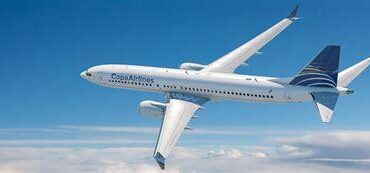
Copa Airlines has built one of the most unusual success stories in modern commercial aviation. The Panamanian flag carrier operates an extensive international network across North, Central, and South America and the Caribbean, yet its fleet remains centered almost entirely on the Boeing 737 family. For an airline serving such a broad geographic area, the absence of a single widebody aircraft might appear surprising. In reality, it is closely connected to the business model that has made Copa one of the most consistently profitable airlines in Latin America.
In fiscal 2025, Copa achieved a 22.6% operating margin and an 18.6% net margin, figures that underline how effectively the airline has controlled its costs while maintaining strong passenger revenues. Its performance is particularly notable because Latin American aviation has experienced repeated restructurings, bankruptcies, and major changes in competitive strategy. Copa has largely avoided that cycle, and its decision not to introduce widebodies is an important part of the explanation.
At first glance, a fleet of widebody aircraft such as the Boeing 787 Dreamliner or Airbus A330 could seem like an obvious way to expand. Such aircraft would give Copa more range, greater passenger capacity, and access to destinations beyond the practical limits of its narrowbodies. But aircraft capability and business necessity are two very different things. For Copa, adding widebodies would not simply mean flying farther. It would mean changing an operating model that already works exceptionally well.
Panama’s Geography Makes Widebody Aircraft Less Necessary
The first reason Copa can avoid widebodies is geography. Panama City’s Tocumen International Airport (PTY) sits in a remarkably useful position for an airline whose primary business is connecting the Americas. The airport can link passengers traveling between North America, South America, Central America, the Caribbean, and Panama itself without requiring the airline to operate a traditional intercontinental hub.
This positioning gives Copa a geographical advantage that many network airlines would struggle to replicate. A large portion of the destinations that matter to the carrier are within the practical range of the Boeing 737 family. Instead of requiring aircraft designed to cross oceans for many hours, Copa can use relatively small narrowbodies to connect a large number of cities through Panama.
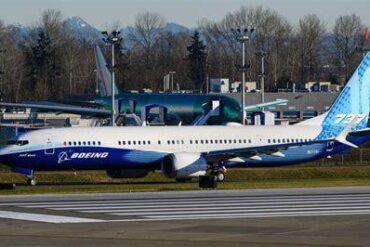
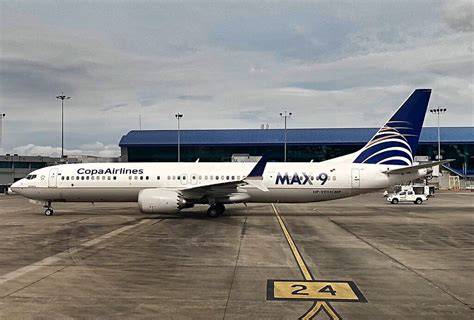
That strategy became even more effective with the arrival of the Boeing 737 MAX. Copa was already using older 737-800 aircraft on flights lasting around seven hours more than a decade ago, demonstrating that the airline did not necessarily need widebodies to operate relatively long routes. The MAX subsequently improved the economics of those missions through greater range and better fuel efficiency.
Long routes such as Panama City to San Francisco or Buenos Aires illustrate the point. These are substantial journeys for a narrowbody, but the 737 MAX gives Copa an aircraft capable of serving them without requiring the carrier to establish a separate widebody fleet.
The extra range also provides something potentially more valuable than simply reaching farther: network flexibility. Copa can use the MAX to open routes to secondary cities where demand might be enough to support a narrowbody but insufficient to justify a much larger aircraft.
The Boeing 737 Fleet Keeps Copa’s Costs Under Control
Geography explains why widebodies are unnecessary, but fleet commonality explains why they could actually be undesirable. Copa operates around 120 Boeing 737 family aircraft, creating a remarkably consistent fleet for a full-service network airline with such a large international footprint.
That commonality has practical consequences throughout the organization. Pilots can remain within essentially the same aircraft family, maintenance procedures can be standardized, spare-parts requirements can be simplified, and crew scheduling becomes considerably easier. Aircraft can also be moved between routes without the operational restrictions that would exist if Copa had to manage several fundamentally different aircraft types.
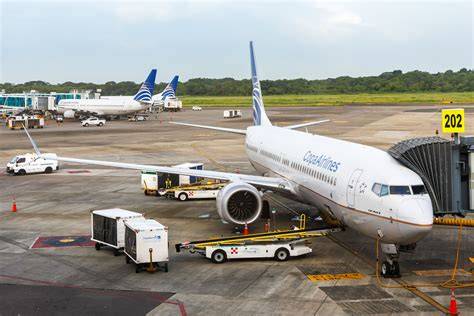
Copa has reinforced this strategy with an order for up to 60 additional Boeing 737 MAX aircraft, supporting fleet growth and modernization over the coming years. The decision sends a clear signal about the direction of the airline’s fleet strategy: rather than introducing a second major aircraft family, Copa intends to extract more value from the model that has already made its network successful.
This matters because aircraft fleet decisions are not determined only by fuel burn or passenger capacity. A widebody might be efficient on an individual long-haul flight, but that does not automatically make it efficient for the airline as a whole.
Adding the Boeing 787 or Airbus A330 would require Copa to create additional pilot training programs, maintenance capabilities, spare-parts inventories, crew procedures, and operational expertise. The airline would also need to plan its schedules around a much larger aircraft with different capacity requirements.
For a carrier that has deliberately built its economics around simplicity, those costs would represent more than an accounting line. They would introduce complexity into almost every part of the operation.
Copa’s Low Unit Costs Are Central to the Strategy
The financial consequences of Copa’s fleet strategy can be seen in its unit costs. In fiscal 2025, the airline reported a Cost per Available Seat Mile (CASM), excluding fuel, of $0.058. That is an unusually low figure for a full-service network carrier.
The comparison with other major Latin American airlines illustrates the difference. Abra Group reported approximately $0.068, while Azul and LATAM Airlines were around $0.071. Aeromexico’s corresponding figure exceeded $0.09. These figures are not perfectly comparable because the airlines use somewhat different reporting methodologies, but they still demonstrate the relative cost discipline within Copa’s operation.
The important point is that Copa has not achieved this cost base by abandoning the characteristics of a network airline. It has instead combined narrowbody fleet commonality with a highly efficient connecting hub.
That combination is difficult to reproduce with a mixed fleet. Widebodies can provide excellent economics when an airline consistently has enough passengers to fill their larger cabins, but they also require the airline to concentrate significant amounts of capacity on individual departures.
Copa’s model works differently.
Tocumen Turns Small Aircraft Into a Powerful Network
Copa’s Boeing 737s are not simply flying passengers from Panama to individual destinations. They are feeding an interconnected network through Tocumen International Airport.
A passenger flying from South America might arrive in Panama and connect to a destination in the United States. Another passenger might travel from Central America to the Caribbean. A third could be traveling between two South American cities with Panama serving as the connecting point. These different passenger flows can share the same aircraft and hub infrastructure.
This is where frequency becomes more valuable than aircraft size.
Instead of putting a large number of passengers onto one widebody departure, Copa can operate multiple narrowbody flights at different times of day. Those flights can be organized around connection banks at Tocumen, creating numerous combinations between origins and destinations.
A single additional daily flight can therefore provide more than additional nonstop capacity. It can create new connection opportunities across the entire network.
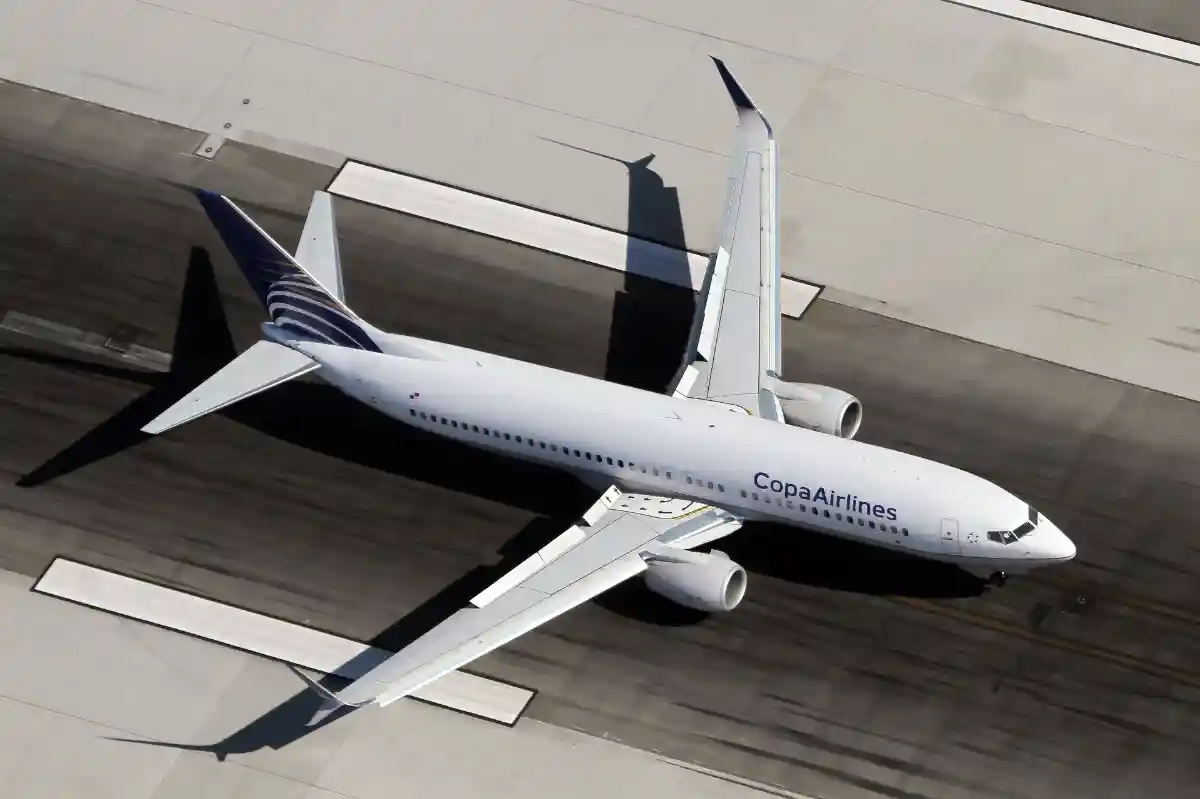
This structure is particularly useful for thinner routes. A city might not generate enough local Panama traffic to fill a large aircraft, but passengers from that city can still contribute to the profitability of a flight because they connect onward to multiple destinations.
The same principle works in reverse. Copa can collect passengers from several markets and distribute them across its network, allowing relatively modest city-pair demand to become part of a much larger traffic system.
Star Alliance membership adds another layer to this strategy. Through alliance relationships and codeshares, Copa can extend its effective network beyond the destinations it operates itself. The airline can carry passengers into its Panama hub before they continue onto partner services, while partner airlines can similarly provide Copa with additional traffic.
The result is a business model in which the value of an aircraft is closely tied to how many connections it can support rather than simply how many passengers it can carry on one route.
Why Bigger Aircraft Could Work Against Copa
A widebody aircraft would undoubtedly give Copa capabilities that its 737 fleet does not have. It could fly farther, carry more passengers, and potentially offer greater cargo capacity. But those benefits would need to outweigh the costs created by operating the aircraft.
One of the biggest challenges would be capacity concentration. A 787 or A330 carries substantially more passengers than a typical Copa narrowbody. That can be beneficial when demand is consistently strong, but it can become a disadvantage when demand varies across different departure times or seasons.
Copa’s current strategy allows it to offer relatively frequent flights with aircraft that are appropriately sized for many markets. If a widebody replaced several narrowbody frequencies, passengers could gain a larger aircraft but lose some schedule flexibility.
That trade-off matters enormously to connecting passengers. A traveler may care less about whether the aircraft is physically larger than whether there are multiple convenient departure times available.
A widebody fleet could also reduce Copa’s ability to shift capacity quickly. With a largely common 737 fleet, the airline can adjust its aircraft deployment across many routes without introducing a completely different operational category.
Introducing widebodies would therefore create a fundamental question: Would the additional range and capacity generate enough new revenue to compensate for the loss of simplicity?
At present, Copa’s strategy suggests that the answer is not obvious.
Copa Avoided the Financial Reset That Hit Other Latin American Airlines
The airline’s decision becomes even more interesting when viewed against the broader Latin American aviation market. Several major competitors experienced severe financial restructuring after 2020. LATAM Airlines, Avianca, and Aeromexico all entered Chapter 11 bankruptcy protection during the pandemic period.
Those restructurings allowed airlines to renegotiate aircraft leases, reduce debt, return unwanted aircraft, and reconsider their business models. Some emerged with lower costs and more efficient fleets than before.
Copa did not require the same kind of financial reset. Its relatively simple 737 operation and disciplined approach to capacity were already embedded in the business.
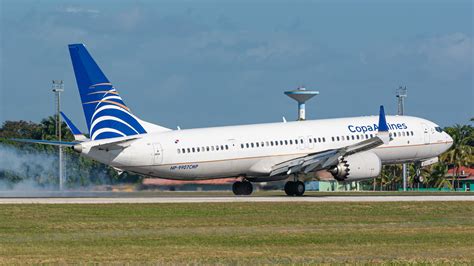
This does not mean Copa operates in an environment without challenges. Latin American aviation remains exposed to currency movements, economic cycles, fuel prices, regulatory changes, and fluctuations in international demand. The distinction is that Copa entered those challenges with an operating structure that had already emphasized efficiency.
Its narrowbody strategy therefore represents more than a fleet preference. It is part of the airline’s broader financial architecture.
Panama’s Dollarized Economy Adds Another Advantage
Copa also benefits from operating in Panama, where the dollarized economy reduces some of the currency mismatches that can affect airlines elsewhere in Latin America.
Airline expenses are heavily exposed to the US dollar. Fuel, aircraft leases, spare parts, maintenance, and many other aviation-related costs are priced directly or indirectly in dollars. An airline earning substantial revenue in a weakening local currency can face a difficult combination of rising dollar-denominated costs and declining purchasing power among passengers.
Copa has less exposure to that particular problem.
Panama also has a long-standing interest in maintaining its position as a regional transportation hub. Aviation connectivity plays an important role in the country’s broader economic model, while investment in infrastructure and international air service relationships supports Tocumen’s role as a connecting point.
Copa has also highlighted Panama’s tax structure as favorable to its international network. According to the airline, foreign-operation revenues are not taxed in the same manner as traffic with an origin or final destination in Panama. This is relevant to a carrier whose business involves moving passengers between foreign markets through Panama City.
The combination of dollarized economics, hub geography, aviation infrastructure, and a common Boeing fleet creates an unusually supportive environment for Copa’s strategy.
What Would Have to Change Before Copa Adds Widebodies?
Copa could eventually reach a point where widebody aircraft become economically attractive. The key would not simply be discovering destinations beyond the 737 MAX’s range. There would need to be enough sustained demand and revenue potential to justify the additional complexity.
A long-haul route could potentially require a widebody if demand consistently exceeded the practical capacity of Copa’s narrowbody fleet. Strong premium demand or substantial cargo opportunities could also change the calculation.
Even then, Copa would need to consider how such aircraft fit into its hub structure. A widebody would need to generate enough traffic without undermining the frequency and connectivity that make the existing network valuable.
The airline would also need to establish an entirely new operational ecosystem around the aircraft. Pilot training, maintenance, spare parts, crew scheduling, airport handling, and fleet planning would all become more complicated.
That is why the question is not really whether Copa can operate a 787 or A330. Of course it can. The question is whether operating one would improve the economics of the entire airline.
Its current fleet plans provide an important clue. With up to 60 additional 737 MAX aircraft on order, Copa appears to have identified substantial growth opportunities that can still be served by its existing narrowbody strategy.
Copa’s Real Advantage Is Not Flying Bigger—It Is Flying Smarter
The absence of widebodies from Copa Airlines is therefore less about a lack of ambition than about fleet discipline. The airline has built its network around a geographic position that allows narrowbody aircraft to cover much of the Americas, while the Boeing 737 MAX has expanded the range and efficiency of that strategy.
More importantly, Copa has created a hub model in which frequency, connectivity, and aircraft commonality reinforce one another. Its low ex-fuel unit costs give it room to remain competitive, while strong revenue generation through the Tocumen hub allows it to operate more like a traditional network carrier without accepting the same cost structure.
A widebody fleet would open new possibilities, but it would also introduce a level of complexity that Copa has spent years avoiding. Unless a new group of long-haul markets produces enough sustained demand and revenue to compensate for those costs, the economics favor continuing with the aircraft family that already fits the network.
For Copa, the absence of widebodies is therefore not a missing piece of its fleet. It is one of the reasons the fleet works so well in the first place.