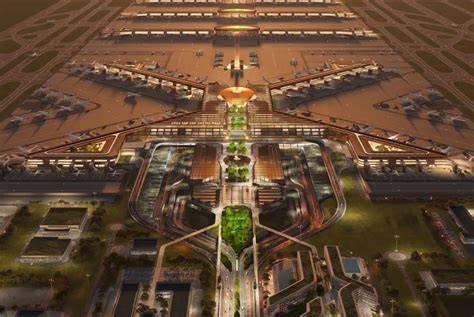
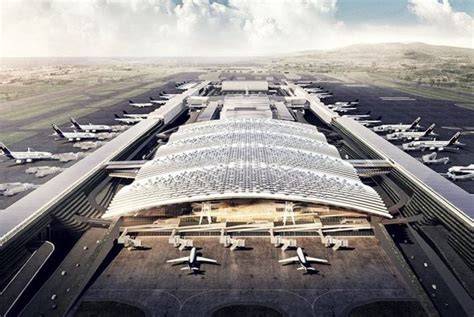
Ethiopia is preparing to build an airport on a scale rarely seen in Africa. Bishoftu International Airport, planned southeast of Addis Ababa, is designed to become the future home of Ethiopian Airlines and one of the world’s largest aviation hubs. With an initial capacity of 60 million passengers a year, two runways, and a long-term expansion plan reaching 110 million passengers, the project is being built for a future that does not yet exist.
Construction began in January 2026, with an expected opening in 2030. The numbers alone make Bishoftu remarkable. Its initial capacity would be several times larger than the traffic currently handled by Addis Ababa Bole International Airport, while the ultimate design could put the Ethiopian hub in the same broad capacity class as the world’s busiest airports. This is not simply a replacement terminal. It is an attempt to create an entirely new aviation platform for a continent where efficient long-distance connectivity remains uneven.
The project also reflects the extraordinary expansion of Ethiopian Airlines. Following the collapse of South African Airways as a major continental force, Ethiopian has become the dominant connecting carrier across much of Sub-Saharan Africa. Its Addis Ababa hub links cities that often have surprisingly limited direct connections, while its international network reaches Europe, the Middle East, Asia, and the Americas. Bishoftu is therefore being designed around the airline’s ambitions rather than merely around the current size of Ethiopia’s air-travel market.
Why Addis Ababa Needs a New Mega Airport
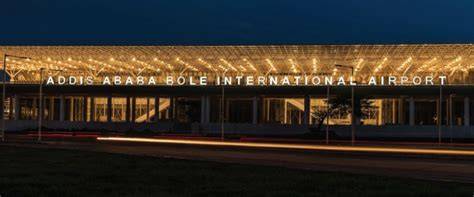
Addis Ababa Bole International Airport has already been expanded repeatedly, but its existing facilities increasingly constrain further growth. The airport is relatively close to the Ethiopian capital and provides an important gateway into the country, yet its domestic operation can feel cramped as passenger volumes rise. In 2024, Bole handled roughly 12 million passengers, a figure that looks surprisingly small beside Bishoftu’s planned capacity.
The contrast becomes even more striking when Bole is compared with Johannesburg’s O. R. Tambo International Airport, which handled around 20 million passengers in 2024. Bishoftu’s first phase is intended to accommodate three times the traffic of Bole’s recent level. Its ultimate 110-million-passenger capacity would be more than nine times Bole’s 2024 throughput.
That reserve is deliberate. Ethiopian Airlines does not want to build an airport that reaches saturation soon after opening. The carrier is expanding its fleet, adding destinations, and increasing its role as a transfer point between African cities and the rest of the world. The airport therefore has to anticipate traffic growth through the 2030s rather than simply reproduce today’s network.
At an elevation of approximately 6,227 feet (1,898 meters), Bishoftu will also rank among the highest major international hubs in the world. High-altitude operations can influence aircraft performance, particularly during hot conditions, making airport design and fleet planning important. Ethiopian Airlines already operates extensively from high-altitude Addis Ababa, giving it experience with the environment.
Ethiopian Airlines Has Built Africa’s Great Connecting Network
The airport project makes more sense when viewed through the structure of Ethiopian Airlines’ network. Addis Ababa is not merely a destination for travelers visiting Ethiopia. It is a transfer point connecting markets that frequently lack practical nonstop service.
Ethiopian serves a large number of African destinations, including routes where the airline or affiliated carriers can provide connections that would otherwise require complicated journeys through distant hubs. In some markets, the unusual economics of African aviation mean that a passenger can find it cheaper or more convenient to connect through Addis Ababa than to travel directly between two nearby cities.
One striking example involves Brazzaville and Kinshasa, the capitals of the Republic of the Congo and the Democratic Republic of the Congo. The two cities sit on opposite sides of the Congo River, with their airports only about 16 miles (26 kilometers) apart. Yet when a direct flight is unavailable, passengers can face a journey of more than ten hours through Addis Ababa. The distance is tiny; the aviation network between them can be anything but.
This illustrates the structural problem Ethiopian Airlines has exploited successfully. Africa contains enormous distances, fragmented markets, limited infrastructure, and many city pairs that do not generate enough demand for frequent nonstop service. A powerful hub can combine passengers from multiple origins, making routes viable while giving travelers access to destinations far beyond their home airports.
Bishoftu would give that model dramatically more room to grow. Instead of asking how many passengers Addis Ababa can squeeze through existing facilities, Ethiopian Airlines will be able to plan a hub around a much larger long-term transfer operation.
A 60 Million Passenger Airport With Room for 110 Million
The scale of Bishoftu is easiest to understand through its planned capacity. The first stage is expected to handle 60 million passengers annually, supported by two runways. Future development could increase capacity to approximately 110 million passengers.
The airport’s design represents a bet on long-term aviation growth. Ethiopian Airlines is already among the continent’s largest carriers, and its fleet expansion provides the aircraft needed to fill additional capacity. The airline currently operates roughly 168 aircraft when cargo aircraft are included, with a substantial widebody fleet and significant orders still outstanding.
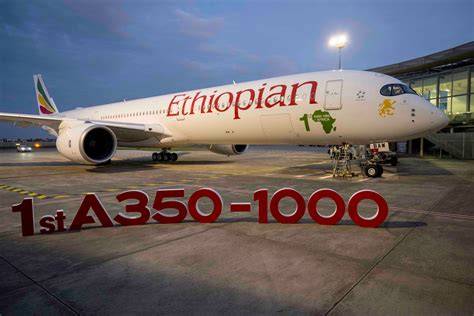
Its fleet includes Airbus A350s, Boeing 777s, and Boeing 787 Dreamliners, alongside Boeing 737s and regional aircraft. Orders include additional A350s, 777s, and 787s. If planned fleet growth continues, Ethiopian could operate around 270 to more than 300 aircraft by the mid-2030s, potentially reaching approximately 350 by 2040.
That aircraft expansion is crucial. A giant airport does not create demand by itself. It needs an airline network capable of feeding terminals, runways, gates, lounges, cargo facilities, and connecting banks throughout the day. In Bishoftu, airport development and fleet expansion are being planned as parts of the same long-term strategy.
Why Bishoftu Could Change African Travel
If Bishoftu reaches its intended scale, its influence could extend well beyond Ethiopia. A larger Ethiopian hub could make more African city pairs economically viable by consolidating passengers through a central transfer point. It could also support more long-haul connections between Africa and major markets in Asia, Europe, the Middle East, and the Americas.
That matters because Africa’s aviation geography remains fragmented. Many countries have relatively small domestic markets, while cross-border travel can be expensive and inconvenient. A carrier with a large hub can bridge those gaps by combining traffic from dozens of countries.
The $12.5 Billion Financing Challenge
The most ambitious part of the Bishoftu plan may not be its runways or passenger terminals. It may be financing the $12.5 billion project while Ethiopia faces significant economic and political challenges.
The planned funding structure combines equity and debt. Ethiopian Airlines is expected to contribute roughly 20% to 30% of the equity, while the African Development Bank has been involved in arranging the much larger debt package. The scale of the financing demonstrates the enormous capital requirement of building a new mega hub.
Ethiopia’s sovereign credit standing remains deep in speculative territory, which can make large infrastructure financing more complicated and expensive. The project therefore depends heavily on the financial credibility of Ethiopian Airlines, institutional backing, and the ability to secure the required debt and equity over time.
Political Risks Could Affect the 2030 Opening
Bishoftu is being constructed in a country where infrastructure ambitions exist alongside serious political and security challenges. Ethiopia has experienced major internal conflicts, including the Tigray war, while instability and insurgencies have also affected other regions.
Tensions involving Eritrea, disputes concerning Red Sea access, instability in neighboring Sudan, and disagreements surrounding Ethiopia’s Nile River dam projects add uncertainty to the broader regional environment. These issues do not automatically mean the airport will be delayed, but they create risks for government finances, construction logistics, investor confidence, and long-term planning.
Ethiopia has nevertheless demonstrated an ability to complete enormous infrastructure projects under difficult circumstances. The Grand Ethiopian Renaissance Dam is the clearest example. Its construction involved major financial, political, and diplomatic challenges, yet the project progressed over many years.
Bishoftu therefore enters a familiar Ethiopian pattern: extremely ambitious infrastructure being pursued while the surrounding environment remains unpredictable. The critical question is whether financing, construction, and political conditions remain stable enough to keep the airport moving toward its 2030 target.
Ethiopian Airlines Is Building Around the Airport
The strongest case for Bishoftu is that Ethiopian Airlines is not waiting for demand to appear before expanding. It is building the aircraft fleet, routes, and connecting network needed to generate future demand.
The airline has continued to add routes while expanding its long-haul capabilities. Its widebody fleet can connect Addis Ababa with distant markets, while narrowbody aircraft distribute passengers throughout Africa and surrounding regions. That combination is essential for a hub whose success depends on both local traffic and international transfers.
The airport’s planned capacity also gives Ethiopian room to increase flight frequency rather than simply adding destinations. More frequencies can make connections more convenient, reduce waiting times, and create larger banks of arriving and departing flights. For passengers, that can turn Addis Ababa into a more useful and flexible global gateway.
A New Aviation Center for the 2030s
Bishoftu International Airport is ultimately a wager on what African aviation could become. Its 60-million-passenger opening capacity, potential 110-million-passenger expansion, two runways, high-altitude location, and connection to Ethiopian Airlines’ growing fleet make it one of the most consequential airport projects on the continent.
The project is unusually ambitious because it is being built ahead of current traffic. That creates risk, but it provides something Bole increasingly lacks: room. Instead of repeatedly expanding an existing airport until terminals, gates, runway slots, and passenger-processing areas become constrained, Ethiopia is attempting to create an entirely new aviation ecosystem.
If construction and financing remain on schedule, 2030 could mark a major turning point for African air travel. Bishoftu would give Ethiopian Airlines the infrastructure to pursue its goal of becoming an even larger global connecting carrier, while giving millions of passengers new possibilities for traveling between African cities and the wider world.
The airport will not solve every weakness in Africa’s aviation system. Roads, regional connectivity, airline competition, economic conditions, and political stability will continue to shape how people travel. But by giving one of Africa’s largest airlines a hub designed for tens of millions more passengers, Bishoftu could fundamentally expand the role that Addis Ababa plays in global aviation.
The ambition is enormous: an airport capable of eventually handling 110 million passengers a year in a country whose existing main hub handled only about 12 million in 2024. Whether Bishoftu reaches that ultimate scale will depend on years of construction, investment, fleet growth, and regional stability. Yet even its first phase would represent a profound change. Africa is preparing for a new mega hub, and Ethiopian Airlines intends to make it the center of its next chapter.