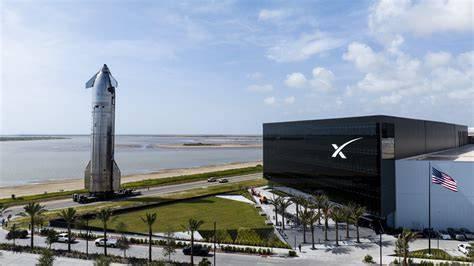
SpaceX is preparing for what could become one of the most ambitious expansions in the company’s history: a massive new spaceport in Louisiana’s coastal marshland. Dubbed Starbase, Louisiana, the proposed facility in Vermilion Parish is designed to dramatically increase launch capacity as SpaceX faces growing demand for orbital missions and Starlink deployments.
The scale of the proposal reflects how quickly SpaceX’s launch business has expanded. In 2025, the company reportedly completed 170 launches, accounting for more than half of global orbital launches while deploying over 3,000 satellites. That extraordinary pace has created a new problem for SpaceX: even with its existing launch infrastructure, there may simply not be enough capacity to meet future demand.
The Louisiana project is therefore more than another launch site. SpaceX envisions a sprawling aerospace complex capable of supporting thousands of launches annually, potentially making it one of the largest and most capable spaceports ever constructed. Construction could begin as early as 2027, with the first launches potentially taking place in 2029.
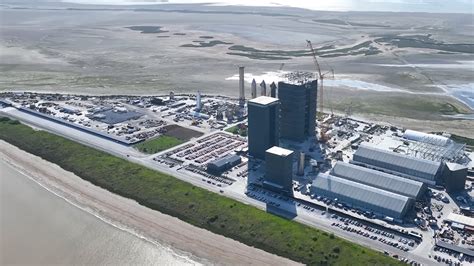
A Ten-Pad Spaceport Built for Massive Launch Demand
The proposed Louisiana Starbase would feature five separate launch complexes, with two launch pads at each complex for a total of 10 pads. This arrangement could allow SpaceX to process multiple vehicles simultaneously rather than relying on a smaller number of heavily utilized launch facilities.
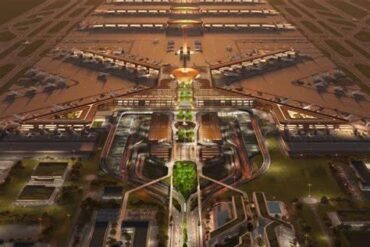
The infrastructure would extend far beyond concrete launch pads. Plans call for propellant farms, propellant production facilities, vehicle processing areas, dedicated power generation, and a deepwater port. An airport is also envisioned, giving the site an unusually broad transportation network for moving personnel, equipment and aerospace hardware.
That combination could fundamentally change SpaceX’s launch workflow. Instead of treating launch operations as a sequence constrained by a limited number of facilities, the company could process vehicles across multiple complexes at the same time. For a company increasingly focused on rapid launch cadence and reusable rockets, that flexibility could be just as important as the number of launch pads themselves.
Why SpaceX Needs Another Major Launch Site
SpaceX’s need for additional infrastructure is closely tied to its transition from Falcon 9 operations toward Starship. At the same time, demand for Starlink launches continues to put pressure on the company’s existing launch network.
Reusable rockets have changed the economics of spaceflight, but reusability does not eliminate infrastructure bottlenecks. Rockets still require inspection, processing, propellant, transportation, range coordination and launch facilities. As flight frequency rises, those supporting systems can become the limiting factor.
Louisiana could provide SpaceX with the physical room required for another major expansion. If the proposed complex eventually reaches its intended scale, it could give the company an enormous additional pool of launch capacity while complementing its facilities elsewhere.
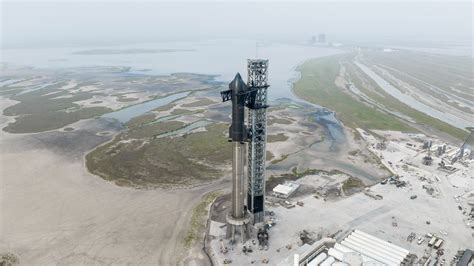
Thousands of Jobs Could Follow the Spaceport
The project could also have a substantial economic impact on Vermilion Parish and the wider Louisiana economy. State projections indicate that the facility could create approximately 3,000 direct SpaceX jobs over the next decade, alongside about 8,100 indirect jobs involving contractors, suppliers and local service businesses.
The projected average annual salary for direct employees is around $92,600, substantially above Louisiana’s cited statewide average of $55,130. SpaceX would also reportedly develop employee housing as part of the broader complex, reinforcing the idea that this would function as an aerospace community rather than simply a collection of launch pads.
Environmental Challenges in Louisiana’s Marshland
The project’s enormous footprint also creates serious environmental questions. Building major aerospace infrastructure in an ecologically sensitive coastal environment would require careful consideration of wetlands, wildlife habitat and surrounding communities.
SpaceX has indicated that it intends to work with state and federal agencies, landowners and conservation organizations to reduce potential ecological damage. That cooperation will be particularly important because the project’s success will depend not only on engineering but also on navigating the environmental and regulatory challenges associated with Louisiana’s marshland.
If SpaceX can overcome those hurdles, Starbase, Louisiana could become a defining piece of the company’s next generation of launch infrastructure. A $100 billion spaceport with 10 launch pads, its own power, port, airport and processing facilities would represent a remarkable escalation in the scale of commercial spaceflight—and potentially bring the concept of the spaceport of the future much closer to reality.