SpaceX is quietly laying the foundation for a completely new category of space transportation, one that extends far beyond launching satellites or ferrying astronauts into orbit. The company’s newly revealed Starfall spacecraft signals an ambitious vision where valuable cargo can remain in orbit, waiting for the exact moment it is needed before returning to Earth with remarkable speed. While the June 23, 2026 demonstration flight revealed only limited details, the available information paints the picture of a spacecraft designed to revolutionize everything from emergency disaster response to military logistics and advanced scientific manufacturing.
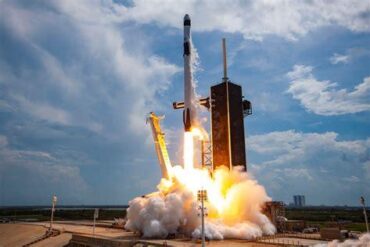
Unlike many high-profile SpaceX launches that showcase every stage of a mission, the Starfall demonstration remained unusually secretive. The company’s livestream ended shortly after Falcon 9’s first-stage booster successfully separated and landed, a departure from its typical broadcasts. Such limited public coverage immediately fueled speculation that Starfall represented something strategically significant. SpaceX only described it as a vehicle intended to provide affordable, routine access to microgravity for scientific research and orbital manufacturing before safely returning to Earth through a controlled splashdown in the Pacific Ocean.
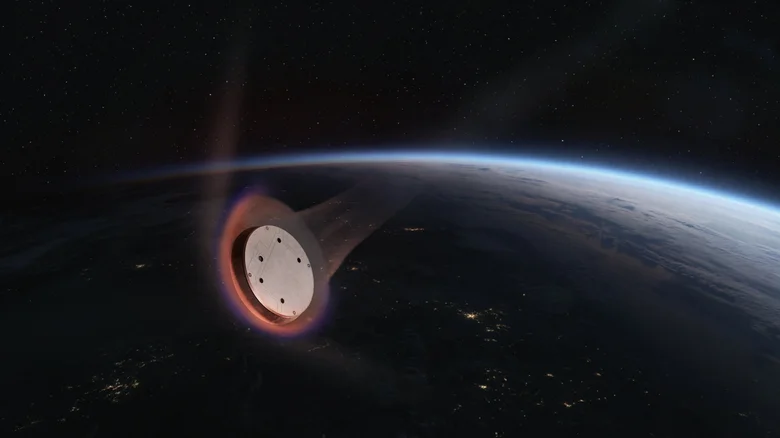
Although the official announcement remained brief, documentation submitted during the Federal Aviation Administration’s environmental review offered valuable insights into the spacecraft’s true capabilities. According to those filings, Starfall is a compact, puck-shaped capsule standing approximately 2.4 feet tall with a diameter of 10.1 feet. Despite its modest dimensions, the spacecraft weighs roughly 4,600 pounds and can transport around 2,200 pounds of cargo, making it surprisingly capable for its size.
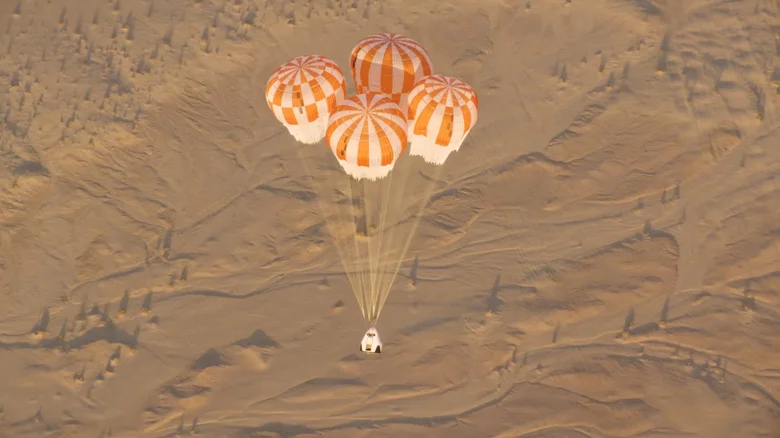
Starfall Is Designed To Keep Critical Supplies Waiting In Orbit
The most fascinating aspect of Starfall is not simply its ability to launch cargo into space—it is its potential to leave supplies floating in low-Earth orbit until they are required. Instead of sending emergency cargo only after a crisis begins, organizations could deploy Starfall capsules in advance, allowing them to remain on standby above the planet before receiving commands to return precisely when needed.
This orbital storage model fundamentally changes the concept of rapid logistics. Rather than relying on aircraft that require airports, cargo ships that travel for weeks, or military transport fleets that may face diplomatic or geographical obstacles, Starfall could theoretically deliver mission-critical equipment to almost any accessible location on Earth in less than an hour after receiving its return command. Such responsiveness represents a dramatic leap forward in global supply chain flexibility.
Because Falcon 9 has already demonstrated rapid turnaround capabilities through its reusable first-stage boosters, launching Starfall capsules into orbit could eventually become a relatively routine operation. Maintaining multiple capsules in orbit simultaneously would allow operators to strategically position valuable cargo across different orbital paths, dramatically reducing delivery times to virtually any continent.
Military Logistics Could Enter An Entirely New Era
Perhaps the most strategically significant application involves military logistics. Modern military operations often depend on delivering specialized equipment at exactly the right place and time. Traditional supply chains remain vulnerable to weather, contested airspace, damaged infrastructure, or hostile interception.
Starfall introduces the possibility of pre-positioning supplies in space before a mission even begins. Rather than transporting equipment after receiving deployment orders, commanders could maintain orbital inventory awaiting activation. Once required, a capsule could begin reentry, descend vertically, and deliver its payload with minimal warning.
This capability could support humanitarian evacuation missions, special operations, remote surveillance installations, communications equipment deployment, or medical supply deliveries without relying on nearby military bases. While many operational details remain undisclosed, the unusually limited public discussion surrounding Starfall suggests that national security considerations likely influenced its development.
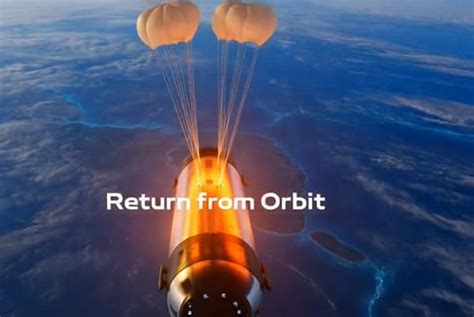
Humanitarian Relief Could Become Faster Than Ever Before
While military applications naturally attract attention, Starfall may ultimately prove even more valuable during humanitarian emergencies. Natural disasters frequently destroy airports, roads, ports, and communication infrastructure, delaying relief efforts when every minute matters.
An orbital delivery system capable of transporting food, clean water, emergency medical supplies, portable communications equipment, rescue tools, or temporary shelters could dramatically improve disaster response. Instead of waiting days for international logistics networks to mobilize, emergency organizations could request supplies already positioned in orbit.
Earthquakes, hurricanes, tsunamis, volcanic eruptions, and severe flooding often isolate entire communities within hours. Starfall offers the possibility of bypassing damaged infrastructure altogether, delivering essential cargo directly where rescuers need it most. For humanitarian agencies, reducing delivery times from days to less than an hour could save countless lives.
Expanding Access To Microgravity Research
Starfall’s mission extends beyond transportation. SpaceX specifically emphasized creating a platform that enables routine scientific research in microgravity, potentially making orbital experimentation significantly more affordable than relying exclusively on the International Space Station.
Microgravity offers researchers conditions impossible to reproduce consistently on Earth. Without gravity-driven convection, buoyancy, or sedimentation, scientists can observe physical processes with extraordinary precision. Universities, research laboratories, biotechnology companies, and private organizations could gain much broader access to these conditions through autonomous Starfall missions.
Numerous scientific disciplines stand to benefit. Researchers studying fuel combustion can observe flame behavior without gravitational distortion. Materials scientists can investigate crystal formation under ideal conditions, while physicists continue exploring complex particle interactions that remain difficult to examine within Earth’s gravitational environment. Even investigations involving dark matter detection technologies have benefited from experiments performed in orbit.
Manufacturing High-Value Products In Orbit
One of the fastest-growing commercial sectors in space focuses on manufacturing products that perform better when produced in microgravity. Starfall could dramatically expand this emerging industry by providing affordable transportation for both raw materials and finished products.
Pharmaceutical manufacturing has already demonstrated substantial promise. In microgravity, protein crystals often develop with significantly greater uniformity than on Earth, improving researchers’ ability to design highly effective medicines. Better crystal structures can contribute to improved intravenous drug formulations and more efficient therapeutic development.
Optical fiber manufacturing represents another exciting opportunity. ZBLAN optical fiber, composed of Zirconium, Barium, Lanthanum, Aluminum, and Sodium fluorides, exhibits exceptionally low signal loss when manufactured under microgravity conditions. These fibers possess the potential to transmit dramatically more data than conventional silica-based optical fibers, making them attractive for future telecommunications networks, medical imaging systems, defense technologies, and high-speed computing infrastructure.
As launch costs continue falling, orbital manufacturing may become economically competitive for an increasing number of specialized products. Starfall provides exactly the type of reusable transportation system needed to support this expanding industrial ecosystem.
A New Business Model For Commercial Space Operations
Starfall also represents an important evolution in SpaceX’s commercial strategy. Rather than focusing solely on launch services, the company is moving toward becoming a full-service orbital logistics provider. Customers may eventually purchase complete mission packages that include launch, autonomous orbital operations, manufacturing time, scientific experimentation, secure storage, and rapid cargo return.
Such a business model would lower barriers for organizations that currently cannot justify purchasing expensive access to the International Space Station. Universities conducting limited experiments, biotechnology startups developing pharmaceuticals, advanced materials companies, and government research agencies could all benefit from shorter, lower-cost orbital missions tailored to their specific objectives.
If Starfall proves reliable through repeated operational flights, it could establish an entirely new commercial marketplace centered around orbital warehousing, autonomous manufacturing, and rapid Earth delivery.
Why Starfall May Redefine The Future Of Space Logistics
SpaceX’s Starfall program represents far more than another experimental spacecraft. It introduces a compelling vision in which orbit becomes an extension of Earth’s supply chain rather than simply a destination for satellites. By allowing valuable cargo to remain suspended above the planet until needed, Starfall combines rapid logistics, scientific research, advanced manufacturing, and emergency response into a single reusable platform.
Whether delivering humanitarian supplies to disaster zones, supporting time-sensitive military operations, enabling groundbreaking pharmaceutical research, or transporting next-generation optical fibers manufactured in microgravity, Starfall demonstrates how space itself can become an active part of everyday global infrastructure. If the concept matures into regular operations, keeping important supplies floating in orbit may soon become one of the most practical innovations of the modern space age.