Redefining Industry in Orbit: What Is Space Manufacturing?
Space manufacturing, also known as in-space manufacturing (ISM), marks a revolutionary shift in how and where we build physical goods. It refers to the fabrication, assembly, or integration of tangible products outside Earth’s atmosphere. Utilizing either human-operated or autonomous systems, ISM taps into the extraordinary conditions of space — such as microgravity, ultra-high vacuum, and extreme thermal environments — to produce materials and structures that are either impractical or impossible to manufacture on Earth.
This evolving domain is a subfield of ISAM (In-Space Servicing, Assembly, and Manufacturing) and closely linked with ISRU (In-Situ Resource Utilization). Together, they aim to create a self-sustaining space economy, whether for supporting human exploration, developing extraterrestrial infrastructure, or enhancing Earth-based applications.
From Orbit to Earth: The Strategic Domains of ISM
ISM activities can be classified into three major operational domains:
- Space-for-Space: Creating components such as satellite parts, repair modules, or space habitats in orbit, for use in space-based infrastructure.
- Space-for-Earth: Leveraging microgravity to develop advanced materials—like protein crystals or semiconductor wafers—for terrestrial industries.
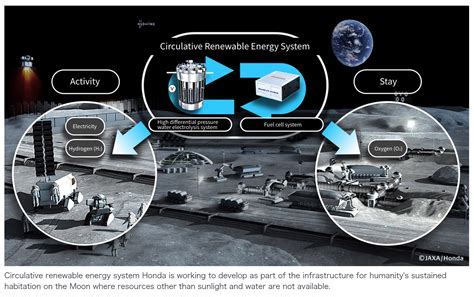
- Space-for-Surface: Manufacturing conducted on planetary bodies such as the Moon, Mars, or asteroids, to support long-term exploration or colonization.
Each domain opens up new economic models and logistical pathways, removing the launch mass bottleneck and enabling a decentralized system of supply and production.
Harnessing the Environment: Why Space Is Ideal for Manufacturing
Manufacturing in space takes full advantage of natural conditions that cannot be replicated on Earth:
- Microgravity minimizes convection and sedimentation, facilitating diffusion-based mixing and allowing for the growth of large, defect-free crystals.
- The vacuum of space offers a clean, contamination-free environment ideal for thin-film fabrication, vapor deposition, and atomic-level purity.
- Thermal extremes enable the creation of materials that require high heat differentials, essential for forming exotic alloys or composites.
- Surface tension in microgravity can shape perfect spheres, beneficial in optical and materials science.
These physical properties fundamentally redefine material science, pushing the boundaries of what’s possible in structural integrity, efficiency, and precision.
The Evolution of ISM: A Timeline of Technological Breakthroughs
The concept of in-space manufacturing has been explored for over half a century:
- 1969 – The Soviet Soyuz 6 mission demonstrated welding in space using the Vulkan device.
- 1973 – NASA’s Skylab included a materials science facility with an electric furnace and crystal growth module.
- 1983–1998 – Over 26 Space Shuttle missions via Spacelab focused on microgravity materials research.
- 1994 & 1995 – The Wake Shield Facility created ultrathin semiconductor films in low Earth orbit.
- 2005 – The Foton-M2 mission examined molten metal dynamics and crystal behavior in microgravity.
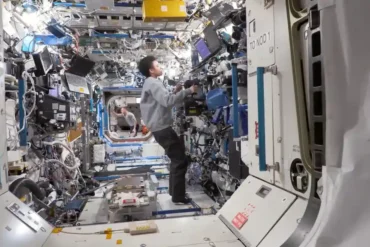
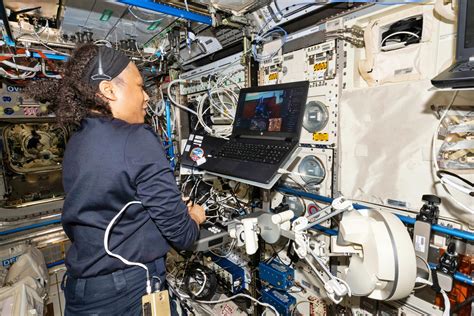
- 2014–2018 – NASA and private firm Made In Space Inc. conducted successful 3D printing experiments aboard the ISS, marking the transition from concept to operational capability.
Modern Methods: Advanced Manufacturing Processes in Orbit
Today’s in-space manufacturing ecosystem incorporates a suite of advanced production techniques:
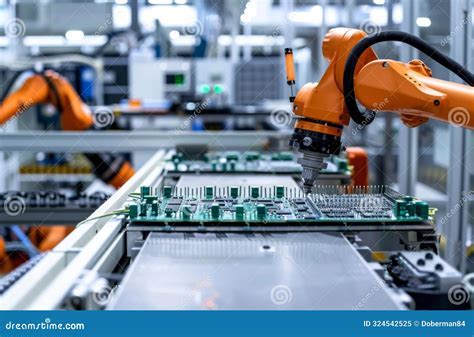
- Additive Manufacturing (3D Printing): Builds objects layer by layer, ideal for custom parts and repairs.
- Subtractive Manufacturing: Uses cutting and machining to refine raw material.
- Hybrid Manufacturing: Integrates both additive and subtractive methods for complex builds.
- Welding and Thermal Processing: Utilizes electron beams and solar thermal energy for bonding and reshaping materials.
NASA’s Additive Manufacturing Facility and the Refabricator—capable of both recycling and printing—are paving the way for closed-loop production systems.
Sourcing from Space: In-Situ Resource Utilization (ISRU)
To reduce dependence on Earth-launched materials, ISM employs ISRU techniques for extracting resources directly from celestial bodies:
- Asteroids offer rich deposits of iron, nickel, platinum-group metals, and water ice.
- Lunar regolith can be processed for oxygen extraction (up to 20%) and metallic elements.
- Extraction technologies include solar thermal heating, electrolysis, chemical reduction, and magnetic separation.
Transportation is enabled by solar sails, ion propulsion, or mass drivers, with capture systems like the mass catcher being theorized for orbital resource aggregation.
Product Horizons: What Can Be Made in Space?
The spectrum of viable space-manufactured products is steadily expanding:
- Protein crystals (canavalin, lysozyme) for pharmaceutical research.
- Semiconductor wafers with fewer defects and higher efficiency.
- Encapsulated medicines for slow, targeted release.
- Advanced ceramics and metals for use in space-based systems.
- Structural components like tanks, radiators, mirrors, and shielding blocks.
- Solar panels and antennas for spacecraft.
- On-demand tools and spare parts via in-orbit printing.
- Food and consumables, including printed meals under NASA’s Advanced Food Technology program.
Long-term, this could scale to gigaprojects like space elevators, orbital solar farms, or rotating space habitats.
Automation and Robotics: The Future of Remote Production
Due to the hostile and remote nature of the environment, automation is essential. ISM relies heavily on:
- Fully autonomous robotics that can manage tasks without human intervention.
- Telerobotics for remote operation, especially when precision and adaptability are required.
- Machine learning algorithms to optimize manufacturing processes in real-time.
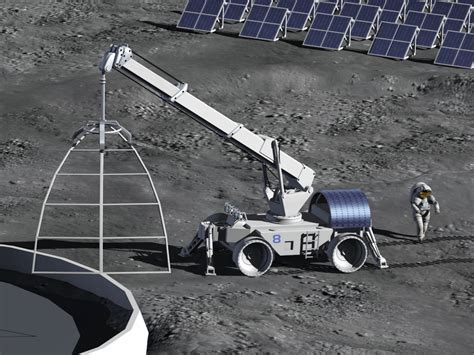
These robotic systems are crucial for extraterrestrial construction on surfaces like the Moon or Mars, enabling outposts and infrastructure with minimal human presence.
Barriers to Entry: Challenges Facing ISM
Despite the remarkable promise, ISM is constrained by several substantial challenges:
- High launch costs to get raw materials and manufacturing equipment into orbit.
- Energy-intensive processes, especially when refining metals or synthesizing chemicals.
- Transport complexity, where delivery and retrieval systems must navigate low-delta-v corridors.
- Economic viability, heavily influenced by decreasing the cost-per-kilogram to orbit.
- Regulatory and legal frameworks, which remain largely untested in space manufacturing governance.
Nonetheless, as launch prices decline and materials science advances, these obstacles are expected to diminish over time.
Toward an Interplanetary Economy: Why ISM Matters Now
We are entering a pivotal moment in industrial history. Just as the first factories defined the modern economy, space manufacturing is set to define the post-Earth economy. Its implications stretch far beyond aerospace:
- Geopolitical advantage through technological supremacy in orbit.
- Human survival, by enabling permanent settlements on Moon, Mars, or beyond.
- Economic expansion beyond Earth’s finite resources.
- Innovation acceleration through space-specific product development.
ISM is more than science fiction — it is the next frontier of economic evolution, one that will shift how we build, live, and thrive both in orbit and on Earth.
Conclusion: Earth’s Factory is Moving to Space
As access to space becomes more routine, the economic and technological rationale for off-world manufacturing grows ever stronger. We must now prepare for a future in which orbiting factories, lunar refineries, and asteroidal mines are not the exceptions — they are the new norm. This is not a far-off vision, but an industrial transformation already underway. The age of space manufacturing has begun.