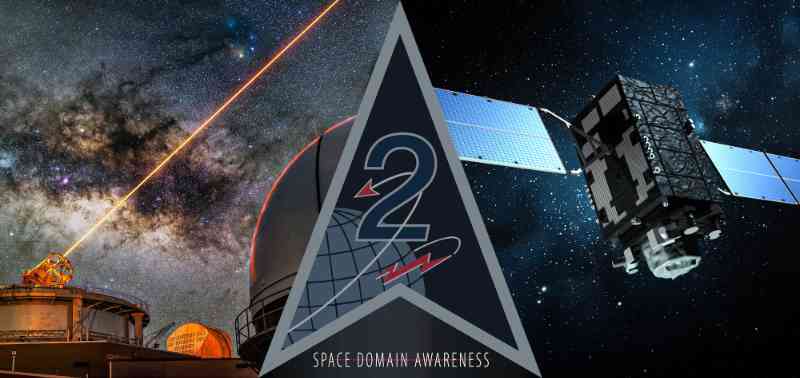
The United States Space Force has taken a monumental leap forward with the operational deployment of the Advanced Tracking and Launch Analysis System (ATLAS) — a state-of-the-art software solution developed by L3Harris Technologies. With the successful completion of rigorous testing at Vandenberg Space Force Base, ATLAS now serves as the cornerstone for space domain awareness (SDA), replacing the aging Space Defense Operations Center (SPADOC) system.
This marks a transformative shift in how the United States surveils and commands its presence in outer space, aligning with the broader strategic objective of ensuring superiority and responsiveness in a rapidly evolving orbital landscape.
The End of an Era: Retiring SPADOC
For decades, SPADOC served as the backbone of U.S. space command infrastructure. However, as threats in low Earth orbit and beyond have grown more complex, the antiquated system fell short in meeting the demands of real-time data processing and proactive threat response. ATLAS, built with modern AI-driven analytics, scalable architecture, and intelligence-grade interoperability, is not merely a replacement—it is a reimagining of how space operations should function in the 21st century.
Where SPADOC was reactive and compartmentalized, ATLAS is predictive and integrated. Its adoption signifies the Space Force’s commitment to maintain strategic agility in an era where space is an active warfighting domain.
Space Domain Awareness Reimagined
At its core, ATLAS is designed to ensure space superiority by offering an unprecedented level of visibility into Earth’s orbital environment. This includes monitoring:
- Adversarial satellite movements
- Rapid launch events
- Orbital debris tracking
- Threat attribution
The ATLAS system integrates bi-directional messaging and real-time communication channels between intelligence, surveillance, reconnaissance (ISR), and operational command units. This architecture ensures that the warfighter receives accurate, timely, and actionable insights about potential risks in space.
Built for the Modern Battlespace
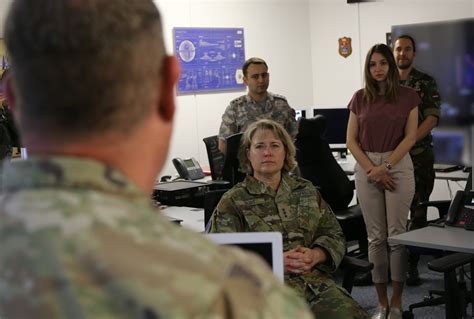
Lt. Col. Amber Johnson described ATLAS as a “revolutionary leap” for national defense. The system’s deployment isn’t just about monitoring satellites; it’s about creating a cohesive, real-time understanding of the entire space battlespace. With increasing satellite launches and a surge in private space ventures, ATLAS fills the critical need for a dynamic, automated, and scalable SDA solution.
The software was funded through a $90 million contract awarded to L3Harris by the U.S. Space Systems Command, a decision that underscores the urgency and importance placed on space domain modernization.
Operational Validation and Testing
ATLAS underwent a comprehensive year-long testing phase under the supervision of Mission Delta 2 at Vandenberg. This rigorous process evaluated its:
- Data ingestion capacity
- Cross-domain message synchronization
- Threat simulation accuracy
- System redundancy under cyber threat conditions
The system passed all critical thresholds and is now fully operational. It supports the processing of vast volumes of orbital telemetry data and enables cross-service coordination for both national defense and allied intelligence agencies.
Strategic Implications: Escalating Space Rivalries
The implementation of ATLAS arrives at a time of rising geopolitical tension in space. The United States is not alone in militarizing orbit. China has already voiced concerns over the U.S.’s intentions, specifically targeting projects like the Orbital Carrier, another Space Force initiative led by Gravitics.
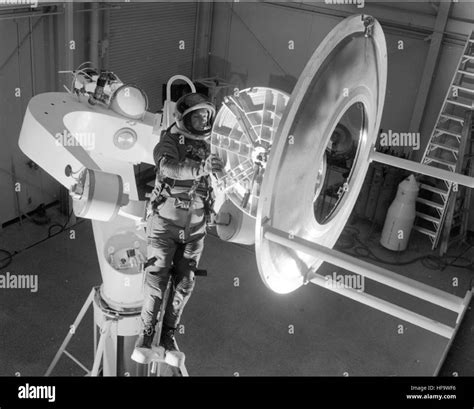
The Orbital Carrier, still in the early phase, is designed to act as a deployment hub for multiple mission-critical spacecraft. It is a response to the need for tactically responsive space operations — the ability to launch, maneuver, and defend assets in orbit with minimal warning.
Such developments have triggered anxieties in global circles. Chinese officials claim these systems threaten the stability of space, while Brig. Gen. Jürgen Schrödl recently asserted that the traditional rule-based order in orbit is “nearly over.”
ATLAS, though a surveillance and command platform, is part of this broader push toward militarized deterrence in space.
Technical Capabilities and Innovations
ATLAS is equipped with a modular AI-driven decision engine that allows it to adaptively refine its threat models based on new data. Among its most groundbreaking features:
- Multi-orbit tracking: From low-Earth orbit (LEO) to geostationary orbit (GEO)
- Threat inference algorithms: Detect satellite rendezvous, unknown launches, or adversarial behaviors
- Secure cross-domain communication framework: Integrates seamlessly with classified and unclassified networks
- User-centric interface: Real-time dashboards for command operators, supporting situational awareness at-a-glance
This next-gen capability ensures that operators can predict, not just react, to sudden changes in orbital patterns—be it a rogue satellite, anti-satellite weapons test, or space weather anomalies.

The Enterprise-Grade Edge
According to the Space Operations Command (SpOC), ATLAS offers “integrated bi-directional messaging that connects SDA, as an enterprise function, across the combined force.” This means it does not operate in isolation. Instead, ATLAS is part of a multi-domain strategy that connects air, land, sea, cyber, and space.
Its integration with other platforms enables commanders to:
- Execute coordinated responses to space threats
- Prioritize satellite tasking based on real-time threat scoring
- Share insights with allied defense networks (e.g., NATO partners)
By centralizing data streams and accelerating decision-making, ATLAS gives the United States a commanding presence in the orbital theater.
The Future of Orbital Defense
ATLAS is not the end, but rather the foundation of a new SDA ecosystem. Its scalable architecture supports the addition of machine learning plugins, allied data feeds, and predictive analytics tools in the future. Moreover, its design anticipates a rising tide of commercial space activity and potential civil-military collaboration.
This future-oriented framework ensures that ATLAS will remain relevant not just for today’s threats, but also for the unpredictable landscape of tomorrow’s space frontier. The upcoming decade will likely witness the expansion of such systems beyond national defense and into areas such as:
- Commercial space traffic management
- Emergency response to satellite failures
- Debris mitigation initiatives
- Orbital traffic negotiation protocols
Conclusion: A Decisive Technological Advantage
With the operational launch of ATLAS, the United States Space Force has taken a vital step toward securing its interests in the final frontier. In a domain increasingly defined by unpredictability, complexity, and risk, ATLAS serves as a technological sentinel — vigilant, adaptable, and engineered for dominance.
From monitoring foreign satellites to ensuring the resilience of U.S. assets in orbit, ATLAS represents more than a software upgrade. It is the embodiment of a strategic doctrine that acknowledges space as the battlespace of the future, and boldly claims leadership in it.
The message is clear: Space Force is watching, and it’s ready.