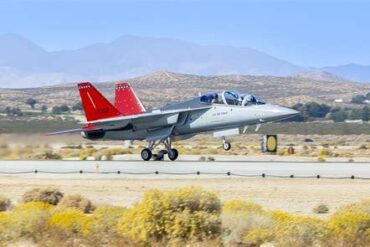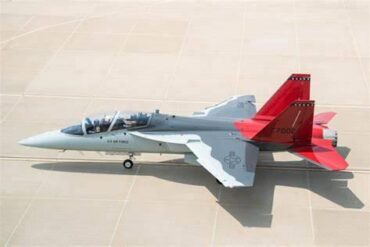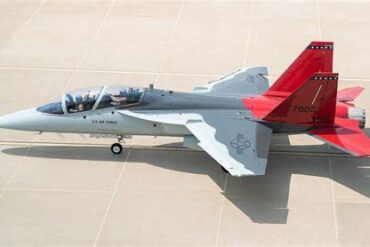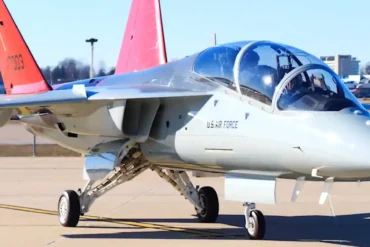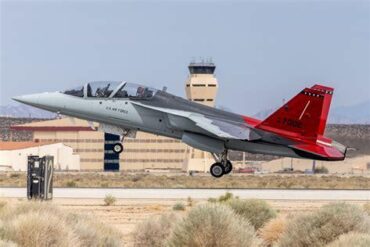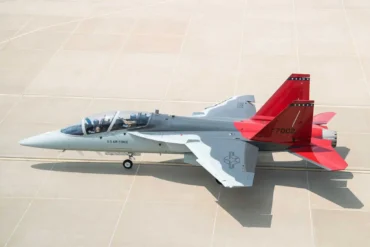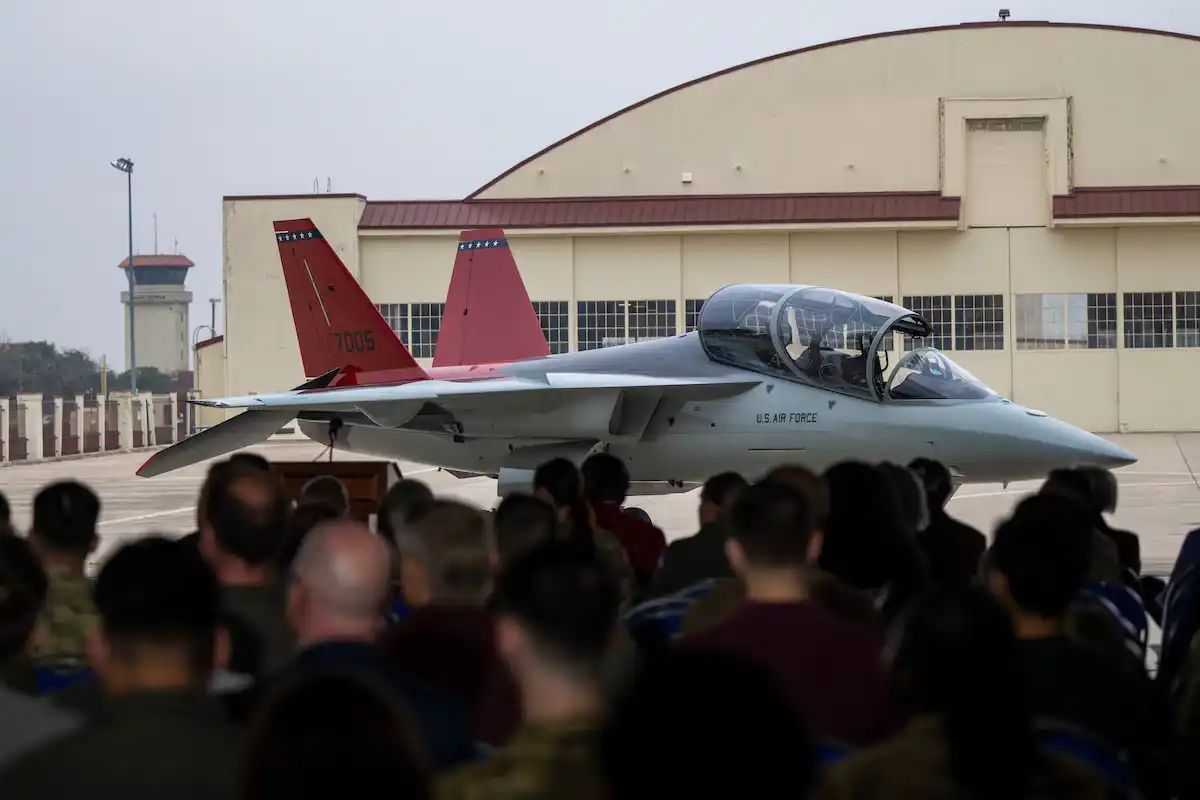
On January 9, 2026, the U.S. Air Force entered a transformative new era in pilot training with the formal induction of the first T-7A Red Hawk jet trainer into operational service at Joint Base San Antonio–Randolph, Texas. This event marks a historic pivot from legacy systems toward a digitally native, high-performance training ecosystem designed to prepare pilots for the sophisticated demands of 21st-century air combat.
From T-38 Talon to T-7A Red Hawk: Closing the Capability Gap
For over 60 years, the T-38 Talon has served as the cornerstone of advanced jet training for the U.S. Air Force. However, designed in the early 1960s, the Talon reflects an analog-era philosophy ill-suited to the data-rich, sensor-integrated, decision-intense nature of modern aerial warfare. Despite multiple service life extensions and avionics upgrades, the T-38 simply cannot replicate the complex, network-centric air combat environment that fifth- and sixth-generation aircraft now operate within.
The T-7A Red Hawk was conceived to fill this growing gap. Developed by Boeing, the Red Hawk is more than a new airframe—it’s a fully digital training platform. It promises a quantum leap in preparing new pilots, offering them a seamless transition into operational squadrons equipped with aircraft like the F-35 Lightning II, B-21 Raider, and future Next Generation Air Dominance (NGAD) platforms.
Designed for a Digital Battlespace
The cockpit of the T-7A is a model of modern interface design, emphasizing large-area touchscreen displays, hands-on throttle-and-stick (HOTAS) systems, and advanced mission system management tools. Unlike the T-38, which required instructors to simulate complexity through ground-based or virtual systems, the Red Hawk embeds complexity directly into flight.
This shift acknowledges a core truth about airpower in 2026: the battlespace is now defined as much by data throughput, sensor fusion, and information dominance as it is by aerodynamics or firepower. The Red Hawk trains pilots not just to fly but to think, prioritize, and decide in a multi-domain environment where seconds matter and cognitive load is immense.
Performance That Matches Modern Combat Demands
Boeing designed the T-7A Red Hawk with agility, precision, and real-world relevance at the forefront. The aircraft boasts:
- High thrust-to-weight ratio for rapid acceleration
- Aerodynamically optimized agility across low and high speeds
- Digital fly-by-wire controls allowing configurable flight handling for various phases of training
These attributes allow instructors to teach energy management, tactical maneuvering, and high-G operations in ways that closely mirror combat aircraft behavior. Where the T-38 was increasingly limited in simulating operational missions, the Red Hawk thrives.
Moreover, the Red Hawk’s modular design means that a single aircraft can be adapted to meet the demands of different training modules without artificial constraints—a vital flexibility as combat doctrine continues to evolve.
Built with Maintenance and Longevity in Mind
While performance was paramount, the Red Hawk’s logistical sustainability is equally impressive. The T-38 has become costly to maintain, with parts obsolescence and downtime issues hampering training pipelines. In contrast, the T-7A was engineered for maintainability from the outset:
- Digital diagnostics streamline fault detection
- Modular systems simplify repairs and upgrades
- Open-systems architecture allows for rapid software updates
These factors translate into greater aircraft availability and increased sortie rates, helping the Air Force meet pilot production targets in a climate of growing demand and limited resources.
A Platform for Future-Proof Training
What sets the Red Hawk apart most is its capacity for evolution. The platform’s open architecture enables:
- Integration of simulated weapons and sensor packages
- Real-time data linking for collaborative missions
- Software-driven flight behavior adjustments
This positions the T-7A not as a static tool but as a living training ecosystem—one capable of adapting to future threats and integrating new tactics, techniques, and procedures (TTPs) without wholesale system replacement.
Such capability is especially critical as the Air Force explores autonomous wingmen, AI-enhanced decision support, and multi-domain command and control concepts as part of its Air Force Future Operating Concept (AFFOC).
Institutional Transformation Beyond Hardware
The induction of the Red Hawk isn’t merely a procurement milestone—it reflects a deep institutional shift. The 99th Flying Training Squadron under the 12th Flying Training Wing has received the first aircraft, but more squadrons will soon follow. The replacement of the T-38 is not just mechanical; it involves a rethinking of curriculum design, instructional methodology, and evaluation standards.
By aligning student experience with operational realities earlier in their development, the Air Force aims to:
- Reduce transition time to combat aircraft
- Improve cognitive readiness under operational stress
- Enhance mission adaptability from Day One of operational service
The Red Hawk thus supports not just the skillset but also the mindset of tomorrow’s warfighters.
Strategic Implications for Airpower Readiness
The broader implications of the T-7A go well beyond pilot production. In an era where great power competition is reshaping global security, readiness is not a checkbox but a continuous posture. The Red Hawk enables:
- Higher sortie generation rates to meet surge demands
- A pipeline that mirrors operational complexity, reducing retraining time
- Enhanced joint and coalition interoperability through shared digital training standards
This is particularly critical as the U.S. Air Force embraces Agile Combat Employment (ACE) concepts and dispersed operations, which demand pilots who are ready not just to fly, but to lead in ambiguous, high-tech battlespaces from the outset.
Honoring a Legacy, Embracing the Future
The T-7A Red Hawk is named in tribute to the Tuskegee Airmen, the first African-American military aviators who served with valor and distinction during World War II. That legacy of excellence, innovation, and determination is embedded in every Red Hawk.
The arrival of the first T-7A at Randolph is not merely symbolic—it is operationally significant. It marks the moment where the U.S. Air Force formally leaves behind a Cold War-era training paradigm and steps confidently into a future defined by information warfare, digital systems, and global maneuverability.
As more Red Hawks enter service and reshape the training landscape, they carry with them the responsibility of preparing aircrews not just for the fight of today, but for the unknown battles of tomorrow. The era of the Red Hawk has begun, and with it, a renewed commitment to air dominance through world-class training.