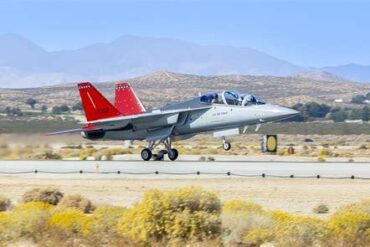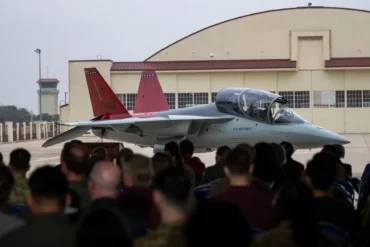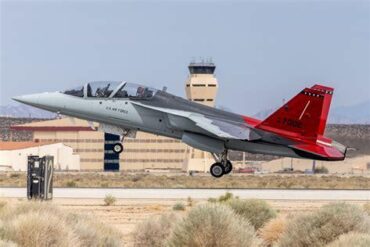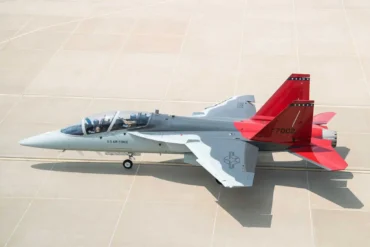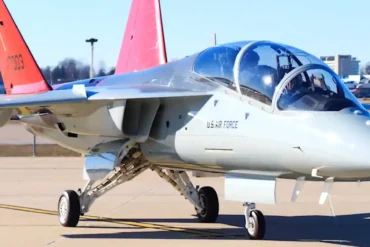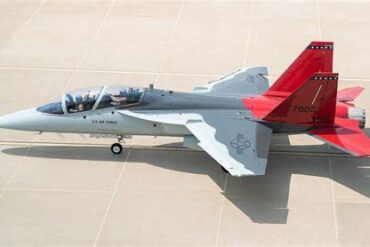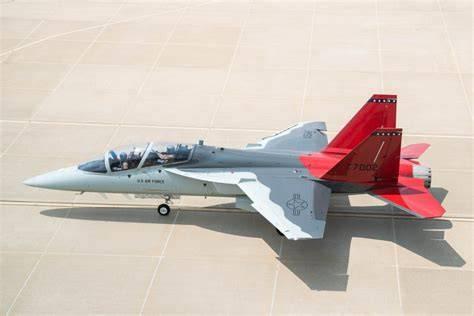
The Boeing T-7A Red Hawk is frequently described as one of the most revolutionary military aircraft programs of the modern era. Not because it is the fastest, stealthiest, or most heavily armed aircraft ever built, but because it fundamentally changed how military aircraft are designed, engineered, tested, and manufactured. The aircraft’s rapid journey from concept to first flight in just three years demonstrated the power of digital engineering and created a development blueprint that is now influencing some of America’s most important defense programs, including the B-21 Raider, Collaborative Combat Aircraft, and the future F-47 fighter.
While some commentators have suggested that the T-7A signals the end of the F-35 era, the reality is considerably more complex. The Red Hawk represents a transformation in development methodology rather than a replacement for the F-35 Lightning II. Instead of rendering existing aircraft obsolete, the T-7A showcases how next-generation digital technologies can dramatically reduce design cycles, lower manufacturing costs, and improve production efficiency across the aerospace industry.
The Birth of the Boeing T-7A Red Hawk
The T-7A Red Hawk was developed jointly by Boeing and Saab to replace the aging Northrop T-38 Talon trainer fleet used by the United States Air Force. The T-38 had served for more than six decades, training generations of fighter pilots since the early 1960s. As modern fighters such as the F-22 Raptor and F-35 Lightning II became increasingly sophisticated, the Air Force required a new trainer capable of preparing pilots for highly digital combat environments.
Unlike previous aircraft development programs, Boeing and Saab embraced a fully digital-first philosophy from the beginning. Rather than relying heavily on physical mockups and multiple generations of prototypes, engineers created a comprehensive virtual aircraft before major physical construction began.
The result was extraordinary. The T-7A advanced from initial design concepts to first flight in only 36 months, a timeline that would have been considered almost impossible for a military aircraft program just two decades earlier.
The achievement immediately attracted attention throughout the defense industry and transformed perceptions regarding what modern aerospace engineering could accomplish.
Why Traditional Aircraft Development Was So Slow
To understand why the T-7A became such a landmark program, it is important to understand how aircraft were traditionally developed.
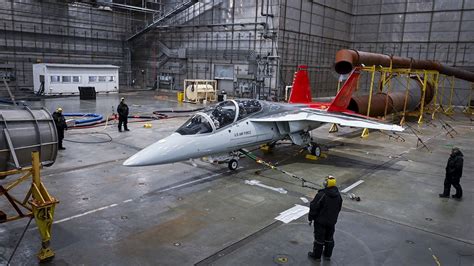
For decades, military aircraft programs followed a lengthy cycle of design, prototype construction, testing, redesign, and rebuilding. Engineers would create digital models, but those models lacked the computational power and simulation accuracy available today. As a result, manufacturers depended heavily on physical prototypes to identify flaws and validate performance.
Programs such as the F-22 Raptor and F-35 Lightning II were developed during a period when digital design tools existed but had not yet matured into today’s sophisticated ecosystems.
A typical process often involved:
- Designing aircraft components.
- Building expensive prototypes.
- Conducting flight tests.
- Discovering unexpected issues.
- Modifying the design.
- Building updated prototypes.
- Repeating the process numerous times.
Each cycle consumed years and billions of dollars.
Although the F-35 utilized some of the most advanced engineering tools available during the early 2000s, its development still depended heavily on physical validation. The aircraft’s unprecedented complexity compounded these challenges, resulting in schedule delays and significant cost growth.
The Digital Engineering Revolution
The T-7A emerged during a period when several transformative technologies reached maturity simultaneously.
Among the most influential innovations were Model-Based Systems Engineering (MBSE), digital twins, high-fidelity simulations, advanced computational modeling, integrated digital threads, and three-dimensional model-based definitions.
Together, these technologies created a development environment where engineers could simulate aircraft behavior with unprecedented accuracy long before physical construction began.
A digital twin acts as a highly detailed virtual representation of the actual aircraft. Engineers can test aerodynamic performance, manufacturing tolerances, structural loads, maintenance procedures, and operational scenarios entirely within a digital environment.
This dramatically reduces uncertainty.
Instead of discovering problems after construction, engineers can identify and solve many issues during the design phase. Consequently, fewer modifications are required once physical manufacturing begins.
The T-7A became one of the most visible demonstrations of this philosophy.
How Boeing Built the T-7A in Just Three Years
The most remarkable aspect of the Red Hawk program was not simply its speed but the precision achieved through digital design.
When aircraft sections were manufactured separately, they fit together almost perfectly upon assembly. One frequently cited example involved the joining of the forward and rear fuselage sections. Thanks to highly accurate digital engineering, technicians completed the process in less than 30 minutes.
Historically, such work often required days or even weeks due to alignment issues and manufacturing tolerances.
Digital modeling ensured that every component existed within the same engineering ecosystem. This created unprecedented manufacturing accuracy and reduced traditional assembly errors by approximately 50 percent.
The program demonstrated that modern aerospace development could move significantly faster without sacrificing engineering rigor.
The True Meaning Behind the T-7A’s Success
Many observers mistakenly interpret the T-7A’s rapid development as evidence that older programs like the F-35 were fundamentally flawed.
The reality is much simpler.
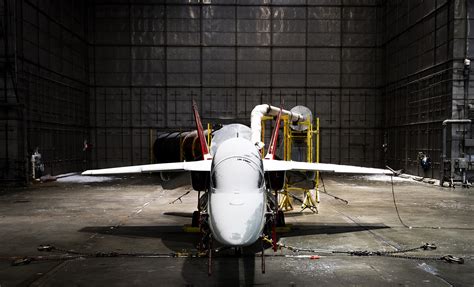
The T-7A’s success primarily reflects advances in technology rather than failures of previous programs.
The F-35 was conceived during an era when today’s digital engineering ecosystem simply did not exist. Lockheed Martin could not utilize technologies that had not yet matured.
Comparing the two aircraft directly is therefore misleading.
The Red Hawk benefited from nearly two decades of advances in computing power, simulation fidelity, software integration, cloud-based collaboration, and digital manufacturing techniques.
Its development speed reflects the evolution of engineering capabilities rather than shortcomings in earlier aircraft.
Why the F-35 Was a Completely Different Challenge
The F-35 Lightning II is among the most ambitious military aircraft ever developed.
Unlike the T-7A, which serves primarily as an advanced trainer, the F-35 was designed to perform multiple combat roles across three service branches.
The aircraft was expected to replace or supplement numerous legacy platforms, including the:
- A-10 Thunderbolt II
- F-16 Fighting Falcon
- F/A-18 Hornet
- AV-8B Harrier
- Panavia Tornado
- Selected F-15 variants
Each service required unique capabilities.
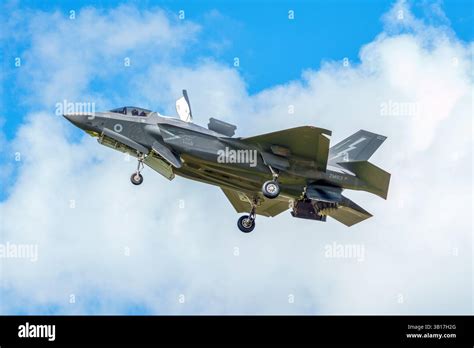
The F-35A serves conventional Air Force operations. The F-35B performs short takeoff and vertical landing missions. The F-35C operates from aircraft carriers.
Combining these requirements into a single aircraft family represented an unprecedented engineering challenge.
Furthermore, the aircraft incorporated advanced stealth technology, sensor fusion, electronic warfare systems, and software architectures that were years ahead of existing operational standards.
The program effectively attempted to deliver future technologies before those technologies were fully mature.
That level of ambition inevitably increased developmental risk.
The Myth That the T-7A Ends the F-35 Era
A popular narrative suggests that digital-first aircraft like the T-7A prove the F-35 is obsolete or represents a failed approach.
This argument ignores several realities.
First, the F-35 is no longer primarily a development program. It is transitioning into a mature operational platform deployed across numerous allied nations.
Second, the aircraft continues receiving major upgrades through the Block 4 modernization program.
Third, the F-35 has become deeply integrated into NATO and allied airpower strategies.
Countries operating the aircraft include:
- United States
- United Kingdom
- Australia
- Norway
- Netherlands
- Italy
- Denmark
- Belgium
- Finland
- Poland
- Japan
- South Korea
The scale of investment surrounding the platform is enormous.
Rather than ending the F-35 era, digital engineering techniques are likely to enhance and support the aircraft’s continued evolution throughout the coming decades.
The Rise of Rapid Military Aircraft Prototyping
The influence of the T-7A extends far beyond pilot training.
Defense contractors across the industry are now leveraging similar digital-first methodologies to accelerate aircraft development.
One notable example is the Northrop Grumman-backed Model 437 autonomous combat aircraft developed by Scaled Composites.
The aircraft progressed from detailed design to first flight in only 21 months.
Engineers utilized fully digital development environments to create wing structures at one facility before shipping them hundreds of miles away for final integration. The components fit correctly on the first attempt, highlighting the precision achievable through modern digital engineering.
Programs involving autonomous combat aircraft are increasingly adopting these methodologies.
Examples include:
- Anduril YFQ-44
- General Atomics YFQ-42
- Northrop Grumman YFQ-48
- Shield AI X-Bat
- Lockheed Martin Vectis
These systems represent a new generation of rapidly developed military capabilities.
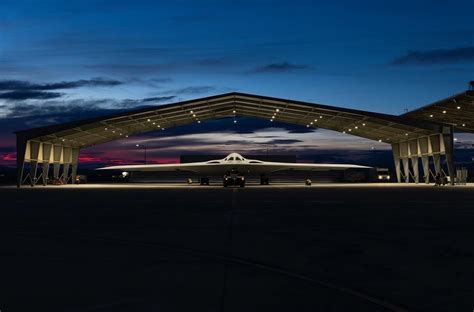
How Digital Engineering Is Accelerating the B-21 Raider
Perhaps the most important demonstration of digital engineering’s potential lies within the B-21 Raider program.
The Northrop Grumman B-21 is America’s next-generation stealth bomber and successor to the legendary B-2 Spirit.
The B-2 first flew in 1989 and entered service in 1997, requiring approximately eight years between those milestones.
The B-21 first flew in 2023 and is expected to enter operational service around 2027.
This significantly compressed timeline illustrates how digital engineering can accelerate even highly complex stealth aircraft programs.
Unlike the T-7A, the B-21 involves advanced stealth shaping, sophisticated mission systems, strategic strike capabilities, and nuclear deterrence requirements.
Its progress suggests that digital methodologies can benefit not only smaller aircraft but also some of the most demanding aerospace projects ever undertaken.
The Future F-47 and the Next Generation of Air Dominance
The United States Air Force’s future F-47 fighter may become the ultimate validation of digital engineering.
Although many details remain classified, available information indicates that Boeing’s demonstrator flew years before public acknowledgment of the program.
The Air Force expects representative prototypes to fly before operational service enters the early 2030s.
If these timelines are achieved, the F-47 could reach service significantly faster than previous generations of advanced fighter aircraft.
The program is benefiting from lessons learned through both the T-7A and broader digital engineering initiatives.
As computational capabilities continue improving, future aircraft may experience even shorter development cycles.
The T-7A’s Own Delays Reveal Important Lessons
Despite its impressive digital achievements, the Red Hawk program is not a perfect success story.
After transitioning from digital design into real-world testing, the aircraft encountered several challenges.
Issues included aerodynamic anomalies, software integration complications, and safety-system concerns.
One particularly ironic problem emerged when ground-based simulators and physical flight systems became misaligned. Correcting these discrepancies required additional software modifications and contributed to schedule delays.
The program ultimately slipped several years beyond its original timeline.
These difficulties highlight an important reality: digital engineering is an incredibly powerful tool, but it is not a magic solution.
Aircraft still operate in the physical world, where unexpected interactions, environmental variables, and integration challenges can emerge despite sophisticated simulations.
The T-7A demonstrates both the promise and limitations of modern digital development.
Why the Red Hawk Became the Blueprint for Future Aerospace Programs
The true legacy of the T-7A is not that it replaced older aircraft development methods overnight.
Its significance lies in proving that an integrated digital ecosystem can dramatically improve engineering efficiency, manufacturing accuracy, and development speed.
The aircraft provided a practical demonstration that digital twins, model-based engineering, and high-fidelity simulation can produce measurable results.
Defense planners now view these tools as foundational technologies for future military aviation programs.
The B-21 Raider, Collaborative Combat Aircraft, autonomous drone systems, and future sixth-generation fighters are all incorporating lessons derived from the Red Hawk experience.
Rather than ending the F-35 era, the T-7A helped launch the next era of aerospace development.
Conclusion
The Boeing T-7A Red Hawk represents one of the most important technological transitions in modern aerospace history. Its rapid three-year journey from concept to first flight showcased the extraordinary potential of digital engineering and demonstrated how virtual development environments can transform aircraft design and manufacturing.
However, claims that the Red Hawk signals the end of the F-35 era misunderstand both programs. The F-35 and T-7A were built for entirely different missions, under different technological conditions, and with vastly different levels of complexity. The Red Hawk did not replace the lessons of the F-35; it built upon them.
What the T-7A truly accomplished was proving that digital-first development can shorten timelines, improve manufacturing precision, and accelerate innovation across the defense sector. Its influence is already visible in the B-21 Raider, emerging autonomous combat aircraft, and the future F-47 fighter.
As aerospace technology continues advancing, historians may ultimately remember the T-7A not primarily as a trainer aircraft, but as the program that fundamentally changed how military aircraft are created. The aircraft became a bridge between traditional aerospace development and a future where digital engineering shapes every stage of aircraft design, production, testing, and sustainment.