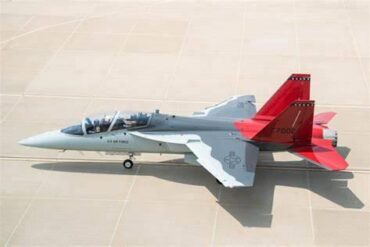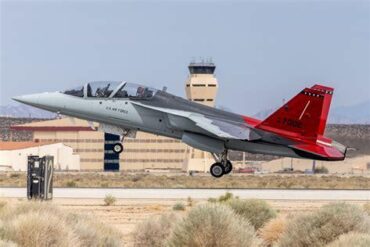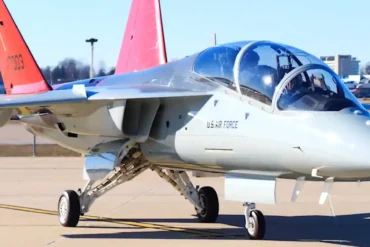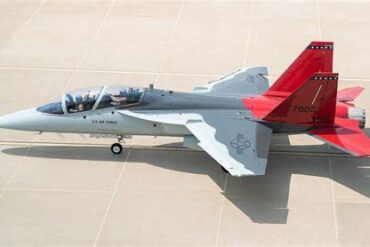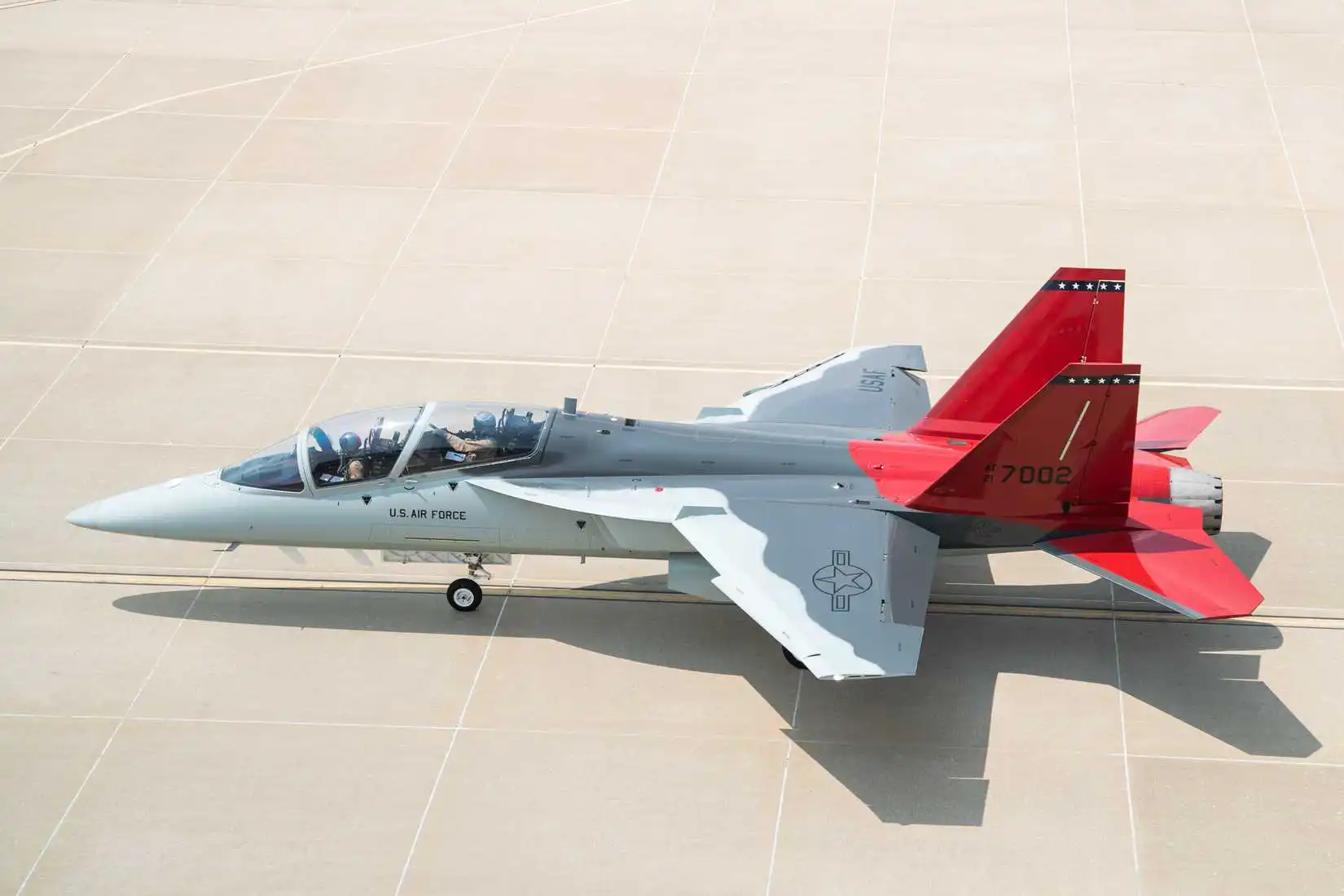
The Boeing T-7A Red Hawk was envisioned as one of the most transformative military aviation programs in decades. Developed to replace the aging Northrop T-38 Talon, the advanced jet trainer promised to prepare a new generation of U.S. Air Force pilots for the demanding realities of fifth-generation combat aircraft. Built using cutting-edge digital engineering, an open-architecture software platform, and an integrated training ecosystem, the aircraft represented a dramatic leap beyond traditional trainer concepts.
Instead, the T-7A has evolved into one of Boeing’s most financially painful defense programs. Billions of dollars in unexpected losses, years of schedule delays, engineering redesigns, and increasing government scrutiny have transformed what was supposed to be a showcase of innovation into a cautionary tale about the risks of fixed-price military contracts. Although the aircraft is steadily progressing toward operational service, its journey illustrates how even groundbreaking technology can become extraordinarily expensive when development challenges collide with rigid contractual obligations.
Why the T-7A Red Hawk Became a $2 Billion Problem for Boeing
The largest source of Boeing’s difficulties lies not in the aircraft’s overall concept, but in the financial structure of the contract itself. When the U.S. Air Force selected Boeing to develop the T-7A under a contract valued at approximately $9.2 billion, the agreement placed substantial financial responsibility on the manufacturer through a fixed-price development model.
Under this arrangement, Boeing agreed to absorb costs that exceeded the negotiated contract value. As technical obstacles emerged throughout development, the company was forced to fund redesign efforts, engineering modifications, production adjustments, and additional testing largely from its own balance sheet.
Rather than generating profits during development, the program accumulated more than $2 billion in recorded losses. Those losses reflected extensive engineering work that analysts had not originally anticipated, turning what appeared to be a prestigious defense contract into one of Boeing’s most expensive development programs in recent years.
Unlike cost-plus contracts that allow governments to reimburse unforeseen development expenses, the T-7A agreement transferred much of that financial risk directly to Boeing, making every delay significantly more expensive.
Development Delays Exposed Technical Challenges
The T-7A was designed using advanced digital engineering techniques that dramatically accelerated its initial design process. Early demonstrations suggested the program could redefine how military aircraft were developed.
Reality proved considerably more complicated.
As flight testing expanded, engineers uncovered issues requiring extensive redesign work before the aircraft could safely enter large-scale production. Among the most significant challenges was the ejection seat system, which required modifications after testing identified safety concerns under specific operating conditions.
Software integration also demanded far more effort than originally forecast. Unlike older trainers that focused primarily on basic flying skills, the T-7A integrates sophisticated mission systems, digital avionics, advanced displays, and simulation technologies that closely replicate modern combat aircraft.
Synchronizing these systems across both the aircraft and its accompanying ground-based training environment required thousands of hours of additional validation, delaying several program milestones.
After each engineering adjustment, flight testing had to continue to verify performance, reliability, and safety standards before the aircraft could advance toward operational approval.
More Than Just a Trainer Aircraft
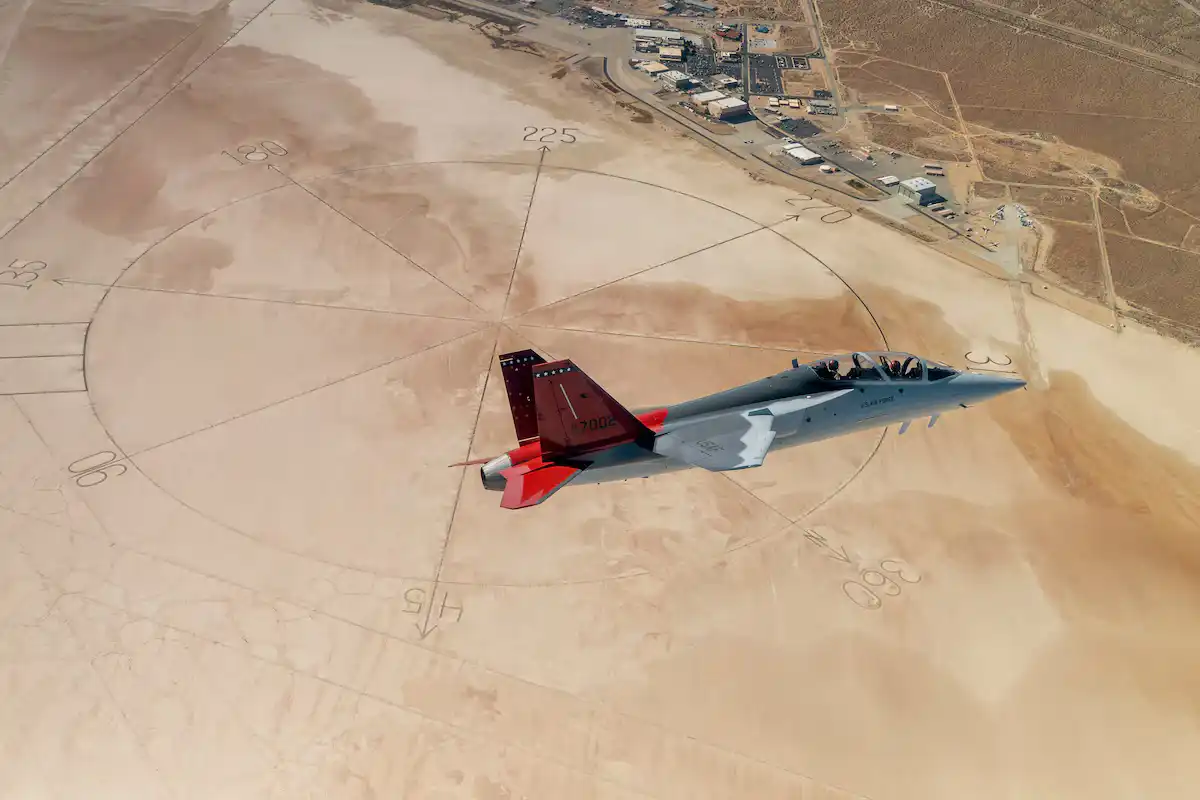
Although frequently described simply as a replacement for the T-38, the T-7A represents a completely different philosophy of pilot training.
Instead of teaching pilots only how to fly an aircraft, the Red Hawk is designed to prepare them for the overwhelming flow of information encountered inside modern fighters such as the F-35 Lightning II and advanced bomber platforms.
Its fully digital cockpit exposes students to sensor management, mission displays, data fusion, electronic systems, and increasingly complex tactical environments from the earliest stages of advanced flight instruction.
Equally important is the aircraft’s fly-by-wire flight control system, which allows instructors to tailor aircraft behavior according to student experience. Beginning pilots can train within carefully controlled performance limits before gradually expanding into more demanding flight envelopes as their proficiency improves.
This flexibility creates a smoother progression toward operational fighter aircraft while reducing training risk.
The Red Hawk also functions as part of a much broader ecosystem. Sophisticated simulators, live-virtual-constructive training environments, and networked mission scenarios enable students to practice complex combat situations that would otherwise be prohibitively expensive or impossible to recreate using live aircraft alone.
A Name That Honors Aviation History
The aircraft carries significant symbolic value beyond its technical innovations.
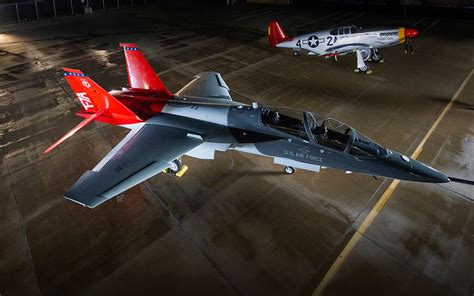
The name “Red Hawk” honors the legendary Tuskegee Airmen, the pioneering African American military aviators whose accomplishments during the Second World War permanently changed American military aviation.
The aircraft’s distinctive red tail pays tribute to the famous “Red Tails,” connecting the Air Force’s future pilot training pipeline with one of its most celebrated chapters of history.
That heritage makes the program especially visible within both the Air Force and the broader defense community, increasing public attention whenever delays or cost overruns emerge.
The Air Force Needed a Modern Replacement
While Boeing struggled with development costs, the Air Force faced its own pressing challenge.
The T-38 Talon, first introduced during the early 1960s, has served for more than six decades. Although repeatedly upgraded, its design reflects an era long before digital cockpits, sensor fusion, and fifth-generation warfare.
Modern combat pilots now operate aircraft that process enormous volumes of information while managing advanced radar systems, electronic warfare capabilities, and networked battlefield communications.
Training students on an aging analog platform creates a widening capability gap between basic instruction and operational squadrons.
The T-7A was specifically created to bridge that gap by exposing future pilots to contemporary technologies much earlier in their training pipeline.
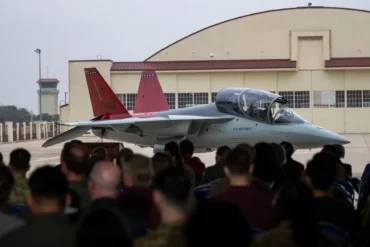
The arrival of the first aircraft at Joint Base San Antonio-Randolph marked an important milestone, allowing instructors to begin integrating the Red Hawk into the 99th Flying Training Squadron while broader testing continued.
Production Approval Signals a Turning Point
Following years of redesign work and extensive evaluation, the program reached one of its most important achievements.
In May 2026, the U.S. Air Force granted Milestone C approval, authorizing the T-7A to transition toward full-rate production. The decision demonstrated growing confidence that Boeing had addressed the major technical concerns uncovered during development.
The approval also reflected improvements in manufacturing consistency, supplier stability, and production quality. Boeing has increasingly demonstrated repeatable assembly processes capable of supporting long-term fleet expansion.
However, production approval represents only one stage of the program’s lifecycle.
The Air Force remains focused on ensuring that government maintenance organizations can eventually support the aircraft independently. Achieving that objective requires Boeing to deliver comprehensive technical documentation, maintenance procedures, tooling, logistics support, and sustainment planning that reduce long-term dependence on the manufacturer.
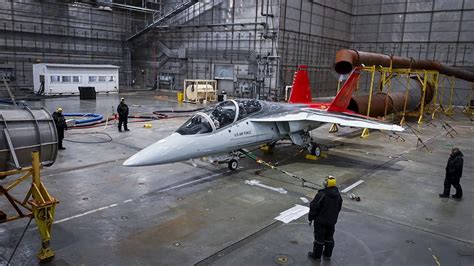
The Road Ahead for Boeing’s Advanced Trainer
Although the T-7A Red Hawk has finally gained momentum, its development remains one of the clearest examples of how ambitious defense programs can generate enormous financial consequences even when technical success is ultimately achieved.
For Boeing, the program has already delivered painful lessons about estimating development risk under fixed-price contracts. For the Air Force, however, the Red Hawk still represents the cornerstone of its future pilot training strategy, replacing an aircraft that has served generations of aviators since the Cold War.
As production accelerates and operational squadrons receive additional aircraft, attention will increasingly shift from development setbacks to long-term reliability, sustainment efficiency, and training effectiveness. If the Red Hawk ultimately delivers the modern pilot preparation it was designed to provide, Boeing may eventually transform today’s $2 billion headache into one of military aviation’s most important long-term success stories.