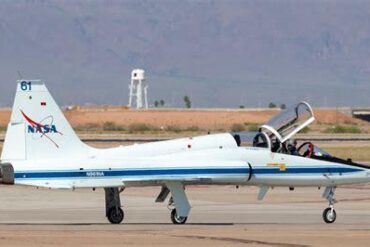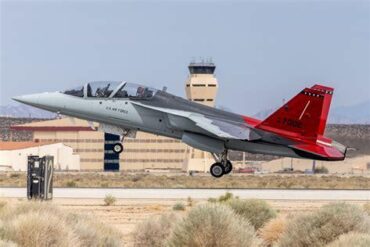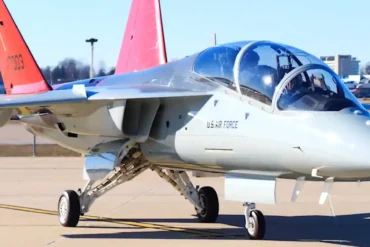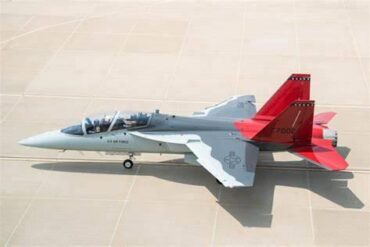
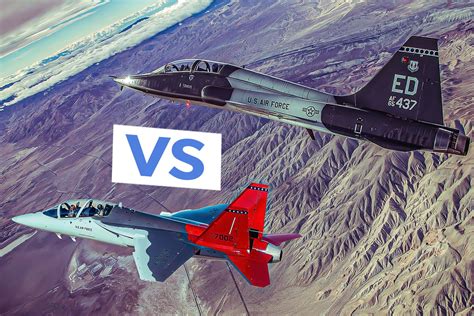
For more than six decades, the Northrop T-38 Talon has occupied a unique place inside the United States Air Force. Introduced in 1961 during the height of the Cold War, the sleek twin-engine trainer became the first supersonic jet trainer in history and ultimately shaped generations of American military aviators. Thousands of fighter pilots who later flew the F-4 Phantom, F-15 Eagle, F-16 Fighting Falcon, F-22 Raptor, and B-2 Spirit all began their journey in the Talon.
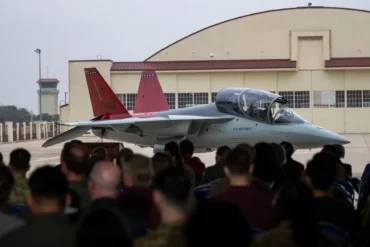
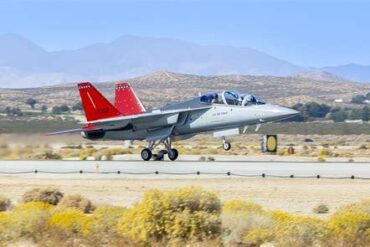
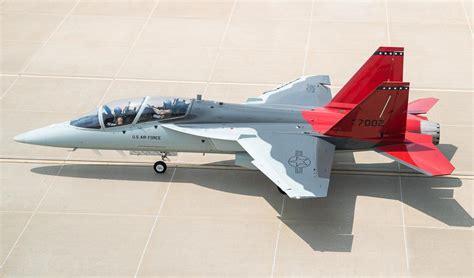
Yet even icons eventually face the realities of time. The Air Force is now moving decisively toward replacing the aging T-38 fleet with the Boeing-Saab T-7A Red Hawk, a next-generation trainer designed for the digital battlefield rather than the analog skies of the 1960s. The transition represents far more than a simple aircraft replacement. It reflects a complete transformation in how modern pilots are trained for fifth-generation and future sixth-generation warfare.
The Talon was originally designed for an era when aerial combat centered on speed, maneuverability, and basic radar interception. Modern air combat has evolved into a networked environment dominated by sensor fusion, data management, electronic warfare, and artificial intelligence-assisted operations. The aircraft that once represented the cutting edge of pilot instruction is increasingly unable to prepare aviators for the cockpit realities of the F-35 Lightning II or future Next Generation Air Dominance platforms.
By the early 2020s, the Air Force faced a difficult truth: the T-38 was no longer just aging — it was becoming a bottleneck for the future of combat aviation.
The T-38 Talon’s Extraordinary Six-Decade Legacy
Few military aircraft remain operational for more than sixty years while continuing to perform their original mission. The T-38 accomplished exactly that. More than 1,100 Talons were produced, and the aircraft trained over 75,000 Air Force pilots along with tens of thousands of international aviators from allied nations.
Its lightweight design and supersonic capability made it revolutionary when it entered service. During the Cold War, the aircraft provided student pilots with exposure to high-speed jet operations before transitioning into frontline fighters. The Talon became synonymous with elite Air Force training culture, especially within undergraduate pilot training programs.
NASA also adopted the T-38 as a proficiency aircraft for astronauts, further elevating its legendary status. The aircraft’s narrow fuselage, aggressive climb rate, and responsive controls earned enormous respect from pilots who often described the Talon as unforgiving but highly rewarding.
However, maintaining a fleet designed during the Eisenhower administration has become increasingly unsustainable. Airframes have endured decades of stress cycles, and replacement parts for many systems are becoming harder to source. Maintenance crews now spend significantly more time keeping the aircraft operational than in previous decades, driving costs upward while reducing training availability.
The Talon’s age is also impacting pilot production rates. Delays caused by maintenance issues can disrupt training pipelines, creating cascading effects across the Air Force at a time when pilot shortages remain a strategic concern.
Why Modern Fighter Training Demands A Digital Revolution
The core problem with the T-38 is not simply age. It is technological relevance.
Modern combat aircraft no longer rely primarily on raw aerodynamic performance. Fighters like the F-35 function as airborne information hubs, processing vast streams of sensor data while coordinating with satellites, drones, and other aircraft in real time. Pilots today must master digital battlespace management as much as traditional flying skills.
The T-38 was never built for that environment. Its cockpit architecture belongs to another era, lacking the sophisticated avionics, touchscreen displays, and sensor integration systems now standard in frontline fighters.
As a result, pilots graduating from Talon training often require additional time to adapt to modern operational aircraft. Instead of focusing entirely on combat tactics, many must first learn advanced cockpit management and digital workflow fundamentals after reaching their combat units.
Brigadier General Matthew Leard of Air Education and Training Command summarized the urgency clearly when he described replacing the Talon fleet as a top priority for preparing pilots for “the cockpits of the future.”
The Air Force increasingly recognized that future wars may be won not by the fastest aircraft, but by the pilot who can best process, interpret, and exploit information under pressure.
Inside The T-7A Red Hawk’s Advanced Training Ecosystem
The T-7A Red Hawk was designed specifically around modern combat realities rather than adapting older concepts. Unlike the Talon, the Red Hawk is fundamentally a digital aircraft built using advanced model-based engineering techniques.
One of the program’s most important advantages lies in its open architecture software design. This allows the aircraft to receive rapid upgrades throughout its operational life without requiring massive structural redesigns. As frontline fighters evolve, the trainer can evolve alongside them.
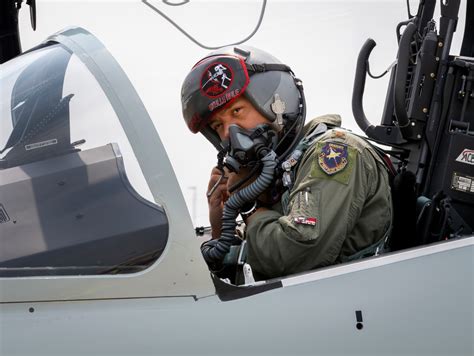
The cockpit itself closely resembles fifth-generation combat aircraft. Large-area displays, modern Hands-On Throttle-and-Stick controls, and integrated digital systems expose student pilots to operational workflows that mirror the F-35 and F-22 experience.
The aircraft can simulate radar systems, targeting pods, electronic warfare environments, and hostile threats directly inside the cockpit displays without external equipment. This dramatically reduces training costs while simultaneously increasing realism.
Another major innovation is the Red Hawk’s Live Virtual Constructive environment. Pilots flying actual T-7As can interact with computer-generated enemy aircraft and virtual wingmen integrated through ground-based simulators. This creates highly complex combat training scenarios that would have been impossible with the T-38.
The Red Hawk effectively transforms pilot training from isolated aircraft instruction into an interconnected combat ecosystem.
Lower Maintenance, Faster Turnarounds, Greater Readiness
While advanced avionics receive much of the attention, maintenance efficiency may ultimately become one of the T-7A’s most valuable features.
The Air Force designed the aircraft with simplified servicing in mind. Its General Electric F404 engine can reportedly be replaced in approximately 90 minutes using basic tools. Ejection seats can be swapped in around 15 minutes, dramatically reducing downtime between flights.
These improvements directly affect operational readiness. Faster maintenance means more available aircraft, more training sorties, and fewer scheduling disruptions for student pilots.
The contrast with the aging Talon fleet is striking. Maintaining older aircraft often requires labor-intensive inspections, scarce replacement parts, and extensive troubleshooting for systems that were never designed for modern reliability expectations.
The Red Hawk also benefits from digital diagnostics that allow maintainers to identify issues more rapidly. Predictive maintenance technologies could help prevent failures before they occur, reducing unexpected grounding events that currently plague older fleets.
The End Of One Era And The Beginning Of Another
The retirement of the T-38 Talon closes one of the most remarkable chapters in American aviation history. Very few military aircraft remain operational long enough to train multiple generations of pilots across radically different eras of warfare.
But sentiment alone cannot prepare aviators for future combat.
The Air Force’s transition to the T-7A Red Hawk reflects a larger strategic shift in military aviation training. Tomorrow’s pilots must operate inside highly connected battlespaces where information dominance matters as much as speed or maneuverability. The aircraft they train in must reflect that reality from the very beginning.
For decades, the Talon taught pilots how to fly fast jets. The Red Hawk is designed to teach them how to fight modern wars.