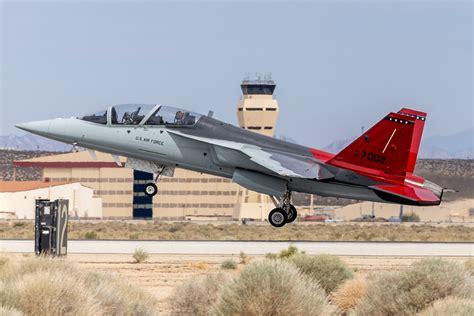
The future of Royal Air Force (RAF) pilot training is undergoing a pivotal transformation, driven by a landmark partnership between BAE Systems, Boeing, and Saab. On 18 November 2025, these defense industry giants signed a formal Letter of Intent to propose the T-7A Red Hawk as the centerpiece of the next-generation Advanced Jet Training System for the UK, marking a bold departure from legacy systems and realigning the RAF’s training approach to the realities of modern and future air combat.
Transforming RAF Training in the Post-Hawk Era
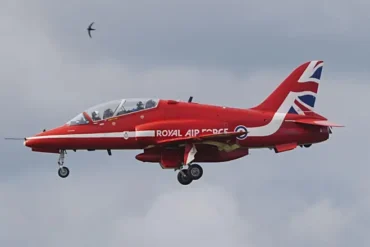
The United Kingdom’s 2025 Strategic Defence Review officially declared the retirement of the venerable Hawk training fleet, creating a vacuum that demanded more than a mere aircraft replacement. It necessitated an entire paradigm shift in how combat aviators are prepared. The proposed solution is more than a jet; it is a comprehensive training ecosystem capable of preparing pilots for fourth, fifth, and ultimately sixth-generation fighters.
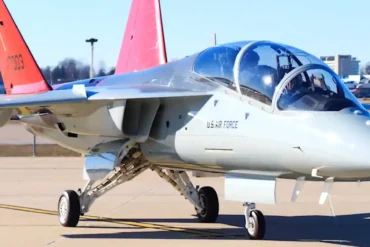
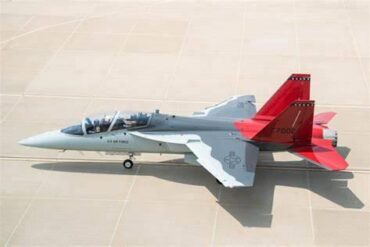
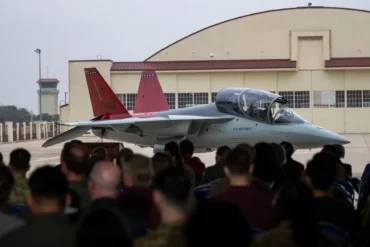
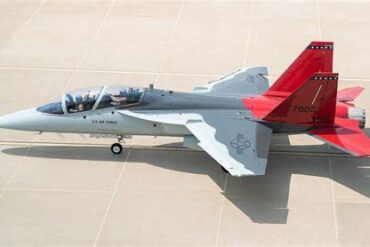
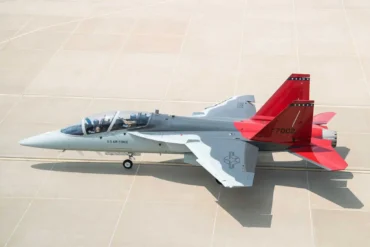
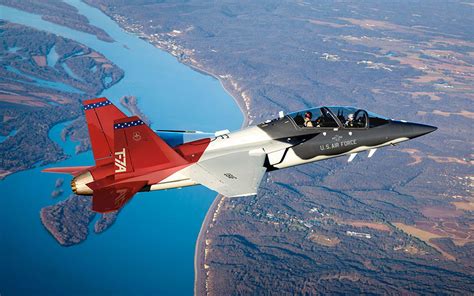
At the heart of this vision is the T-7A Red Hawk, an aircraft purpose-built with digital tools and agile development in mind. Boeing and Saab’s original design for the United States Air Force (USAF) was a clean-sheet concept emphasizing modularity, simulation integration, and future-proofing from the start.
A Collaborative Bid Anchored in UK Sovereignty
The proposal’s strength lies in its industrial and geopolitical architecture. BAE Systems will spearhead UK final assembly, enabling sovereign control and ensuring significant domestic economic participation. This includes:
- Integration of British suppliers for airframe components, avionics, and ground systems
- Support for aeronautical engineering roles and testing infrastructure in the UK
- Seamless interoperability with existing BAE-led systems such as the Eurofighter Typhoon and emerging GCAP technologies
Saab’s involvement is not merely symbolic. Their proven record in electronic warfare systems and radar technologies reinforces the longstanding Anglo-Swedish defense partnership. Moreover, it solidifies technological continuity across training and operational domains, setting the stage for enhanced training fidelity.
T-7A Red Hawk: A Jet Designed for Tomorrow’s Battlespace
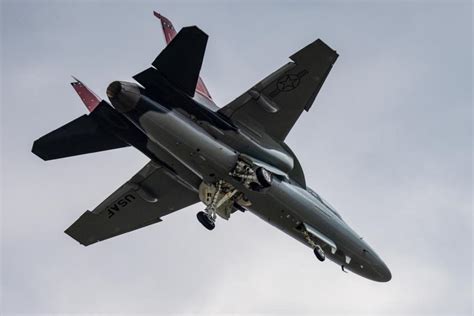
The T-7A Red Hawk is no simple trainer. It is a modern performance jet that blurs the line between training aircraft and combat readiness platforms. Engineered with a General Electric F404-GE-103 afterburning turbofan, the Red Hawk delivers approximately 17,700 pounds of thrust, pushing it near Mach 0.95 and achieving 8g maneuverability.
Dimensions and Performance:
- Length: 14.3 meters
- Wingspan: 9.32 meters
- Flight envelope: High angles of attack and aggressive agility suitable for dogfighting scenarios
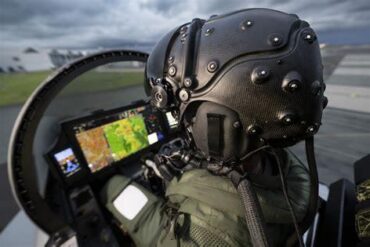
Its fly-by-wire controls and digital cockpit featuring large-format multifunction displays replicate frontline fighter ergonomics. This mirrors the cockpit architecture of the F-35 Lightning II and Typhoon, allowing students to transition seamlessly into combat aircraft environments.
The Ground-Based Training System (GBTS): A Synthetic Revolution
What distinguishes the T-7A proposal is its high-fidelity, Ground-Based Training System (GBTS). This is not just a simulator suite—it is an entire ecosystem designed to train RAF pilots in Live Virtual Constructive (LVC) environments that tightly replicate real-world engagements.
The GBTS incorporates:
- Immersive simulators with 360-degree visuals and real-time physics modeling
- LVC-capable mission scenarios, blending live aircraft, synthetic elements, and AI-controlled adversaries
- Open architecture, allowing constant updates for threat libraries, flight dynamics, and new technology integration
Through this system, the RAF can rehearse complex missions—ranging from interdiction and suppression of enemy air defenses to combined air-to-sea operations—without the cost or logistical strain of full fleet deployments.
Training for the GCAP and Manned-Unmanned Future
The broader strategic backdrop is the Global Combat Air Programme (GCAP), which aims to deliver a sixth-generation fighter to the RAF by the mid-2030s. Training for such advanced platforms demands an equally advanced preparatory system.
The T-7A Red Hawk ecosystem enables:
- Embedded simulation of radar threats and missile warning systems
- Electronic warfare training without external hardware pods
- Data link management and RMP/COP generation to mimic full spectrum networked warfare
- Manned-Unmanned Teaming (MUM-T) simulations with MALE drones, integrated even during pilot school phases
This level of synthetic integration reduces dependency on frontline fighters for instructional purposes, preserving combat readiness while enhancing training depth.
Positioning the UK as a Global Training Powerhouse
By establishing a domestically assembled and internationally aligned system, the UK strengthens its status not just as a user but as a provider of advanced pilot training. This holds appeal in markets where BAE Systems already has operational customers, such as:
- The Middle East, where air forces are seeking fourth-to-fifth generation transitions
- Southeast Asia, where regional competition is increasing demand for combat-ready pilot schools
This ecosystem, tuned for NATO interoperability, will also appeal to allied forces seeking affordable yet sophisticated training options compatible with future multi-domain combat architectures.
Navigating a Competitive Global Market
The RAF’s future training program is not unfolding in a vacuum. The international market offers a slew of rival trainers, including:
- Leonardo’s M-346 Master (Italy)
- KAI T-50 Golden Eagle (South Korea)
- TAI Hürjet (Turkey)
Meanwhile, the modular Aeralis jet presents a sovereign British alternative in the longer term. However, it remains in developmental stages and lacks the immediate operational maturity of the T-7A.
The BAE-Boeing-Saab bid thus strikes a balance between performance, domestic assembly, and international interoperability, standing out as the only solution offering:
- Proven platform maturity from USAF adoption
- Industrial participation in the UK
- Synthetic training leadership, aligned with sixth-gen fighter concepts
Conclusion: The Next Chapter in RAF Pilot Excellence
The selection of the T-7A Red Hawk as the RAF’s next advanced training platform would represent more than a procurement decision—it would be a generational leap in the way Britain prepares its combat aviators. By combining cutting-edge aerodynamics, digital-native systems, and a globally connected training infrastructure, the Red Hawk offers a seamless bridge to the future battlefield.
For a Royal Air Force preparing for GCAP-era operations, autonomous teaming, and hyper-networked warfighting, this system does not merely fill a gap. It redefines the standard of pilot excellence.
Should this vision be realized, it will place Britain at the forefront of both aircrew capability development and the global defense training market—a strategic win for national defense, industry, and allied interoperability alike.