In early 2026, a highly unusual aviation test quietly unfolded inside the restricted boundaries of White Sands Missile Range in New Mexico. A grounded Boeing 767 fuselage sat in the desert while military engineers, FAA safety officials, and defense analysts prepared to fire a 20-kilowatt high-energy laser system directly at the aircraft for several seconds.
The experiment sounded like something pulled from a Cold War weapons program or a futuristic defense simulation. Yet the reason behind it was rooted in a very modern problem: the explosive rise of unauthorized drones near sensitive airspace along the US southern border.
The Federal Aviation Administration was not trying to weaponize commercial aviation. Instead, regulators wanted answers to a much more urgent question. Could military counter-drone lasers operate near civilian aircraft without creating catastrophic risks for passengers, crews, and airports?
The answer carried enormous implications for aviation safety, border enforcement, military operations, and the future integration of directed-energy weapons into the National Airspace System.
By the end of the test, officials had reached a conclusion that may permanently change how the United States manages drone threats around civilian airspace.
Why The FAA Became Involved In Military Laser Testing
The origins of the test can be traced back to a chaotic incident near El Paso International Airport (ELP) in February 2026. According to reports surrounding the event, military laser activity associated with border-security operations caused major disruptions to nearby civilian airspace.
Commercial flights reportedly faced sudden restrictions. Medical transport operations were affected. More alarmingly, a US Customs and Border Protection drone was accidentally brought down during the activity.
That moment triggered immediate concern inside both aviation and defense circles.
The issue was not whether counter-drone lasers worked. Military planners already knew the technology could disable small unmanned aircraft. The bigger problem was operational control. A weapon capable of destroying drones could also create unintended hazards near airports if deployed without strict safeguards.
The FAA quickly realized that assumptions were no longer enough.
Officials needed hard evidence regarding what a high-energy laser could actually do to an aircraft structure, how dangerous the beam remained over distance, and whether automated safety systems could reliably prevent accidental exposure to civilian traffic.
The stakes were exceptionally high. Drone incursions near airports, military facilities, and border regions have increased dramatically over the past several years. Traditional countermeasures such as radio jamming and projectile systems come with limitations, particularly in densely managed airspace.
Lasers offered an attractive alternative because they could engage drones almost instantly without launching physical munitions into the sky. However, introducing directed-energy systems near commercial aviation required proof that the technology could coexist with civilian operations safely.
That proof would ultimately come from one of the most closely watched aviation-defense tests in recent memory.
Understanding The Army’s AMP-HEL Laser System
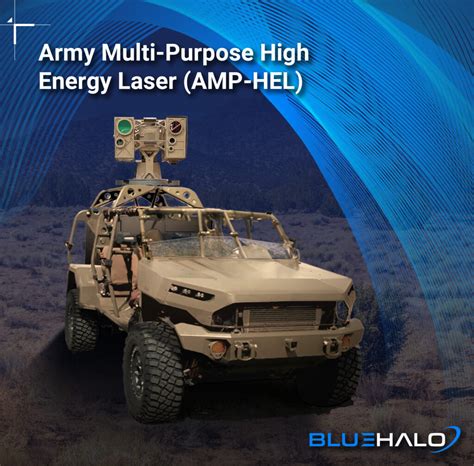
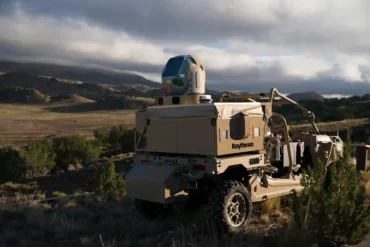
The system used during the FAA-backed demonstration was the Army’s Advanced Maneuver-Short Range Air Defense High-Energy Laser, commonly known as AMP-HEL.
Unlike consumer laser pointers measured in milliwatts, AMP-HEL operates at roughly 20 kilowatts of power, placing it in an entirely different category of directed-energy capability.
The difference is not merely quantitative. It is transformational.
A handheld laser pointer might distract a pilot or create temporary visibility issues. A military-grade laser system can physically damage components by concentrating energy onto a target for several seconds. Against drones, that concentrated beam can overheat electronics, blind sensors, melt structural materials, disable propulsion systems, or ignite batteries.
Modern counter-drone lasers are also far more sophisticated than many people imagine.
The laser itself is only one piece of a larger architecture that includes advanced sensors, precision tracking systems, stabilization mechanisms, targeting optics, airspace-monitoring software, and automated firing restrictions. These systems are designed to maintain a precise lock on moving airborne objects even in difficult environmental conditions.
In practical terms, the technology functions less like a science-fiction death ray and more like an extremely controlled energy-delivery platform.
Still, even highly advanced systems create serious concerns when operated near civilian air corridors.
A laser powerful enough to disable a drone raises obvious questions about accidental exposure to passenger aircraft. Could the beam weaken structural materials? Damage cockpit windows? Affect avionics? Ignite fuel vapors? Interfere with pilots?
Those questions explain why the FAA’s involvement focused heavily on operational safeguards rather than raw destructive capability.
Why A Boeing 767 Was Chosen For The Test
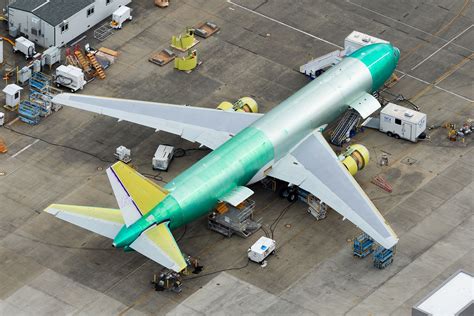
The use of a Boeing 767 fuselage immediately drew attention across the aviation industry.
The aircraft type remains widely used in commercial passenger service, cargo operations, and government fleets around the world. Its large aluminum airframe provided investigators with a realistic test subject that closely represented the structure of a modern airliner.
The choice also carried symbolic importance.
The FAA understood that public confidence mattered just as much as technical analysis. Testing the laser against an actual transport-category aircraft structure helped answer the most direct concern passengers might have: what happens if a high-energy military laser contacts a commercial jet?
The 767 provided a practical middle ground between realism and controllability.
Because the aircraft section was grounded inside a highly restricted military range, investigators could examine impacts carefully without risking actual flight operations. Engineers were able to analyze surface heating, penetration risks, structural integrity, scorch patterns, and material responses under tightly monitored conditions.
The aircraft did not represent a random choice for spectacle. It represented a controlled engineering platform.
Inside The Eight-Second Laser Exposure
The most dramatic phase of the experiment involved firing the AMP-HEL system directly at the Boeing 767 fuselage for approximately eight seconds at the laser’s maximum effective operational range.
In the context of directed-energy systems, eight seconds is a significant exposure period.
Counter-drone engagements often last only moments because the target is relatively small and vulnerable. Holding the beam on a large commercial aircraft structure for that duration created an opportunity to observe cumulative thermal effects under realistic conditions.
Investigators closely monitored multiple variables throughout the process.
They examined whether the laser caused:
- Structural penetration
- Material deformation
- Surface ignition
- Heat concentration
- Visible burn-through
- Damage to the aircraft skin
- Hazardous secondary effects
The results surprised many observers outside the defense sector.
According to the FAA and defense partners involved in the evaluation, the laser exposure did not produce direct structural damage to the Boeing 767 fuselage.
That finding immediately became the headline result of the demonstration.
It did not mean the laser was harmless. Nor did it suggest aircraft could safely absorb unlimited exposure from directed-energy systems. Instead, it established that under the specific tested conditions — including distance, beam duration, targeting geometry, and operational controls — the risk of catastrophic structural damage appeared lower than many feared.
The test effectively shifted the conversation from panic toward procedure.
The Real Story Was Not The Laser — It Was The Safety System
Despite the dramatic imagery surrounding a military laser firing at a passenger jet fuselage, aviation regulators were arguably more interested in something else entirely: the system’s safety architecture.
The FAA’s primary concern centered on preventing accidental engagements before they could occur.
During the White Sands demonstration, the laser system reportedly operated alongside multiple layers of automated protection designed to ensure the beam could not fire under unsafe conditions.
These safeguards included:
- Airspace-awareness integration
- Automated shutoff logic
- Tracking validation systems
- Target-confirmation protocols
- Restricted engagement envelopes
- Coordination with air traffic management data
The operational philosophy was straightforward. The laser should never fire unless the system confirmed that surrounding airspace conditions satisfied predefined safety requirements.
That distinction matters enormously.
The true aviation risk associated with directed-energy systems is often not the beam itself, but the possibility of poor coordination, human error, or incomplete situational awareness. The February El Paso disruption demonstrated exactly how quickly problems can escalate when emerging defense technologies intersect with civilian air traffic.
White Sands was designed to prove that procedural controls could reduce those risks to acceptable levels.
In effect, the FAA was attempting to build a regulatory framework around an entirely new category of airspace hazard.
How The Test Could Change Border Security Operations
The broader implications extend far beyond one Boeing 767 fuselage in the desert.
US border regions have experienced increasing drone activity tied to surveillance operations, smuggling, unauthorized reconnaissance, and cross-border criminal activity. Traditional countermeasures are not always practical near populated areas or active flight corridors.
Lasers offer several operational advantages.
Unlike missiles or gun-based systems, high-energy lasers do not launch physical projectiles that could continue traveling beyond the target. Engagements occur at the speed of light. Costs per engagement can also remain relatively low compared to conventional interceptor systems.
For defense planners, that combination is highly attractive.
However, the National Airspace System is among the most tightly regulated aviation environments in the world. Any technology capable of interfering with aircraft operations faces intense scrutiny from regulators.
The White Sands test appears to have provided the evidence needed for a new FAA-defense understanding announced on April 10, 2026. Under the agreement, controlled deployments of counter-drone lasers near border regions may proceed if they remain within approved operational limits.
That is a major development.
It suggests the United States is moving toward formal integration of directed-energy defense systems into areas that overlap with civilian aviation infrastructure.
Why Airline Passengers Probably Should Not Panic
For travelers reading headlines about military lasers firing at airliners, the story understandably sounds alarming.
Yet the FAA’s findings were largely intended to prevent public danger rather than create it.
The key takeaway from the test was not that lasers are harmless. High-energy systems remain potentially dangerous tools that require strict operational discipline. Instead, the demonstration showed that risks can be managed through coordinated procedures, technological safeguards, and tightly controlled engagement protocols.
Commercial aviation already operates alongside countless hazards that passengers rarely think about. Military training zones, missile-test corridors, restricted airspace, and defense radar systems coexist with airline routes every day under carefully managed rules.
The FAA appears determined to place directed-energy systems into that same framework of controlled oversight.
Passengers are also protected by multiple layers of aviation coordination. Air traffic control integration, restricted operating zones, automated safety interlocks, and preapproved engagement conditions all exist specifically to prevent unsafe interactions between lasers and civilian aircraft.
In other words, the laser is not supposed to operate freely inside active airline traffic.
The February El Paso incident became significant precisely because it represented a breakdown in coordination. The White Sands test was designed to ensure that such disruptions do not become routine.
The Aviation Industry Is Entering A Directed-Energy Era
The Boeing 767 laser test may eventually be remembered as a turning point in aviation-security history.
For decades, aviation regulators primarily focused on traditional threats such as mechanical failures, weather hazards, runway incursions, and conventional weapons risks. Directed-energy systems introduce an entirely different category of operational challenge.
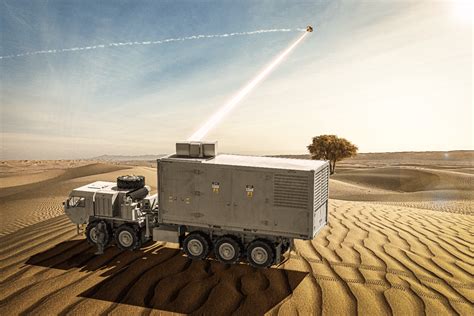
Unlike missiles or firearms, lasers are invisible, instantaneous, and heavily dependent on software-controlled safety mechanisms. That creates new regulatory questions involving automation, targeting verification, system integration, and airspace coordination.
The aviation industry now faces a future in which military-grade lasers could become permanent fixtures near sensitive infrastructure.
Airports, border zones, military installations, and critical facilities may increasingly rely on counter-drone systems as unmanned aircraft technology continues evolving. Regulators therefore need standards that balance security needs against civilian aviation safety.
The FAA’s White Sands evaluation appears to represent one of the first major attempts to create those standards using real-world testing rather than theoretical modeling alone.
That matters because public trust in aviation depends heavily on predictability and procedural discipline.
Even highly advanced technology becomes unacceptable if passengers believe the skies are turning into uncontrolled military operating environments. Regulators understand that confidence can disappear quickly following even isolated incidents.
By conducting a transparent, structured evaluation against a commercial aircraft fuselage, the FAA effectively demonstrated that oversight — not improvisation — would define future deployments.
The Bottom Line Behind The Boeing 767 Laser Test
At first glance, the image of a military laser firing at a Boeing 767 sounds sensational. In reality, the test represented something far more important than spectacle.
It was a stress test for the future relationship between national defense technology and civilian aviation safety.
The FAA needed to determine whether counter-drone laser systems could exist near commercial airspace without creating unacceptable risks. The White Sands experiment provided a cautiously reassuring answer.
Under controlled conditions, the 20-kilowatt AMP-HEL system reportedly caused no direct structural damage to the Boeing 767 fuselage during an eight-second exposure. More importantly, the demonstration validated the importance of automated safeguards, airspace integration, and strict operational procedures.
That procedural framework may ultimately become the real legacy of the test.
Military-grade lasers are powerful tools. Drone threats are growing rapidly. Yet the FAA’s position appears increasingly clear: directed-energy systems can only operate near civilian aviation if safety rules remain stronger than the weapons themselves.