The future of space exploration envisioned by NASA is no longer confined to distant dreams or speculative science fiction. It is being shaped right now by deliberate strategy, technological maturity, and a renewed focus on human presence beyond Earth. Under the leadership of its newest administrator, the agency is recalibrating priorities to ensure that exploration, science, and human ingenuity move forward together with purpose and clarity.
NASA’s current direction emphasizes understanding its own strengths before accelerating outward. This approach reflects a belief that transformational exploration begins with empowered people and well-aligned resources. Rather than chasing every possible objective, the agency is refining its focus on missions that fundamentally change how humanity explores space and understands its place in the universe.
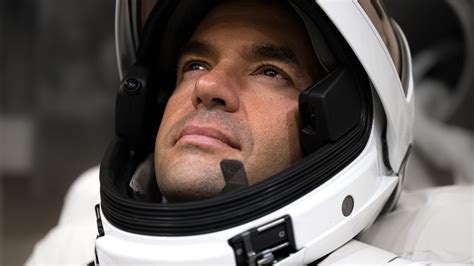
The appointment of Jared Isaacman marks a generational shift in leadership tone and ambition. As the youngest NASA chief in history, Isaacman brings a mindset shaped by private-sector agility and astronaut experience. His early emphasis on listening, internal collaboration, and workforce empowerment signals a belief that NASA’s greatest asset remains its people. The goal is not reinvention for its own sake, but sharper execution of missions that truly move the needle in science and discovery.
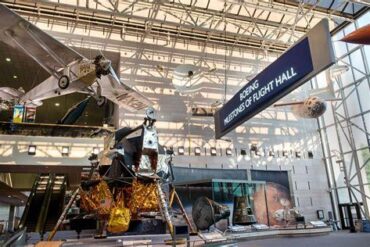
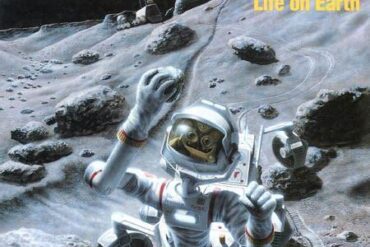
One of the most consequential pillars of NASA’s future is a sustained human presence on the Moon. Rather than viewing lunar missions as symbolic achievements, NASA sees the Moon as a proving ground for long-term exploration. Establishing infrastructure on the lunar surface enables deeper scientific research while also laying the groundwork for entirely new economic systems beyond Earth. Resources such as Helium-3, rare on Earth but more abundant on the Moon, could one day play a role in advanced energy research, transforming how humanity powers its future.
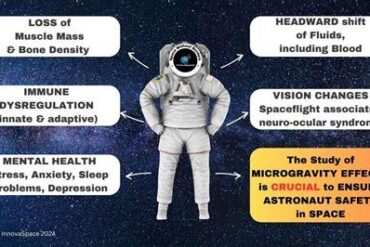
The Moon is also central to understanding how humans can live and work safely beyond Earth for extended periods. Operating in reduced gravity, managing radiation exposure, and sustaining life with limited resupply are challenges that must be solved before venturing farther into the solar system. The lunar environment offers the ideal laboratory for these solutions.
Artemis Missions and the Return to the Moon
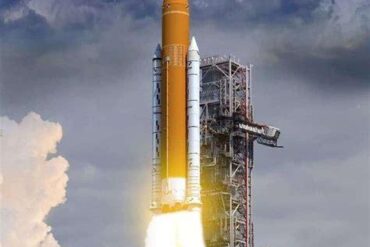
As Artemis II approaches launch, NASA stands on the edge of its first crewed lunar mission in half a century. This mission will carry four astronauts on a journey around the Moon, validating spacecraft systems and human readiness. It serves as a critical bridge between decades of robotic exploration and a new era of human-led missions.
Building Toward Artemis III and Beyond
Artemis III represents a historic leap forward, with astronauts set to land near the Moon’s South Pole. This region holds immense scientific value due to its permanently shadowed craters, which may contain water ice preserved for billions of years. Data collected here will deepen understanding of lunar geology while informing technologies essential for Mars exploration.
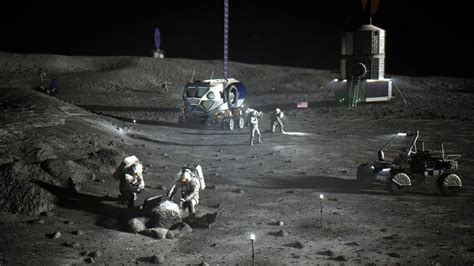
NASA views these missions not as isolated events, but as steps toward a broader cosmic economy. By developing lunar bases and orbital infrastructure, the agency aims to unlock a future where space exploration supports science, industry, and human expansion. The long-term vision extends beyond the Moon, positioning Mars as the next horizon, made reachable through lessons learned on our nearest celestial neighbor.