Nestled on the National Mall in Washington, D.C., the Smithsonian’s National Air and Space Museum (NASM) stands as a monumental testament to humankind’s relentless pursuit of the skies and beyond. Since its formal establishment by Congress in 1946 and the opening of its Mall facility in 1976, the NASM has grown to become the world’s foremost institution dedicated to the history, science, and innovation of aviation and spaceflight. With over 3.1 million visitors in 2023, it remains one of the most visited museums globally, ranking fourth in the United States and eleventh worldwide.
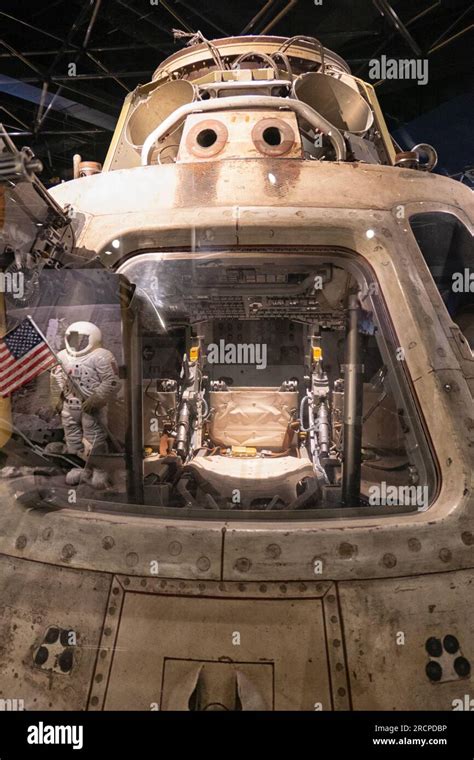
From the Wright Flyer that marked the dawn of aviation to the Apollo 11 command module Columbia, which carried humans to the Moon, the museum’s collection is unrivaled in its breadth and historical significance. But NASM is not only a repository of artifacts—it is a hub of scholarly research, STEM education, and public engagement that bridges the dreams of the past with the aspirations of the future.
A Brief History of Sky-Bound Vision
The roots of the NASM date back to 1946, when it was chartered as the National Air Museum in response to the increasing need to preserve the rapidly expanding array of aeronautical artifacts, particularly from World War II. Early exhibits were modestly housed in the Arts and Industries Building, a “Tin Shed”, and a stretch of outdoor displays known as Rocket Row.
A critical moment in its evolution came with the establishment of the Paul E. Garber Facility in 1952, created to house the growing collection. The real transformation, however, occurred under the leadership of Apollo 11 astronaut Michael Collins, when the newly renamed National Air and Space Museum opened its signature building on July 1, 1976, celebrating the U.S. Bicentennial and the power of innovation in the nation’s story.
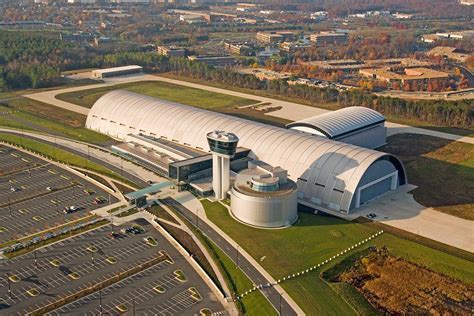
Over the decades, the museum expanded further. In 1988, the addition of the Wright Place pavilion brought new amenities. In 2003, the Steven F. Udvar-Hazy Center opened near Dulles International Airport, allowing for the display of larger aircraft and hosting the Mary Baker Engen Restoration Hangar, where visitors can watch conservation efforts firsthand. This facility became essential for showcasing monumental aircraft such as the Concorde and the Space Shuttle Discovery.
Architectural Grandeur: Designed for the Skies
The design of the NASM Mall building itself is a marvel. Crafted by architect Gyo Obata of Hellmuth, Obata & Kassabaum (HOK), the structure consists of four pink Tennessee marble cubes linked by steel-and-glass atria. These striking glass connectors are more than aesthetic; they accommodate massive exhibits such as full-size rockets and satellites.
The building’s western glass wall doubles as a giant loading door for aircraft installation, making the museum not just a gallery, but a living stage for dynamic curation. Though elegant, the architecture has faced wear and tear over the decades.
By the 2010s, an urgent renovation became necessary due to aging infrastructure, including UV-permeable glass threatening artifact integrity, deteriorating marble, and a failing HVAC system.
A New Era: Renovation and Rebirth
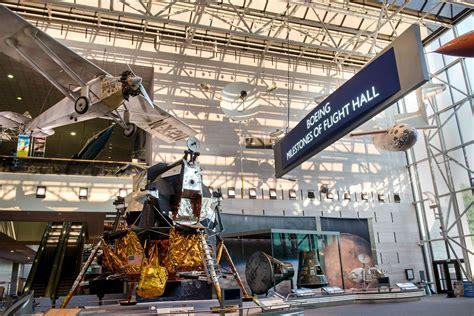
In 2014, Boeing’s $30 million donation catalyzed the revitalization of the Milestones of Flight Hall, which was renamed Boeing Hall. The need for comprehensive modernization culminated in a massive $360 million renovation, started in 2018, with cost projections eventually exceeding $1 billion.
The phased renovation focuses on artifact preservation, accessibility, modern exhibition design, and sustainability—with solar panel installation and enhanced security among the improvements. Phase I reopened on October 14, 2022, unveiling redesigned galleries, a refurbished planetarium, new retail and dining spaces, and improved visitor flow.
By 2026, the transformation will be complete, including the opening of the Jeff Bezos Learning Center on the former food court site, promising interactive learning experiences for future generations of explorers.
Unrivaled Collections of Air and Space History
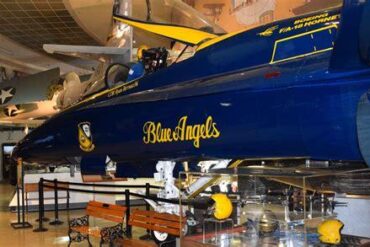
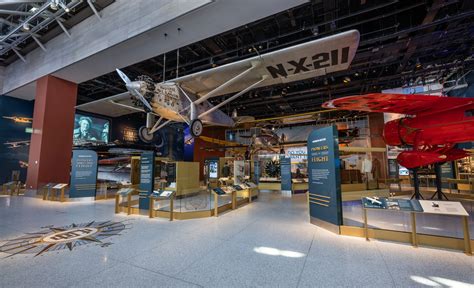
The strength of the NASM lies in its extraordinary collection, many of which are original, flight-flown artifacts. Inside its galleries are legendary icons such as:
- Apollo 11’s Columbia command module
- Charles Lindbergh’s Spirit of St. Louis
- John Glenn’s Friendship 7 capsule
- A full-scale replica of the Hubble Space Telescope’s COSTAR instrument
- The Bell X-1 Glamorous Glennis, the first plane to break the sound barrier
- The Wright Flyer, the first powered, controlled, and sustained heavier-than-air human flight
The museum also showcases missiles, lunar modules, space suits, and thousands of smaller yet equally significant artifacts. The Steven F. Udvar-Hazy Center, meanwhile, houses aircraft too large for the Mall building, including the Enola Gay, the SR-71 Blackbird, and Space Shuttle Discovery.
Research, Restoration, and Learning in Action
Behind the scenes, NASM’s mission extends far beyond exhibition. Its scholars conduct original research in fields ranging from planetary science and geophysics to aviation history and technology. Restoration is a critical component, carried out at the Paul E. Garber Facility in Maryland and the Restoration Hangar at Udvar-Hazy.
Through four prestigious fellowship programs, including the Charles A. Lindbergh Chair and Postdoctoral Earth and Planetary Sciences Fellowship, the museum supports rigorous academic work. These fellowships contribute to a growing body of aerospace scholarship, reflecting NASM’s role not only as a museum, but also as a research institution.
Public Programs and Education
Education lies at the heart of the museum’s public mission. Flagship programs include STEM in 30, a live, televised show aimed at middle-schoolers, now in its seventh season, and What’s New in Aerospace, a series of guest-speaker events spotlighting cutting-edge discoveries and missions.
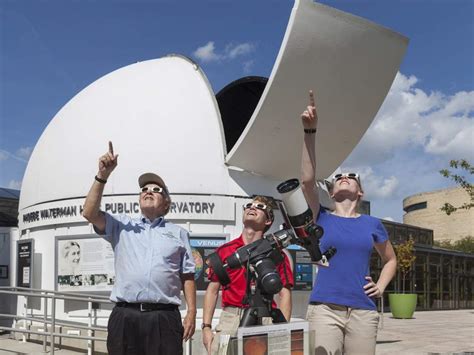
The Phoebe Waterman Haas Public Observatory, which opened in 2009, allows visitors hands-on experience with solar and night-time observations. Equipped with a 16-inch Boller & Chivens telescope and solar telescopes, the observatory operates Wednesday through Sunday and includes special night sessions each month.
Navigating Controversy and Cultural Reflection
Despite its acclaim, the museum has not been without controversy. In 1994–95, a planned exhibition on the Enola Gay stirred national debate. The original draft text, critiqued by veteran groups for its perceived political framing of the atomic bombings of Japan, was revised following congressional hearings. The controversy culminated in Director Martin Harwit’s resignation and a simplified 1995 exhibition that ultimately drew millions.
Other incidents, such as the Occupy D.C. protest closure in 2011 and 2013 demonstrations by food workers seeking fair wages, underscored the museum’s role not only as a cultural institution but as a civic space embedded in national dialogue.
A Legacy of Leadership
From its inaugural director Carl W. Mitman (1946–52) to modern leadership under Christopher U. Browne (acting 2020–22, permanent since 2022), the NASM has been shaped by visionaries in science, curation, and public service. Among its most influential leaders was Michael Collins, who not only walked among the stars but also built a museum to inspire others to follow.
The Future of Flight Begins Here
As it approaches the full completion of its decade-long renovation, the National Air and Space Museum reasserts itself as a living archive of our most audacious dreams. More than just a destination for tourists, it is a launchpad for discovery, a repository of global achievement, and a beacon for generations to come. Through its exhibits, research, and programs, NASM continues to tell the story of flight and space exploration with unparalleled authenticity and vision.
In a world increasingly defined by technology and innovation, the NASM remains a place where we remember the courage to leap from Earth—and imagine how far we can still go.