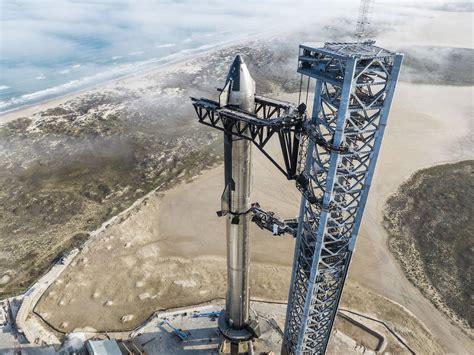
A launch pad serves as the indispensable, above-ground facility from which rockets or missiles are vertically launched into space or ballistic trajectories. Far more than a simple platform, a launch pad integrates an intricate network of infrastructure and technology designed to support the intense mechanical, thermal, and acoustic stresses of rocket liftoff. It is the critical nexus where engineering, safety, and operational precision converge to transform static rocket hardware into dynamic vehicles soaring beyond the Earth’s atmosphere. The core of the launch pad is the launch platform or mobile launcher platform, which provides a stable foundation to support the rocket’s weight and the intense thrust forces during ignition and ascent. Surrounding this platform are extensive service structures—typically tall steel gantries or towers—that facilitate vehicle assembly, maintenance, crew access, and secure umbilical connections delivering power, propellants, cryogenic fluids, communications, and telemetry links. These umbilicals detach mere moments before launch to allow an unencumbered liftoff.
The design of the launch pad also incorporates crucial propellant and cryogenic fluid supply systems, enabling the precise fueling of liquid rockets with volatile substances like liquid oxygen and hydrogen. Adjacent infrastructure includes storage tanks, power generation units, communication arrays, and advanced telemetry facilities that continuously monitor vehicle health and environmental conditions.
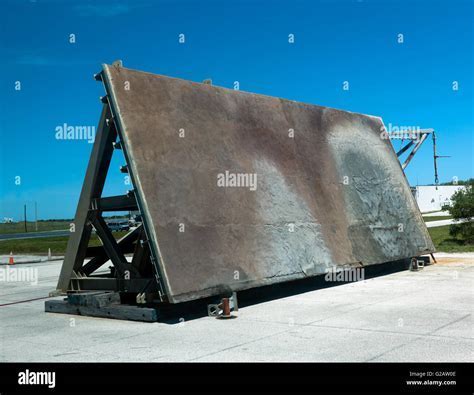
The environment surrounding the pad is meticulously engineered for operational resilience, featuring access roads for transportation logistics, drainage systems to handle cryogenic spills and rainfall, and protective systems such as lightning protection to safeguard sensitive electronics and personnel. Integral to the launch pad’s survivability are flame deflectors—massive, often concrete or steel, structures that redirect the enormous exhaust plumes away from the pad infrastructure to prevent damage. Equally vital are the sound suppression systems, employing colossal water deluge setups that soak the pad and create a mist to absorb and dramatically reduce the acoustic energy generated during ignition, which can reach an ear-shattering 200 decibels, risking damage to both hardware and humans if unmitigated.
The Evolution and Historical Milestones of Launch Pads
The concept of a dedicated launch pad evolved as rocket technology transitioned from simple experimental devices to complex, high-thrust vehicles requiring specialized ground support. Early rocketry in the late 19th and early 20th centuries—primarily solid-fuel fireworks and rudimentary rockets—demanded no formalized launch sites. The pioneering liquid-fueled rocket tests conducted by Robert H. Goddard in 1926 utilized a simple, makeshift mounting system in Massachusetts with basic fuel lines for gasoline and liquid oxygen, reflecting the experimental nature of early rocketry.
By the 1930s, as liquid-fuel rockets increased in size and complexity, the need for dedicated launch facilities became apparent. Germany led early developments with the establishment of Raketenflugplatz Berlin in 1930 and the more advanced Kummersdorf test stand in 1932. However, the hazardous nature of early liquid propellants was tragically underscored when a hydrogen peroxide and alcohol fuel mishap at Kummersdorf resulted in fatalities, highlighting the essential requirement for rigorous safety and infrastructure standards.
This knowledge led to the creation of Peenemünde’s Test Stand VI and VII in 1937, where the legendary V-2 rocket was developed. Test Stand VII was notable for its ability to conduct static firings of engines producing up to 200 tons of thrust, establishing the blueprint for modern launch pad design. The evolution continued through the Cold War and space race era, where pad designs became increasingly sophisticated to accommodate larger, heavier rockets such as the Saturn V and the Space Shuttle, with enhanced support structures, flame trenches, and advanced telemetry systems.
Strategic Site Selection: Geographic and Environmental Considerations
Selecting a launch pad location is a strategic decision shaped by physics, geography, and safety imperatives. Coastal sites facing eastward are favored worldwide because they exploit the Earth’s rotational velocity to provide rockets with a natural boost during launch, enhancing payload efficiency. Launch trajectories over open ocean also minimize risk to populated areas in case of failure, making such locations ideal for safe rocket operations.
However, nations without direct access to suitable coastlines have engineered innovative alternatives. The Soviet Union’s Baikonur Cosmodrome, situated deep inland in Kazakhstan, leverages vast surrounding uninhabited areas to mitigate risk. Similarly, the Guiana Space Centre near the equator benefits from the Earth’s maximum rotational speed and proximity to the ocean, making it a premier site for European space missions.
Launch pads themselves must withstand extreme environmental conditions, from corrosive salt air at oceanfront sites to harsh continental climates. This impacts the choice of construction materials and ongoing maintenance regimes, ensuring longevity and operational reliability.
Launch Pad Facilities: Integration of Technology and Transport Methods
Launch pads are tailored to the rocket designs and operational philosophies of space programs. Transportation and integration methods profoundly influence pad architecture. Rockets like Soyuz, Proton, N1, Energia, SpaceX’s Falcon 9, and Rocket Lab’s Electron utilize horizontal integration methods where the vehicle is assembled horizontally and transported to the pad on rail or road transporters. The pad must then accommodate the vertical erection of the vehicle, necessitating large cranes or gantry arms.
Conversely, rockets such as the Saturn V, Space Shuttle, Ariane 5, and Atlas V employ vertical integration, where the vehicle is stacked and assembled vertically in a nearby facility, then rolled out or transported atop a mobile launcher platform to the pad. This method streamlines final checks and preserves vehicle orientation.
In some cases, repurposed missile silos serve as launch pads for converted intercontinental ballistic missiles (ICBMs), offering a highly secure and camouflaged launch environment. The innovative Sea Launch platform is an ocean-going example, where a converted oil rig serves as a mobile pad on the equator, capitalizing on the Earth’s rotational speed while providing flexibility in launch site location.
Advanced Safety and Performance Systems on Modern Launch Pads
Modern launch pads incorporate a series of safety and performance validation systems that ensure a rocket is launch-ready before ignition. Hold-down arms physically secure the rocket during initial engine ignition, enabling full engine startup and system checks. This is critical to verify that all engines perform nominally before releasing the vehicle to ascend. If anomalies are detected, automated systems initiate engine shutdown to prevent catastrophic failure.
One of the more specialized pad subsystems is the hydrogen burn-off system, crucial for vehicles using liquid hydrogen as fuel. Free hydrogen gas, if allowed to accumulate, poses an explosive hazard. Igniters fire radially outward from the pad to burn off excess hydrogen safely, preventing dangerous gas buildup around the engines during countdown.
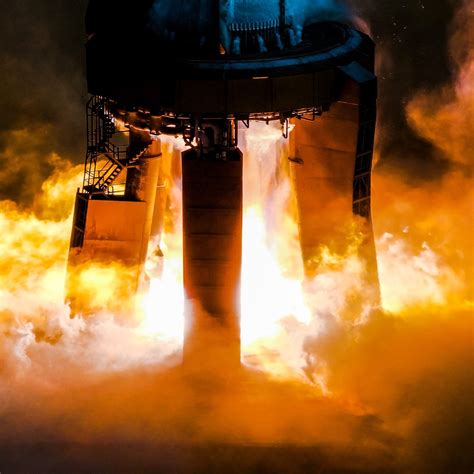
The launch pad is also the site of static-fire tests, where the rocket’s engines are fired at full thrust for a brief duration (typically three to five seconds) while restrained. This test validates engine and system performance, ensuring reliability on launch day. The ability to conduct these tests on-pad without moving the vehicle preserves schedule and safety margins.
Conclusion: Launch Pads as Cornerstones of Space Access
The launch pad stands as a monumental engineering achievement, embodying decades of technological progress and operational experience. It is much more than a platform; it is a complex, highly specialized ecosystem that must reliably manage the most violent, volatile, and precise processes in human technology. From the earliest rocket tests by Goddard to the sprawling complexes that support modern orbital and interplanetary missions, launch pads continue to evolve, integrating cutting-edge materials, advanced safety systems, and new methodologies to enable humanity’s reach into space.
As private companies and governments push the boundaries with reusable rockets, rapid launch cadence, and extraterrestrial missions, the launch pad remains the essential ground-based hub. Its design, location, and infrastructure dictate not only the success of a single mission but the broader progress of space exploration and the commercial space economy. In essence, the launch pad is the literal and figurative launching point of human aspiration and technological mastery.