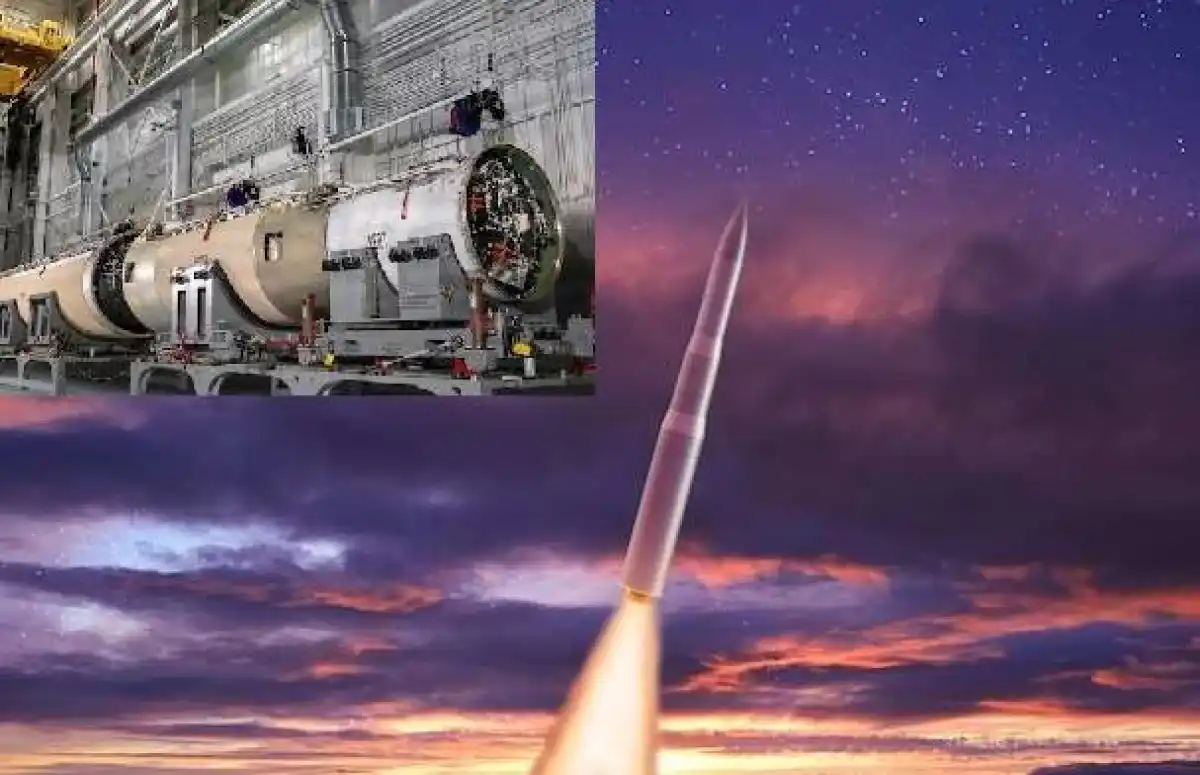
The U.S. Air Force has moved decisively to restore momentum to the LGM-35A Sentinel intercontinental ballistic missile (ICBM) program, setting a firm target for a first missile pad launch in 2027 and aiming to regain Milestone B approval by the end of 2026. The reset follows a turbulent period marked by a 2024 Nunn–McCurdy breach, a statutory signal that cost growth had exceeded acceptable thresholds and triggered a comprehensive restructuring of the program. The latest update frames Sentinel not as a single missile replacement but as a full-scale modernization of the land-based leg of the U.S. nuclear triad, designed to deliver reliability, decision advantage, and infrastructure resilience well into the early 2030s and beyond.
The Sentinel program replaces the aging Minuteman III force that has anchored U.S. land-based deterrence since the 1970s. While Minuteman III has benefited from life-extension programs, the Air Force argues that continued patchwork upgrades would eventually compound risk and cost while locking in outdated command-and-control architectures. Sentinel is therefore positioned as a generational reset: a new three-stage, solid-fuel missile, new launch and support systems, and a rebuilt command-and-control backbone engineered for cyber resilience and modular upgrades. The strategic logic is straightforward. A dispersed force of hardened silos complicates adversary planning and preserves credible presidential options, reinforcing deterrence even as submarines and bombers shoulder much of the survivability and signaling burden.
The 2024 cost breach forced a hard look at what was driving overruns. The Department of Defense concluded that the largest cost growth stemmed not from the missile airframe but from the command-and-launch ecosystem: the labyrinth of launch facilities, control centers, utilities, and secure corridors that must be modernized to transition from Minuteman III to a new digital-era architecture. In response, the Air Force rescinded Sentinel’s earlier Milestone B approval and directed a full program restructure. The 2026 update now asserts that the corrective work is maturing into a tighter acquisition plan designed to reduce decision latency, improve enterprise alignment, and tame the sprawling infrastructure footprint that underpins every alert missile.
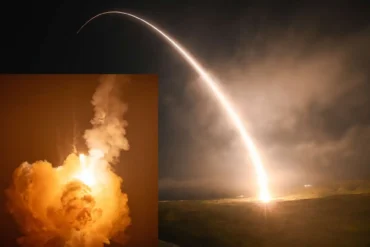
Engineering progress on the missile itself has provided tangible proof points that the technical heart of Sentinel is moving forward. The Air Force has released imagery of a Sentinel test booster assembled with stages one, two, and three, including both interstage mechanisms. This booster is being integrated with the missile’s forward section to form a fully assembled ground-test missile, enabling transportation, emplacement, and other pathfinder activities that de-risk operations long before flight testing begins. Propulsion work has advanced through full-scale qualification of the stage-two solid rocket motor in July 2025 following stage-one qualification in March 2025, with earlier developmental testing feeding into reliability models. For a system expected to sit on alert for decades, predictable propulsion performance and maintenance cycles are strategic assets, not mere engineering details.
Payload integration is equally central to Sentinel’s credibility. The Air Force Nuclear Weapons Center confirms that Sentinel will replace Minuteman III across the three existing missile fields at F.E. Warren, Malmstrom, and Minot, maintaining the same number of land-based missiles on alert. Initial deployments will carry the W87-0 warhead currently associated with Minuteman III, while the National Nuclear Security Administration (NNSA) advances the W87-1 modernization slated for deployment in the FY2031–FY2032 window. NNSA has verified completion of the first production unit plutonium pit for W87-1 and is rebuilding pit manufacturing capacity, binding Sentinel’s schedule to the health of the broader nuclear enterprise. The missile cannot outrun the warhead pipeline; strategic timelines now hinge on synchronized industrial throughput as much as on flight-test cadence.
Sentinel Missile Architecture and Test Infrastructure
The Air Force’s emphasis on decision advantage reflects lessons drawn from modern conflict and cyber-contested environments. Sentinel’s command-and-control architecture is being built for resilience against digital intrusion and for modular upgrades as technologies evolve. This approach treats software and secure communications as enduring warfighting systems rather than static support functions. In practical terms, the modernization aims to compress decision timelines for U.S. leadership while denying adversaries confidence in disabling the force through cyber or electronic attack. Reliability becomes deterrence by other means: a system that can be trusted to function under pressure changes the calculus of escalation.
Infrastructure is where Sentinel becomes most tangible to the communities and units that will operate it. The Air Force has opted to build new silos rather than excavate and retrofit the unique, aging Minuteman-era structures scattered across the northern tier of the United States. Officials cite cost unpredictability and safety hazards associated with decades-old concrete and utilities. The transition is being managed through Site Activation Task Force detachments at the three missile wings and at Vandenberg Space Force Base, which will host the future flight-test campaign. The Air Force Global Strike Command has already taken the first Minuteman III silo offline as a sequenced step in the handover, signaling that the shift from legacy to next-generation systems is no longer theoretical.
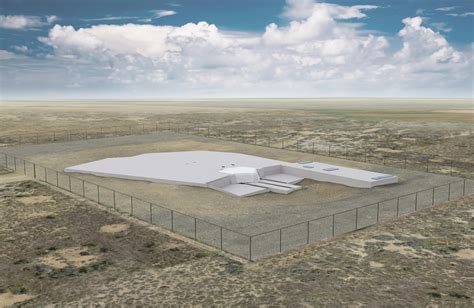
Near-term milestones anchor the reset in visible construction and testing. In early 2026, teams are set to break ground on a prototype launch silo at Northrop Grumman’s Promontory, Utah site to validate modern construction techniques before full field work accelerates. Prototyping at F.E. Warren is planned to refine utility corridor construction methods intended to streamline the installation of thousands of miles of secure cabling and conduits across missile fields. The Air Force has completed a critical design review for the Sentinel Launch Support System and begun building the first of three new wing command centers at F.E. Warren, while expanding test facilities at Vandenberg to support the integrated launch campaign. The 2027 pad launch is framed as the first visible proof that missile, infrastructure, and command systems are converging into a coherent whole.
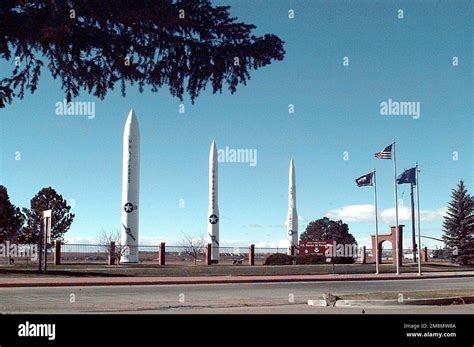
U.S. Nuclear Deterrence Infrastructure Modernization at F.E. Warren
The strategic environment surrounding Sentinel’s rollout is anything but static. Russia continues to deploy the RS-24 Yars, a three-stage solid-fuel ICBM fielded in mobile and silo variants with multiple reentry vehicles and penetration aids, while pursuing the heavy, liquid-fueled RS-28 Sarmat for large payloads and novel trajectories. China’s DF-41 emphasizes mobility and scale, with reported ranges that enable global reach and multiple warheads. North Korea’s Hwasong-18 reflects a different pressure point: solid-fueled, road-mobile concepts that compress warning timelines and complicate pre-launch detection. These parallel modernization tracks sharpen the rationale for a resilient U.S. land-based deterrent that can absorb shocks and preserve response options under compressed timelines.
Allies anchor deterrence differently. The United Kingdom’s future Dreadnought-class submarines will continue to field Trident II D5 missiles, and France is modernizing its sea-based leg with the M51.3. This NATO reality underscores the unique contribution of the U.S. ICBM force to extended deterrence. A credible, always-ready land-based leg signals permanence and resolve to allies while complicating adversary strategies that might otherwise focus on hunting submarines or degrading bomber bases. Sentinel’s success therefore carries alliance implications that extend beyond American missile fields.
Northrop Grumman Promontory Facility Prototype Silo Construction
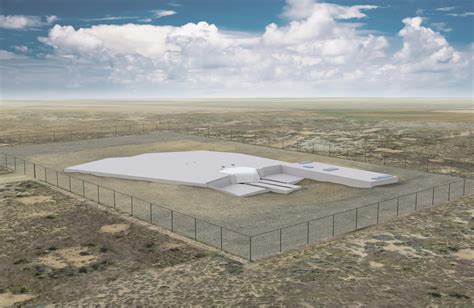
The restructured program still faces schedule pressure. The most consequential hinge points are the reconstituted Milestone B decision at the end of 2026, the 2027 pad launch as an integrated readiness proof, and the nuclear enterprise’s ability to deliver W87-1 components on time. The 2024 cost breach remains a cautionary marker that infrastructure scale, workforce demands, and security requirements can overwhelm even technically mature missile designs. The Air Force’s revised approach emphasizes disciplined phasing, early prototyping, and incremental integration to prevent late-stage surprises from cascading into years of delay.
If the reset holds, Sentinel will do more than replace Minuteman III hardware. It will reassert the strategic logic of a dispersed, hardened, always-ready land-based deterrent in an era defined by mobile missiles, multi-warhead buses, and shrinking warning timelines. The program’s success would signal that the United States can modernize its most consequential strategic systems without surrendering control to cost spirals or institutional inertia. The 2027 pad launch, modest in appearance, is being framed as the moment when engineering discipline, industrial capacity, and strategic intent converge into a single, testable reality.