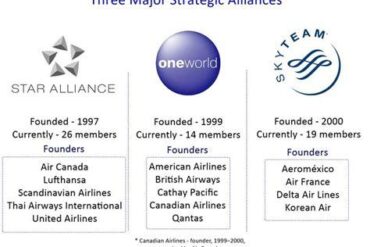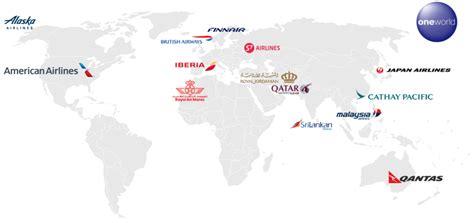
The global airline alliance once promised a simple magic trick: one logo, many airlines, seamless travel. That promise frayed as joint ventures muscled into the most profitable corridors, quietly becoming the real engines of long-haul profit. Against that backdrop, oneworld’s appointment of Ole Orvér as CEO is not a polite change of guard. It is a directional choice, a signal flare that the alliance intends to compete where it still matters: network usefulness, commercial depth, and operational coherence. In a marketplace where partnerships now outrun pageantry, choosing a route master over a brand diplomat tells you exactly how oneworld plans to fight for relevance.
The difference between alliances that look impressive and alliances that sell is not the number of member logos. It is whether itineraries actually work. Passengers don’t buy abstract footprints; they buy timed connections, priced seats, predictable recovery when flights break, and a loyalty experience that doesn’t unravel at the seams. The modern alliance must behave like a single, distributed airline. That requires someone who thinks in flows and bank structures, not slogans. Orvér’s career has been spent inside the engine room of airlines, turning messy networks into sellable products. That muscle memory is now being applied to an alliance that has felt, for years, like the smallest of the Big Three.
The tension inside alliances today is structural. Transatlantic and transpacific joint ventures carve out the profit pools with antitrust immunity and tight commercial integration. Alliances, by contrast, are often left to justify their existence as broad umbrellas of convenience. oneworld’s strategic answer is not to out-scale Star Alliance or out-platform SkyTeam. It is to make the network it already has feel larger than it is by engineering better connections, reducing friction at handoffs, and leaning into premium corridors where its members dominate. This is the logic of a network operator, not a press release.
The Network Guru Thesis: Why oneworld Chose a Route Master CEO
Orvér arrives with a reputation built at the intersection of network planning and commercial strategy, the place where airline theory meets revenue reality. At Finnair, he navigated the twin shocks that forced radical network redesign: the pandemic collapse and the closure of Russian airspace, which shredded Europe–Asia routings and demanded fast, unsentimental decisions about where connectivity could still be monetized. Before that, at Qatar Airways, he worked inside one of the world’s most aggressive hub connectors, where the economics of feeding a super-hub are measured in minutes, not mission statements.
That background matters because alliances are only as strong as their weakest connection. A single broken minimum connection time, a baggage transfer that fails too often, or a fare that prices out of the market quietly erodes loyalty. A network-first CEO sees those failures as revenue leaks. Fixing them is not glamorous, but it is compounding. Over time, smoother seams make an alliance feel like a coherent product rather than a patchwork of brands.
From Marketing to Mechanics: Making a Smaller Alliance Feel Bigger
oneworld’s size disadvantage shows up in practical ways. Secondary markets have fewer natural one-stop options. Disruptions offer fewer alternative hubs. Corporate travel managers see thinner coverage in some regions. None of this is solved by slogans. It is solved by tighter schedule coordination, more realistic connection windows, cleaner through-ticketing, and disciplined fare construction that keeps multi-carrier itineraries competitive. These are mechanics. They decide whether the alliance converts intent into tickets.
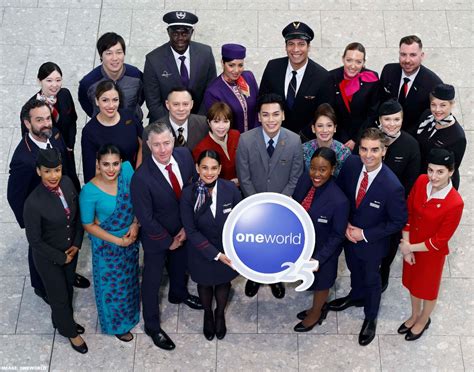
The alliance is not short of powerful hubs. Heathrow, Doha, Hong Kong, Dallas/Fort Worth, Tokyo Haneda—these are super-connectors that already move rivers of traffic. The trick is to make the rivers meet. When banks are aligned across carriers, when minimum connection times reflect how airports actually behave, and when irregular operations trigger predictable rebooking across partners, the network’s perceived size expands without adding a single member airline. The alliance stops feeling small because it stops feeling fragmented.
Premium Corridors as a Strategy, Not a Slogan
Scale for its own sake is a trap. oneworld’s comparative advantage is premium long-haul depth. British Airways, Japan Airlines, Cathay Pacific, and Qatar Airways dominate high-yield corridors where schedule quality and loyalty recognition decide contracts. A route master CEO is more likely to concentrate resources where premium demand compounds value. That means sharpening the experience on the most lucrative flows—consistent elite recognition, predictable lounge access, fare families that make sense across carriers, and disruption handling that protects the premium promise when weather or strikes intervene.

This focus is not exclusionary; it is strategic. Winning decisively on a smaller number of global flows creates halo effects for the rest of the network. Corporate buyers judge alliances by their most important routes. When those routes behave like a single airline, the alliance earns trust that marketing alone cannot buy.
Repairing the Seams: Where Alliances Actually Lose Loyalty
Passengers don’t defect because an alliance lacks a badge. They defect because the seams hurt. Bags misconnect. Seats assigned on one carrier vanish on another. Lounge access rules change mid-journey. During disruptions, rebooking becomes a game of telephone. Each friction point is a tiny tax on trust. Over millions of journeys, those taxes add up to real revenue loss.
A network strategist treats seam repair as a growth project. Better interline reliability lowers disruption costs. Cleaner technology integration reduces call center load. Consistent status recognition increases loyalty stickiness on high-value travelers who notice every mismatch. These fixes rarely trend on social media. They quietly make the product work. Over time, that competence becomes brand.

Intra-Alliance Diplomacy, Solved With Economics
Alliances are coalitions of competitors. Friction is inevitable. History has shown that public spats between members can threaten the alliance’s coherence. The durable way to manage these tensions is not ideology; it is economics. When partners can see, in clean numbers, how flows and revenue grow through cooperation, disputes cool. A CEO who speaks the language of network value can reframe disagreements as solvable allocation problems: where feed should go, how revenue is shared, how schedules can be adjusted to expand the pie rather than fight over slices.
This approach also disciplines the alliance’s governance. Decisions anchored in flow economics tend to survive leadership changes because they are legible to finance teams and network planners alike. That continuity is rare in alliance management, and it is a quiet competitive advantage.
Competing With Star Alliance and SkyTeam on Substance
Star Alliance markets breadth. SkyTeam leans into digital cohesion. Those are rational strategies for their portfolios. oneworld’s edge will be network usefulness that feels premium. The competition in 2026 is not about who has the most members; it is about who makes multi-airline travel feel like a single product. That means codeshares that actually price competitively, connections that work operationally, elite benefits that survive handoffs, and recovery playbooks that preserve trust when plans unravel.
A route master CEO asks the questions that decide outcomes. Will this connection sell at scale? Will the fare family survive a partner handoff without confusing customers? Will elites feel recognized in the lounge and on the seat map? Will disruption handling protect the premium promise, or will it leak goodwill at the worst possible moment? Those questions are operational, commercial, and moral all at once. They define whether an alliance is a brochure or a product.
The Long View: Alliances After the Joint Venture Era
Joint ventures are not going away. They will continue to dominate profit pools on major corridors. The alliance that thrives is the one that complements JVs rather than competes with them. oneworld’s path is to become the connective tissue that makes bespoke partnerships scalable without becoming bureaucratic. When the alliance supplies reliable seams—technology, rebooking protocols, loyalty consistency—members can plug in joint ventures without rebuilding the basics each time.
That is the future-proofing logic behind choosing a CEO who thinks in routes and revenue rather than rhetoric. Alliances must prove they still do something uniquely useful. The oldest argument remains the winning one when executed well: a better network, made real through better integration. When the network behaves, the brand follows.