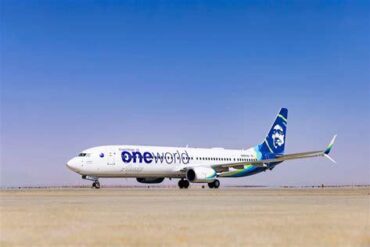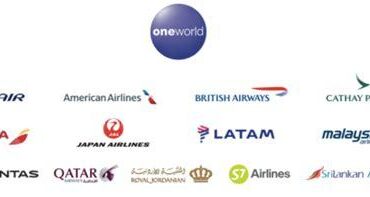
For travelers, airline alliances often appear simple: airlines join forces, passengers earn miles across partner networks, and global connectivity improves. Behind the scenes, however, becoming a member of a major alliance is a highly strategic decision shaped by competition, market access, and the interests of powerful airline executives. In the case of the oneworld Alliance, a single airline CEO can potentially prevent another carrier from joining, creating one of the most fascinating examples of corporate influence in global aviation.
Unlike a traditional business partnership where companies freely choose their collaborators, airline alliances operate through a delicate balance of cooperation and competition. Member airlines share passengers, loyalty programs, and connections, but they also compete for many of the same travelers. This creates situations where an airline may support alliance expansion in theory while opposing a specific candidate that threatens its own commercial position.

How Airline Alliances Decide Which Carriers Can Join
The modern airline industry is dominated by three major global alliances: Star Alliance, SkyTeam, and Oneworld. These networks allow airlines to cooperate internationally without fully merging their operations. Members can offer passengers wider route networks, shared frequent flyer benefits, and smoother connections across continents.
However, joining one of these alliances is not simply a matter of submitting an application and meeting technical requirements. Existing members must determine whether a new airline strengthens the alliance as a whole. Factors such as geographic coverage, fleet quality, financial stability, safety standards, passenger experience, and strategic importance all influence the decision.
For oneworld, new membership decisions are handled through the oneworld Governing Board, which consists of senior executives from existing member airlines. The board determines the alliance’s strategic direction and evaluates potential additions. Since the board is controlled by airline CEOs, membership decisions are ultimately influenced by the commercial priorities of the companies they lead.
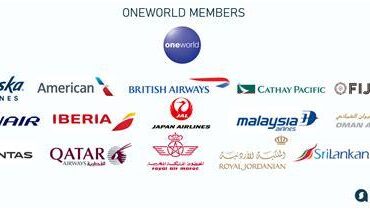
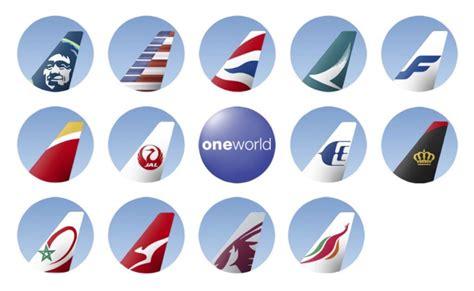
The alliance was founded in 1999 by American Airlines, British Airways, Cathay Pacific, Qantas, and the now-defunct Canadian Airlines. Although the alliance has expanded significantly since then, its founding members continue to hold considerable influence over its future.
Why Founding Airlines Have More Power Inside oneworld
One of the most important aspects of oneworld’s membership structure is that not every airline appears to have equal influence. While the alliance does not publicly release detailed voting procedures, industry reporting has indicated that founding members retain special veto rights over potential new members.
A veto means that one airline can block an applicant from joining, even if other members believe the candidate would benefit the alliance. This arrangement reflects the historical importance of the founding airlines and their role in building the alliance from its beginning.
Today, four original founders remain active members: American Airlines, British Airways, Cathay Pacific, and Qantas. Their influence means that the opinion of one CEO can become a decisive factor in determining whether an airline gains access to one of the world’s largest international aviation networks.
The reason this power exists is simple: the goals of an alliance and the goals of an individual airline are not always identical. Adding a new member may increase the alliance’s overall reach, but it may also create a stronger competitor in a specific market.
For example, an airline based in Asia could provide valuable connections, new destinations, and additional passengers for oneworld. Yet if that same airline competes directly with an existing member on important routes, the current member may view the newcomer as a threat rather than an opportunity.
This conflict between collective growth and individual business interests is what gives founding airlines such significant influence.
STARLUX Airlines Shows How Competition Can Block Alliance Ambitions
The clearest recent example of this power dynamic involves STARLUX Airlines. Since launching operations in 2020, STARLUX has rapidly developed into one of Asia’s most ambitious new full-service carriers. The airline operates modern aircraft, including Airbus A321neo, Airbus A330neo, and Airbus A350 aircraft, while expanding across Asia and North America.
For STARLUX, joining oneworld would appear to be a logical strategic move. Taiwan already has two major full-service airlines connected to rival alliances. China Airlines belongs to SkyTeam, while EVA Air is part of Star Alliance. Becoming a member of oneworld would give STARLUX a unique position as Taiwan’s representative in the third major alliance.
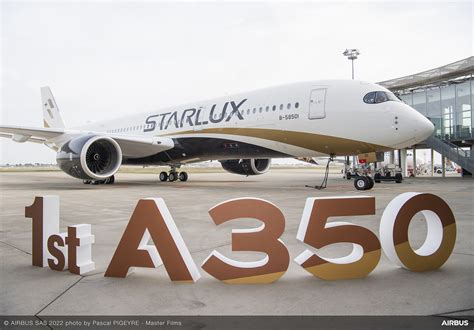
Despite this strategic fit, STARLUX’s progress toward membership has reportedly stalled. Industry speculation has suggested that Cathay Pacific has been the main obstacle to the airline’s application. STARLUX Chairman Chang Kuo-wei has publicly acknowledged that Cathay Pacific opposes the airline joining oneworld.
The disagreement appears to come down to competition. Taiwan and Hong Kong are geographically close, and both Cathay Pacific and STARLUX compete for passengers traveling through Asia. Cathay Pacific’s Hong Kong hub depends heavily on connecting traffic from regional markets, including Taiwan.
A successful STARLUX partnership with oneworld could provide the Taiwanese carrier with stronger global recognition, improved loyalty benefits, and greater access to international connecting passengers. Those same advantages could potentially strengthen a direct competitor to Cathay Pacific.
From STARLUX’s perspective, alliance membership would help it compete globally. From Cathay Pacific’s perspective, allowing a fast-growing rival into its alliance could create commercial disadvantages.
This is exactly the type of situation where a founding airline’s veto power becomes important.
China Southern’s Failed oneworld Link Revealed Similar Challenges
STARLUX is not the only airline whose alliance ambitions have faced uncertainty. China Southern Airlines was once widely expected to become a future oneworld member after leaving SkyTeam in 2019.
At the time, several relationships appeared to support the possibility. American Airlines had invested in China Southern, Qatar Airways held an equity stake, and other oneworld airlines developed commercial partnerships with the carrier. On paper, China Southern offered enormous strategic value because of its size and extensive Chinese domestic network.
However, the airline never joined oneworld.
Although no member airline officially confirmed opposition, industry observers pointed toward concerns involving Cathay Pacific. China Southern’s main hub in Guangzhou is located close to Hong Kong, where Cathay Pacific operates its global network. The two airlines compete for many of the same passengers traveling between mainland China and international destinations.
The situation demonstrated that even a major airline with powerful partners can struggle to enter an alliance when existing members believe the competitive risks outweigh the benefits.
Why Philippine Airlines Received a Different Outcome
Not every airline facing a powerful existing competitor is blocked. The case of Philippine Airlines shows that alliance decisions depend on the exact nature of competition.
Philippine Airlines is expected to become oneworld’s 16th member in 2027. Although it operates in Southeast Asia, where Cathay Pacific is also a major player, its relationship with existing members helped create a stronger case for admission.
The airline has built partnerships with several oneworld carriers, including American Airlines, Qatar Airways, Malaysia Airlines, Cathay Pacific, Alaska Airlines, and Qantas. These relationships demonstrated that Philippine Airlines could add value rather than simply compete with existing members.
Its membership will expand oneworld’s presence in Southeast Asia and add new connectivity between the Philippines and international markets. The carrier is expected to contribute dozens of additional destinations to the alliance’s network.
The difference between Philippine Airlines and STARLUX highlights an important factor in alliance politics: competition alone does not automatically prevent membership. The key question is whether existing airlines see the new member as a strategic partner or a dangerous rival.
The Business Reality Behind Airline Alliance Politics
Airline alliances exist because cooperation creates advantages that individual airlines cannot easily achieve alone. A passenger flying from a smaller city in one country to a destination thousands of miles away benefits from connected networks, shared loyalty programs, and coordinated schedules.
Yet these alliances are built by competitors. Every airline CEO must balance global cooperation with protecting their own company’s market position.
That is why alliance membership decisions can become complicated negotiations rather than simple expansions. A new member can bring additional passengers, stronger geographic coverage, and valuable partnerships. At the same time, it can introduce a powerful competitor into an existing member’s most important markets.
The ability of a single CEO to influence membership decisions demonstrates the unusual structure of airline alliances. They are not purely customer-focused networks; they are strategic partnerships between companies with overlapping interests.
For oneworld, the influence of founding members remains a defining feature. A carrier may meet safety requirements, offer valuable destinations, and have strong partnerships, yet still face a difficult path if a powerful member airline believes admission could harm its own business.
Ultimately, joining oneworld is not only about whether an airline benefits the alliance. It is also about whether the existing members believe that airline will help them win in an increasingly competitive global aviation market. That balance between cooperation and competition explains why one airline CEO can sometimes hold the future of another carrier’s alliance ambitions in their hands.