The decision by British Airways to eliminate nearly 20 routes since early 2025 marks one of the most decisive network restructurings in its recent history. Far from a reactive move, this sweeping route cull reflects a calculated recalibration of capacity, profitability, and hub dominance. In an industry defined by razor-thin margins and relentless competition, every route must justify its existence—not just in passenger numbers, but in yield, strategic value, and long-term viability.
What emerges from this network overhaul is not contraction, but precision. The airline is not retreating—it is repositioning. By trimming underperforming routes and consolidating operations around its strongest hubs, British Airways is doubling down on efficiency while sharpening its competitive edge in both long-haul and short-haul markets.
Long-Haul Network Cuts Reveal a Heathrow-Centric Strategy
The most telling shift lies in the long-haul segment, where seven routes have either been cut or are scheduled for termination. Notably, six of these originated from London Gatwick, signaling a deliberate pivot away from fragmented long-haul operations at the UK’s second-busiest airport.
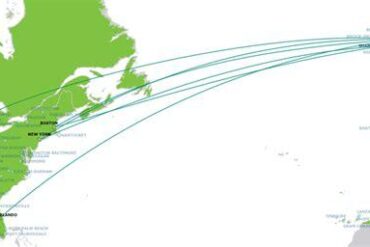
Routes such as Gatwick to Cape Town and Aruba have already been discontinued, while others—including San José and Tampa—are being withdrawn with a critical twist: they are not disappearing entirely, but relocating to Heathrow. This is a strategic consolidation rather than a retreat.
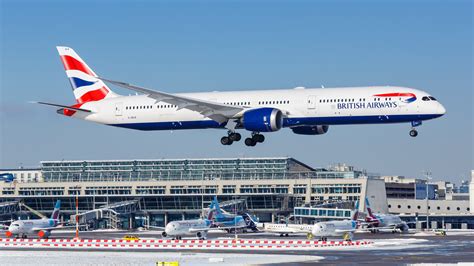
This shift underscores Heathrow’s role as the airline’s primary global gateway, where higher frequencies and stronger premium demand create a more lucrative operating environment. By centralizing long-haul traffic, British Airways gains several advantages:
- Increased connectivity for transfer passengers
- Higher aircraft utilization rates
- Improved premium cabin load factors
- Stronger alliance feed through oneworld partners
The results are already visible. Flights to New York JFK from Heathrow are scaling up to nine daily departures, while Las Vegas frequencies are climbing to ten weekly. These are not marginal adjustments—they are aggressive plays to dominate high-demand corridors.
The End of a 60-Year Legacy: Heathrow to Kuwait
Among all the cuts, none carries more symbolic weight than the termination of the Heathrow–Kuwait route. After more than six decades of continuous service, British Airways has withdrawn from a market that once formed a critical link between the UK and the Gulf.
The reasons are rooted in economics rather than sentiment. Despite deploying modern Boeing 787-9 and 787-10 aircraft, the route struggled with underwhelming seat factors and an overreliance on connecting passengers—typically less profitable than direct, point-to-point travelers.
At the same time, competition intensified. Kuwait Airways was expanding aggressively, with plans for multiple daily flights, placing additional pressure on yields.
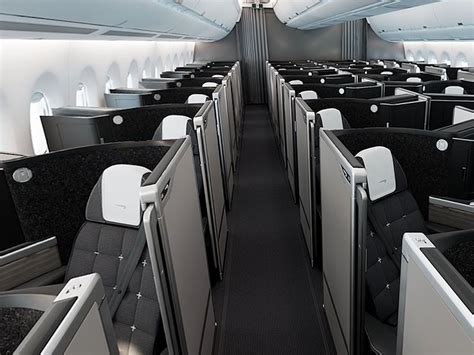
This move reflects a broader industry reality: legacy routes are no longer immune to performance scrutiny. Even historically significant services must meet modern profitability benchmarks—or face elimination.
Short-Haul Cuts Expose Weak Yield Markets and Overcapacity
While long-haul adjustments draw headlines, the most extensive pruning has occurred across short-haul routes. Nine European connections have been eliminated, revealing a pattern of low yields, seasonal demand volatility, and fierce low-cost competition.
Routes such as Heathrow to Grenoble, Bilbao, and Izmir have disappeared, while others—including Cologne, Riga, and Stuttgart—were cut more recently. The numbers tell the story: Riga, for instance, recorded a modest 75% seat factor in 2025, a figure insufficient to sustain profitability in a market saturated with budget carriers.
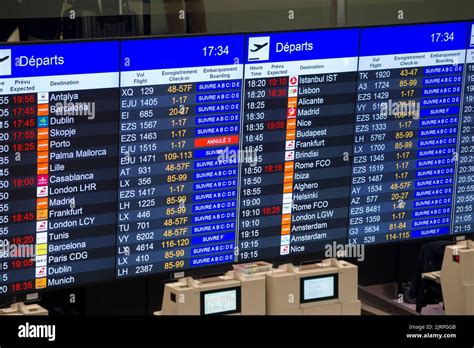
The competitive landscape has shifted dramatically. Low-cost airlines operating from alternative London airports offer lower fares and higher frequency flexibility, eroding British Airways’ ability to command premium pricing on secondary European routes.
In response, the airline is adopting a more selective approach:
- Retaining only high-yield, business-heavy routes
- Shifting leisure destinations to Gatwick or subsidiaries
- Reducing exposure to price-sensitive markets
This is not merely cost-cutting—it is network optimization at a granular level.
Gatwick’s Evolving Role in the British Airways Ecosystem
Once envisioned as a secondary long-haul hub, Gatwick is now being repositioned as a leisure-focused and short-haul-centric base. The withdrawal of multiple long-haul routes has freed up aircraft capacity, enabling redeployment to markets with stronger demand profiles.
This transformation is closely tied to British Airways’ EuroFlyer operation, which is increasingly handling short-haul leisure routes from Gatwick. Destinations like Kalamata and Grenoble have effectively migrated into this structure, allowing the mainline carrier to concentrate its premium operations at Heathrow.

The result is a dual-hub strategy with clearly defined roles:
- Heathrow: Premium, long-haul, high-frequency global hub
- Gatwick: Leisure-oriented, cost-efficient short-haul base
This division eliminates overlap, reduces operational inefficiencies, and aligns each airport with distinct market segments.
Regional and CityFlyer Cuts Reflect Changing Demand Patterns
Beyond London’s major airports, British Airways has also scaled back operations from regional bases and London City Airport. The withdrawal of routes such as London City to Prague and Frankfurt highlights shifting demand dynamics in business travel.
London City Airport, once a stronghold for high-frequency corporate routes, has faced structural changes in business travel behavior, including reduced demand for short-haul day trips and increased reliance on virtual meetings.
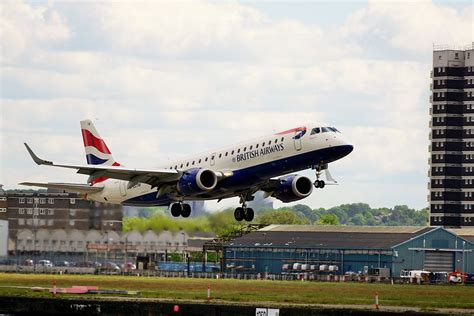
The Frankfurt route, in particular, illustrates the challenge. Despite years of service, competing carriers offered higher frequencies and more flexible schedules, gradually eroding British Airways’ market share.
Similarly, niche routes like Edinburgh to Olbia and Stansted to Amsterdam failed to achieve sustainable demand, leading to their eventual discontinuation.
Route Churn vs. Network Growth: A Strategic Balancing Act
While the headline figure—20 routes cut—suggests contraction, the broader picture is more nuanced. British Airways is simultaneously introducing 12 new or returning routes, signaling that this is not a retreat but a strategic rebalancing.
Route churn is an inherent part of modern airline operations. Markets evolve, demand shifts, and competitive pressures intensify. The key lies in maintaining a dynamic network that adapts faster than competitors.
In this context, British Airways’ recent moves reflect:
- A focus on profitability over presence
- A shift toward hub consolidation
- A data-driven approach to route performance
These principles are increasingly defining success in the global aviation industry.
A Leaner, Stronger Network for the Future
The elimination of nearly 20 routes is not a sign of weakness—it is a demonstration of discipline. By shedding underperforming services and reinforcing its strongest markets, British Airways is building a network that is leaner, more resilient, and better aligned with future demand.
The emphasis on Heathrow as a super-hub, combined with a redefined role for Gatwick and a streamlined short-haul portfolio, positions the airline to compete more effectively against both legacy rivals and agile low-cost carriers.
In an era where efficiency is king and adaptability is survival, British Airways is making a clear statement: every route must earn its place.