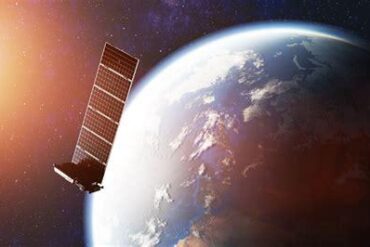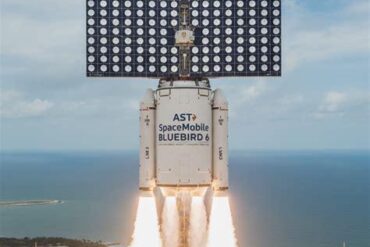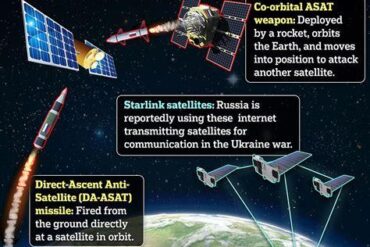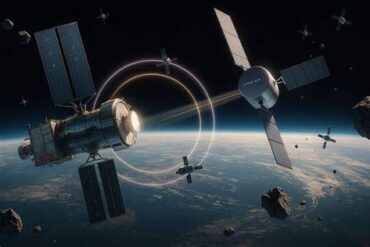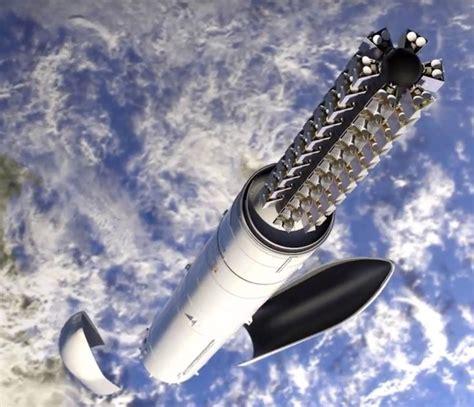
Low Earth orbit has quietly become one of the most crowded and hazardous environments humanity has ever created. Decades of launches, abandoned rocket stages, defunct satellites, and fragmentation events have filled this narrow orbital band with thousands of tons of debris moving at orbital speeds. Even a bolt-sized fragment can cripple a spacecraft. As satellite constellations expand and orbital traffic accelerates, the risk is no longer theoretical—it is systemic.
According to NASA, low Earth orbit currently contains nearly 6,000 tons of material, while the European Space Agency tracks more than 56,000 objects, with over 28,000 still actively monitored by the U.S. Space Surveillance Network. These figures only include objects large enough to track reliably. Countless smaller fragments remain effectively invisible, yet no less dangerous. Until recently, the primary defense against this growing threat was avoidance—limited tracking, delayed updates, and conservative maneuvering.
That defensive posture is now changing. SpaceX is deploying the Stargaze Situational Awareness System (SSA) through its Starlink constellation, transforming how orbital debris and satellites are observed, shared, and managed across low Earth orbit.
Why Low Earth Orbit Has Become a Collision Risk Zone
The physics of orbital debris are unforgiving. Objects in low Earth orbit travel at roughly 7 to 8 kilometers per second, meaning even minor impacts release energy comparable to explosives. A single collision can generate thousands of new fragments, triggering cascading effects known as Kessler Syndrome, where debris growth becomes self-sustaining.
Traditional tracking relies heavily on ground-based radar and optical sensors, which face inherent limitations. Coverage gaps, atmospheric interference, space weather variability, and infrequent observation cycles all reduce accuracy. Most objects are only observed a handful of times per day, leaving wide uncertainty windows for satellite operators making collision-avoidance decisions.
As commercial constellations scale into the tens of thousands, that uncertainty becomes unacceptable.
Stargaze Situational Awareness: A New Orbital Perspective
SpaceX’s Stargaze SSA flips the model by moving observation into orbit itself. Rather than relying solely on Earth-based sensors, Stargaze uses approximately 30,000 star trackers distributed across the Starlink constellation. These sensors conduct what SpaceX describes as continuous observation, generating an estimated 30 million object transits per day.
This sheer volume of data enables detection rates and temporal resolution that ground systems cannot match. Objects are observed repeatedly from multiple vantage points, dramatically improving positional accuracy and predictive modeling.
Free Ephemeris Data and Real-Time Collision Avoidance
One of the most consequential aspects of Stargaze is not just its capability, but its accessibility. Starlink ephemeris data—detailed trajectory tables for orbiting objects—will be shared hourly and made available for free to the broader satellite operator community.
This frequent data refresh allows operators to perform near real-time collision risk assessments, refine maneuver planning, and reduce unnecessary fuel burns caused by overly cautious avoidance actions. More accurate data means fewer false alarms, safer operations, and longer satellite lifespans.
By lowering the barrier to high-quality situational awareness, SpaceX is effectively raising the baseline safety standard for everyone operating in low Earth orbit.
Enabling the Next Phase of Space Debris Removal
Beyond avoidance, Stargaze may unlock something even more ambitious: active debris removal. Multiple technologies already exist, but they have been constrained by one persistent problem—precise tracking.
Companies like Astroscale Japan have demonstrated debris-capture concepts such as ADRAS-J, a spacecraft designed to rendezvous with and inspect defunct satellites. Other researchers are exploring plasma propulsion systems that could safely deorbit debris, forcing it to burn up in Earth’s atmosphere. All of these approaches depend on accurate, continuous orbital data.
Stargaze provides exactly that. With higher-fidelity tracking, removal missions can plan safer approaches, reduce uncertainty margins, and operate at scales previously impractical. In effect, tracking becomes the force multiplier that turns theoretical cleanup into operational reality.
A Shared Infrastructure for a Crowded Orbit
Stargaze has already been tested in a closed beta with select satellite operators and is expected to expand to any operator willing to contribute data. This collaborative model signals a shift in orbital governance—from isolated tracking systems to shared space traffic awareness infrastructure.
Whether Stargaze ultimately slows the growth of orbital debris will take years to measure. What is already clear is that SpaceX has introduced a powerful new tool at a moment when low Earth orbit desperately needs one. By combining massive sensor coverage, frequent data sharing, and open access, Starlink is quietly becoming one of the most important safety systems in space, making Earth’s orbital environment more predictable, more manageable, and significantly safer for everyone who depends on it.