On December 12, 2025, at 1:42 AM EST, the Starlink satellite designated STARLINK-6079 (56120) came within 200 meters of another spacecraft—an astoundingly close encounter in the vastness of low Earth orbit. This near miss wasn’t just a fluke; it’s a harbinger of the chaotic and dangerously unregulated era of space activity that’s rapidly unfolding.
The Alarming Incident: What We Know
The satellite that nearly collided with Starlink-6079 had been launched just 48 hours earlier by CAS Space, a Chinese commercial launch provider. The launch included a payload of satellites from various countries—China, UAE, Egypt, and Nepal—but offered no clear identification of which one posed the danger. Even worse, no coordination or deconfliction measures were taken.
According to Michael Nicholls, Vice President of Engineering at SpaceX, “As far as we know, no coordination or deconfliction with existing satellites operating in space was performed.” The result was a shockingly close brush at 560 kilometers altitude, a region increasingly congested with commercial and governmental satellites.
SpaceX only learned about the satellite when it was essentially too late. This reveals a glaring gap in global space traffic awareness—an absence that now threatens the safety of all orbital assets.
The Bigger Problem: No Space Traffic Control
Unlike aviation, where international systems govern traffic management, space currently operates under an anarchic framework. As astronomer Jonathan McDowell stresses, “We really need… an international space surveillance and coordination system in which both the US and China participate.”
Currently, there is no centralized authority to monitor or guide satellite movements. Each space agency or private company is essentially on its own. This decentralized approach is increasingly unsustainable as Earth’s orbit becomes a congested superhighway of hardware, rife with competing interests and geopolitical sensitivities.
The Rising Threat: Debris and the Kessler Syndrome
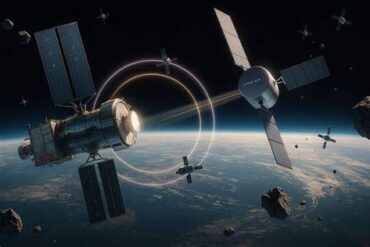
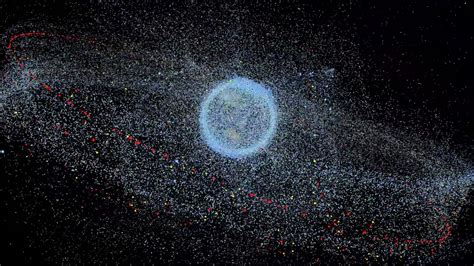
The fear isn’t just about satellites bumping into one another. A collision in orbit would generate clouds of debris, each fragment a potential bullet hurtling at over 17,000 miles per hour.
This scenario is not theoretical. In November 2025, a Chinese spacecraft docked at the Tiangong space station was struck by debris, causing significant damage and temporarily stranding the taikonauts aboard. That incident served as a grim reminder of what unregulated orbital congestion can lead to.
Worse still, space debris doesn’t just stay in orbit. Some of it can—and does—re-enter Earth’s atmosphere uncontrollably. Although most of it burns up, larger pieces could survive re-entry and pose serious risk to life and infrastructure on the ground.
The greatest nightmare is a cascading collision event known as Kessler Syndrome, a theoretical but increasingly plausible scenario where one crash triggers a chain reaction of further collisions, effectively rendering certain orbits impassable for generations.
Mega-Constellations: Fueling the Fire
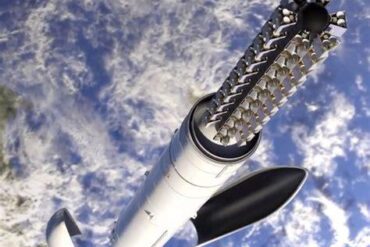
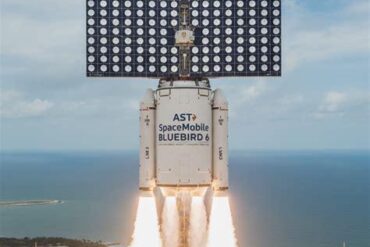
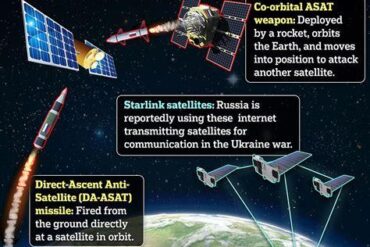
Since 2019, SpaceX’s Starlink program has launched over 10,000 satellites, with plans for tens of thousands more. Amazon’s Project Kuiper has begun deploying its own mega-constellation, and several military and private players are poised to enter the race.
The numbers are staggering: projections suggest that we could see over 560,000 satellites in orbit within the next two decades. Without effective traffic management and international cooperation, it’s not a question of if a catastrophic event will occur, but when.

The International Stalemate
Efforts to establish an international framework have stalled due to political tensions, particularly between the United States and China. The Cold War-era Outer Space Treaty of 1967 provides some high-level guidance, but lacks the specificity and enforcement mechanisms needed for modern orbital traffic.
Some nations have proposed frameworks through the United Nations Office for Outer Space Affairs (UNOOSA), while others like the U.S. Space Command offer tracking services via their Space-Track.org database. But access is inconsistent, participation is voluntary, and major space powers remain reluctant to share full telemetry data, citing national security concerns.
This fragmented approach is akin to having thousands of aircraft in the sky with no air traffic controllers and no mandatory transponders.
The Role of Private Space Companies
Companies like SpaceX, OneWeb, Blue Origin, and Amazon wield unprecedented control over Earth’s near-space environment. Yet, they are still subject to regulatory systems designed for a far less crowded sky. Most national agencies, including the Federal Communications Commission (FCC) and NASA, rely on outdated models to assess collision risk.
Michael Nicholls’ candid admission about the lack of coordination highlights how even the most advanced companies are flying blind in many ways. While SpaceX uses autonomous avoidance systems powered by machine learning and radar, these are only effective when the threat is known—and that’s the critical failure point.
What Needs to Happen Next
Avoiding a devastating orbital incident will require a multi-pronged, international strategy:
- Establishing a global space traffic management authority under UN oversight.
- Creating mandatory transponder and beacon requirements for all spacecraft.
- Enforcing pre-launch coordination protocols for all orbital paths.
- Funding research into debris mitigation technologies like active debris removal (ADR).
- Enhancing transparency and data sharing between commercial and national operators.
Without these reforms, the space above us may transform from a domain of innovation and exploration into a hazardous junkyard, blocking humanity’s path to the stars.
A Wake-Up Call, Not a One-Off Event
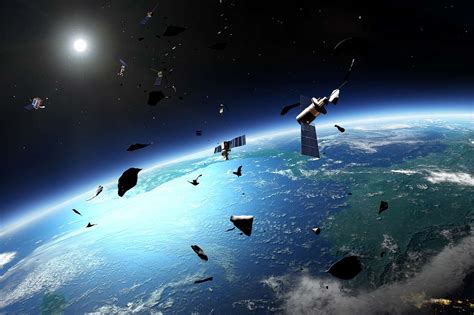
The near collision between STARLINK-6079 and an unidentified satellite should be viewed as a global alarm bell. As it stands, Earth orbit is becoming more contested, more congested, and more fragile by the day. And while this specific incident ended without tragedy, future encounters may not be so lucky.
What’s at stake isn’t just the integrity of telecommunications and internet services, but weather forecasting, GPS systems, military communications, Earth observation, and global scientific research.
This incident is not a curiosity—it is a forecast of a near future where orbital collisions are common, debris fields are untraceable, and entire orbital shells become unusable. It’s not just getting worse. It’s already bad. And we’re running out of time to fix it.