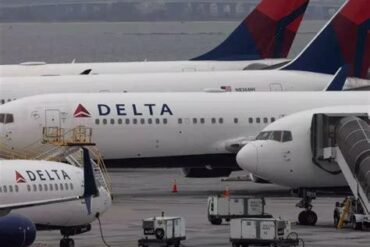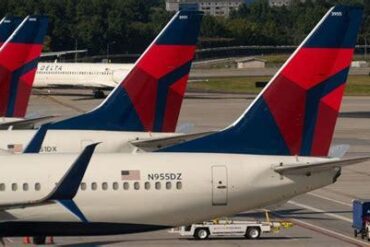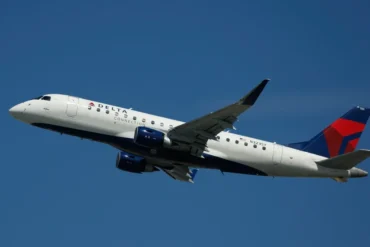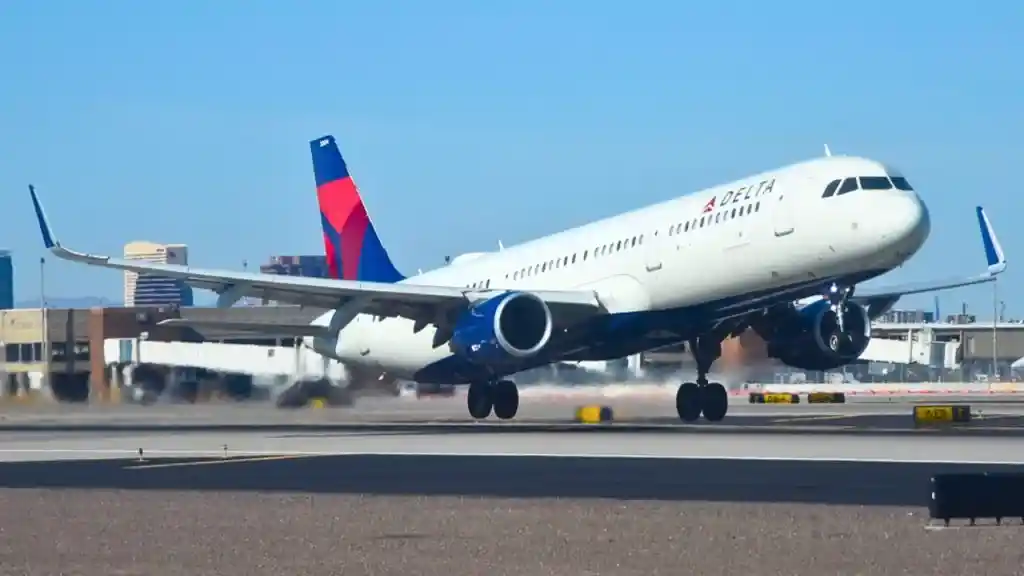
On July 5, 2025, what began as a routine Delta Air Lines flight from Atlanta to San Diego devolved into a mid-air security emergency, marking yet another distressing chapter in the rising epidemic of unruly passenger behavior plaguing U.S. commercial aviation. Delta Flight 731, operated by an Airbus A321neo, was diverted to Dallas-Fort Worth International Airport after a passenger’s erratic behavior escalated into a dangerous onboard confrontation.
The Mid-Flight Incident That Sparked Alarm at 30,000 Feet
Approximately two hours into its scheduled transcontinental journey, Flight 731 encountered unexpected turbulence—not from atmospheric conditions, but from within the cabin itself. The source: Corbin Sanders, a passenger from North Carolina, who began exhibiting alarming behavior. Eyewitnesses described him shouting incoherently, stripping off clothing, and making desperate statements such as wanting to “go home” and “see his family.”
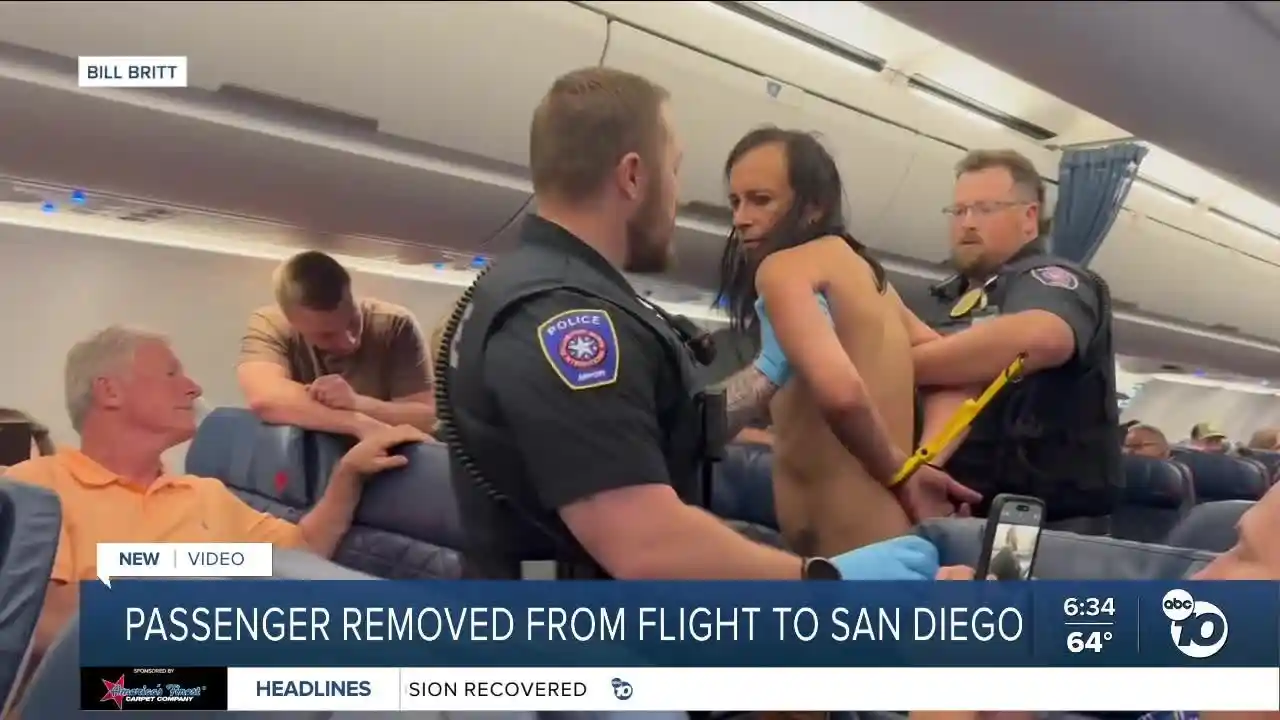
His outburst startled fellow travelers and crew alike. Despite initial attempts to de-escalate the situation peacefully, the disruption intensified. Reports confirmed that Sanders had physically assaulted a flight attendant, forcing the captain and crew to prioritize the safety of all onboard and make a strategic diversion to Dallas.
A Rapid Response in the Sky and On the Ground
Upon landing at DFW Airport, law enforcement boarded the aircraft and found Sanders slumped in his seat, restrained with plastic zip ties. He reportedly had bloodshot eyes, slurred speech, and exhibited clear signs of intoxication. The swift actions of both passengers and crew prevented the situation from deteriorating further.
Local authorities arrested Sanders on charges of public intoxication, and he now faces potential federal penalties that include substantial civil fines and possibly criminal prosecution. While the flight eventually resumed its journey to San Diego after a 90-minute delay, the incident left a psychological and logistical ripple effect on passengers and the airline alike.
FAA Crackdown and Airline Policy: Zero Tolerance for Mid-Air Mayhem
This latest event underscores a growing crisis confronting the aviation industry: a persistent surge in disruptive passenger behavior. While the height of pandemic-era conflicts—often sparked by mask mandates—has passed, tensions in the cabin remain high. Data from the Federal Aviation Administration (FAA) indicates that reports of unruly passengers have continued to climb, driven by alcohol consumption, mental health stressors, and frustration over travel disruptions.
In response, Delta reiterated its zero-tolerance policy. The airline emphasized that any behavior endangering crew or passenger safety will be met with swift and severe action. The FAA, for its part, maintains aggressive enforcement, imposing civil fines up to $37,000 per violation for interference with crew duties.
The Operational Domino Effect of a Mid-Air Emergency
What many passengers don’t realize is that a single mid-air incident can wreak havoc on an airline’s tight scheduling infrastructure. For Delta, the diversion of Flight 731 meant not only rerouting an aircraft but also reconfiguring crew assignments, adjusting gate logistics, and potentially delaying future departures for other routes involving the same aircraft. Airlines, which operate on razor-thin margins, cannot afford such costly ripple effects repeatedly.
Moreover, the psychological impact on passengers cannot be understated. What was meant to be a straightforward flight turned into a stressful ordeal, reinforcing growing public skepticism about air travel safety in confined, high-altitude environments.
Enhancing Security Protocols and Crew Preparedness
Flight crews today are more prepared than ever to handle such threats. Airlines have invested heavily in conflict de-escalation training, physical restraint procedures, and mental health first aid awareness. Some flights include federal air marshals, who remain covertly onboard select high-risk routes.
Delta’s flight attendants demonstrated this training firsthand on Flight 731. Their ability to contain the threat mid-air, while coordinating with ground authorities for a safe landing, speaks to a growing culture of vigilant professionalism. Crew members, who once were seen primarily as service personnel, are now recognized as first responders in the sky.
The Role of Passenger Vigilance and Collective Responsibility
Equally remarkable in this incident was the swift action of fellow passengers. Eyewitness reports confirm that multiple individuals stepped forward to physically restrain Sanders, ensuring that the situation didn’t spiral into a full-scale assault.
Their actions reflect a growing trend: passengers becoming active participants in flight safety. While airlines discourage vigilantism, they have repeatedly praised travelers who responsibly assist in controlling dangerous scenarios until professionals can take over.
Alcohol, Screening, and Mental Health: Contributing Factors Under Review
A deeper examination of such incidents points toward alcohol misuse and mental health deterioration as key triggers. Sanders’ intoxicated state raises fresh concerns about pre-flight screening processes and the availability of alcohol before and during flights. Some carriers have started limiting in-flight alcohol service, especially on short-haul and red-eye flights.
Additionally, experts are calling for more nuanced pre-boarding assessments, including better mental health visibility in frequent fliers who exhibit signs of stress or anxiety. Airlines, while cautious of overstepping personal rights, are exploring new AI-driven monitoring systems to identify potential high-risk individuals before boarding.
The Price of Public Image in the Social Media Era
Today, every smartphone onboard functions as a global broadcasting tool. The optics of mid-air chaos, when captured on video, can severely damage an airline’s brand—even if the crew handles the crisis perfectly. For Delta, immediate transparency after the incident helped mitigate backlash.
Delta’s communications team issued a statement expressing regret for the inconvenience and reaffirming its commitment to safety. This prompt response helped counter the viral spread of passenger-shot footage, which circulated within hours of landing.
High Season, High Stakes: Airlines Brace for More Incidents
With summer travel peaking, airlines like Delta are on heightened alert. Full cabins, delayed schedules, and strained airport resources create a pressure cooker atmosphere in the air. Long-haul flights like ATL-SAN routes are particularly vulnerable due to passenger fatigue, alcohol service, and longer durations in confined spaces.
Industry leaders acknowledge that even with enhanced training and penalties, completely eradicating disruptive passengers is unrealistic. As such, airlines are focusing on damage mitigation, rather than elimination—ensuring that when incidents arise, they are resolved with minimum disruption and maximum safety.
A Broader Reflection on Modern Air Travel
Incidents like the one aboard Flight 731 reveal deeper societal tensions playing out in compressed environments. For many, flying is no longer a marvel—it’s a stress test. From frustrated families to stressed business travelers, the skies have become a microcosm of post-pandemic emotional volatility.
Yet amid the chaos, stories of crew heroism and passenger unity persist. These moments offer hope that while the skies may be turbulent, the collective will to maintain safety and dignity at altitude remains intact.
Delta Flight 731 may have landed in Dallas instead of San Diego, but its unplanned detour served a purpose far larger than one delayed arrival. It illuminated both the fragility and the resilience embedded in today’s aviation ecosystem.
As airlines brace for what’s expected to be the busiest travel season in years, one truth remains: each flight is more than a journey—it’s a test of coordination, patience, and above all, human behavior in a pressurized world.