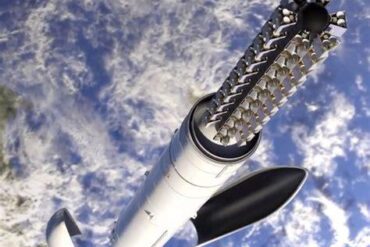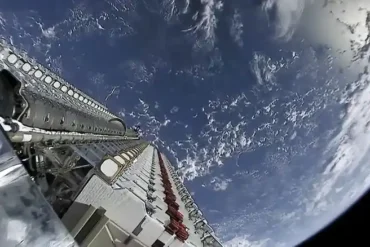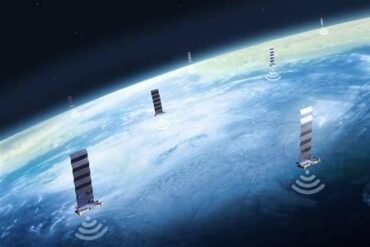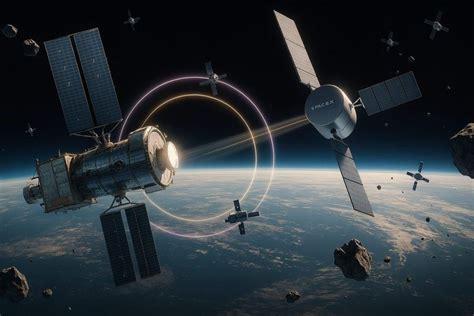
Earth’s lower orbital lanes are no longer a quiet frontier. They are busy, competitive, and increasingly unforgiving. In December 2025, a near-collision between a Chinese Earth-imaging satellite and a SpaceX Starlink spacecraft unfolded less than 200 meters apart, a margin so thin that, at orbital speeds, it amounts to a cosmic hair’s breadth. The encounter did not end in debris or disaster, but its aftershocks are reshaping the architecture of the world’s largest satellite constellation. By January 2026, SpaceX confirmed a sweeping maneuver: nearly 4,400 Starlink satellites would be lowered by 70 kilometers, from roughly 550 km to 480 km, marking one of the most dramatic orbital reconfigurations ever attempted.
This was not merely a technical tweak. It was an admission that Low Earth Orbit (LEO) has entered a new, risk-laden phase, where close calls are becoming policy drivers and orbital altitude is now a strategic choice rather than a fixed parameter.
The shadow looming over this decision is an old but newly urgent theory. In 1978, NASA scientist Donald Kessler warned that once orbital congestion crosses a critical threshold, collisions could trigger a cascading chain reaction, each impact generating debris that increases the odds of the next. This concept, later termed Kessler Syndrome, once felt speculative. Today, it feels operational.
Kessler Syndrome Moves From Theory to Operational Reality
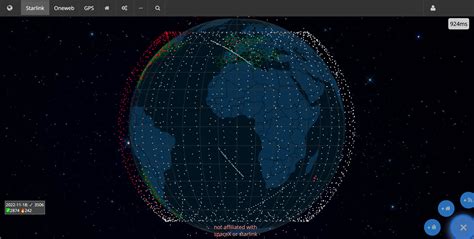
The near-miss on December 10 was not an isolated fluke. It was the logical outcome of exponential growth. As of early 2026, Starlink operates around 9,500 active satellites, nearly half of which occupy the 500–600 km altitude band, one of the most popular and crowded zones in LEO. This region is favored because it balances coverage, latency, and atmospheric drag. Unfortunately, it is also where many new national and commercial constellations are heading.
The Chinese satellite involved in the incident was launched aboard a Kinetica-1 rocket from the Jiuquan Satellite Launch Center, alongside eight other payloads. According to researchers from the Chinese Academy of Sciences’ Institute of Software, the spacecraft’s orbital data was generated less than 14 minutes before the close approach. That delay drastically reduced SpaceX’s reaction window.

Orbital mechanics do not allow for improvisation. Satellites travel at roughly 7.5 kilometers per second. At those speeds, even a fragment the size of a bolt can cripple a spacecraft. A full collision between two intact satellites would generate tens of thousands of trackable debris pieces and countless smaller shards, each becoming a long-lived hazard.
The unsettling reality is that Kessler Syndrome no longer requires a catastrophic trigger. Repeated near-misses, last-second maneuvers, and fragmented data sharing already push operators into defensive postures that reshape constellations.
Inside the December Near-Collision That Changed Starlink’s Orbit
SpaceX Vice President of Engineering Michael Nicolls publicly addressed the incident days later, pointing to a systemic problem rather than a single misstep. His comments emphasized lack of ephemeris sharing, the practice of providing precise, time-stamped orbital data that allows operators to predict conjunctions accurately.
“When satellite operators do not share ephemeris for their satellites, dangerously close approaches can occur,” Nicolls wrote, describing how one of the newly deployed Chinese satellites passed within 200 meters of STARLINK-6079 at an altitude of 560 km.
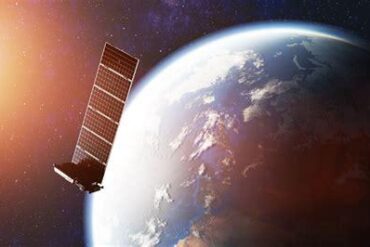
Starlink satellites are equipped with autonomous collision-avoidance systems, using onboard sensors and Hall-effect thrusters that generate gentle but precise course corrections. These systems work best when paired with timely, high-quality data from other operators. When that data arrives late or not at all, autonomy becomes guesswork.
According to Chinese researchers, the psychological and operational impact of the near-collision was decisive. While SpaceX did not officially link the events, the timing tells its own story. Less than three weeks later, on January 1, Nicolls announced the large-scale lowering of Starlink’s orbital shell, framing it as a proactive safety measure designed to reduce aggregate collision probability.
Why Dropping 70 Kilometers Matters in Orbital Safety
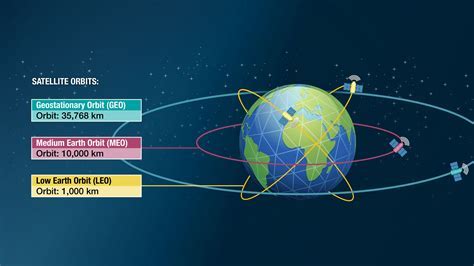
Lowering a satellite’s orbit by 70 km may sound modest, but in orbital terms it is transformative. The 480 km altitude band experiences slightly higher atmospheric drag, which has two critical effects. First, it shortens the lifespan of defunct satellites and debris, causing them to decay and burn up faster. Second, it shifts Starlink away from one of the most congested orbital corridors.
Chinese researchers acknowledged this advantage, noting that many countries are deploying large constellations between 500 and 600 km, making 480 km comparatively safer. However, they also warned of a paradox. Lowering more than 4,400 satellites simultaneously introduces its own risks, as maneuver coordination becomes vastly more complex.
This is orbital traffic management at planetary scale. Every maneuver slightly alters collision probabilities not just for Starlink, but for every spacecraft sharing nearby inclinations and altitudes.
Geopolitics Above the Atmosphere
The incident cannot be separated from the broader geopolitical contest unfolding in space. China has repeatedly criticized Starlink, arguing that its rapid expansion congests shared orbital resources and increases collision risks. Beijing has cited two near-encounters between Starlink satellites and the Tiangong space station in 2021 as evidence.
Yet China’s own ambitions complicate the narrative. The state-backed Guowang constellation, operated by China Satellite Network Group, plans to deploy approximately 13,000 satellites for global broadband coverage. India, Russia, and the European Union are also preparing large-scale LEO deployments.
This is not hypocrisy so much as inevitability. Every major power wants orbital real estate. The problem is that Earth’s orbits are finite, governed by physics rather than diplomacy.
Starlink’s Scale Forces New Norms
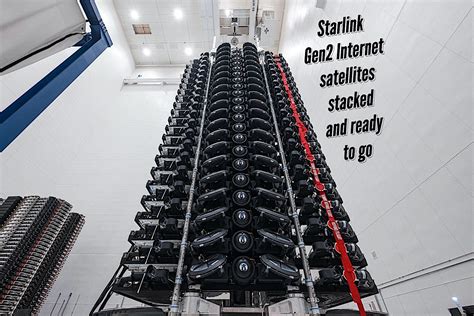
Starlink’s numbers are unprecedented. SpaceX has launched nearly 11,000 satellites to date and holds approval to deploy 42,000 in total, including 15,000 Gen 2 satellites authorized by the US Federal Communications Commission. At that scale, even best-in-class safety practices strain under statistical weight.
SpaceX has repeatedly argued that international coordination is the weakest link in orbital safety, particularly with operators who do not routinely share ephemerides or maintain accessible contact channels. This is not a technical limitation but a political one.
The Chinese research team suggested that Starlink’s orbital retreat also serves a reputational purpose, helping to burnish the company’s image as a responsible operator amid rising scrutiny of mega-constellations. That interpretation does not negate the safety benefits. In space, optics and physics often align.
The Risk of Doing Nothing Is Far Worse
Near-miss incidents are accelerating. As more satellites crowd LEO, conjunction alerts multiply, and avoidance maneuvers become routine rather than exceptional. Each maneuver consumes propellant, shortens satellite lifespan, and introduces new uncertainties.
The nightmare scenario remains a single uncontrolled collision that seeds a debris cloud dense enough to trigger secondary impacts. Such an event could render entire altitude bands unusable for generations, severing Earth from weather monitoring, navigation, Earth observation, and broadband connectivity.
Avoiding that future demands more than unilateral actions. Mandatory ephemeris sharing, standardized collision-avoidance protocols, strict end-of-life disposal rules, and active debris removal are no longer optional ideals. They are prerequisites for continued access to space.
Some experts have even floated the idea of orbital usage fees, a mechanism to internalize the cost of congestion and incentivize responsible deployment. The concept remains politically sensitive, but the alternative is unmanaged scarcity.
A Narrow Escape With Lasting Consequences
The December 2025 near-collision did not produce debris, headlines of catastrophe, or dramatic visuals. Its significance lies in what followed. Nearly 40% of Starlink’s operational fleet is changing altitude, not because of failure, but because success has pushed the system to its limits.
This episode underscores a simple truth. Space is no longer vast when viewed from the perspective of orbital mechanics. It is crowded, contested, and fragile. The margin between continuity and chaos can be measured in meters and minutes.
Starlink’s retreat to lower orbit is a strategic recalibration, shaped by physics, geopolitics, and the cold arithmetic of probability. It is also a warning shot. The age of casual expansion in Low Earth Orbit is ending, replaced by an era where coordination, transparency, and restraint determine who gets to stay aloft.
The universe may be vast, but the lanes around our planet are not. How humanity chooses to share them will decide whether Earth’s orbital commons remains usable or becomes the first major casualty of our technological ambition.