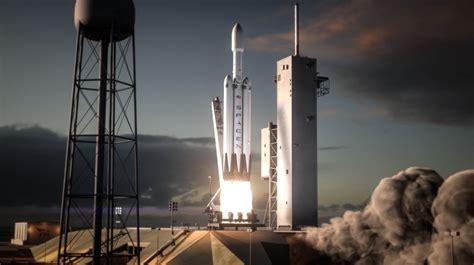
The idea of building AI data centers in space sounds like science fiction wearing a business suit, yet it is now formally sitting on a federal regulator’s desk. SpaceX has filed a request with the Federal Communications Commission seeking authorization to deploy up to one million orbital satellites designed to function as AI data centers, a scale that would eclipse every previous space infrastructure proposal combined. The filing reframes orbit not as a communications layer, but as a vast computational frontier.
At the center of the proposal is a bold reimagining of how artificial intelligence is powered. Traditional AI facilities on Earth consume staggering amounts of electricity and water, straining grids and ecosystems alike. SpaceX argues that placing compute-heavy infrastructure in orbit would allow continuous solar energy harvesting, theoretically bypassing terrestrial environmental limits while unlocking near-infinite processing capacity above the planet.
The company’s filing leans heavily on futurist logic. SpaceX describes the constellation as an early step toward a Kardashev Type II civilization, a theoretical society capable of harnessing the full output of its star. In this framing, orbital AI data centers are not excess but destiny, infrastructure for a future where billions of users rely on AI-driven systems operating beyond Earth’s surface.
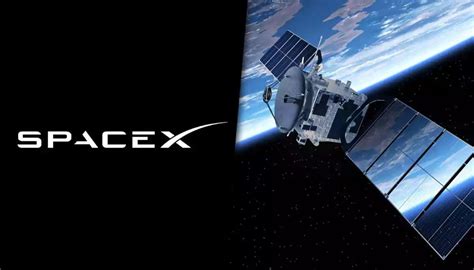
The physics, however, remain unforgiving. Low Earth orbit is an environment of violent thermal contrast, swinging from roughly -240 degrees Fahrenheit in shadow to nearly 300 degrees in direct sunlight. AI processors generate intense heat even under controlled terrestrial conditions. Keeping millions of spaceborne data centers within safe operating temperatures would demand unprecedented thermal regulation systems, redundancy layers, and failure containment strategies that have never been tested at this scale.
Skepticism also surrounds feasibility. There are currently about 15,000 active satellites in orbit, with more than 9,600 belonging to SpaceX’s own Starlink network. Even with reusable rockets and aggressive launch cadences, lifting one million satellites would require decades of uninterrupted launches, colossal manufacturing throughput, and a replacement cycle accounting for limited satellite lifespans that often average just five years.
Regulators and orbital safety experts are equally uneasy. Orbit is becoming crowded as nations and corporations race to secure strategic positions above Earth. China has submitted applications for nearly 200,000 satellites, while Rwanda has sought authorization for more than 327,000. Each object increases the risk of collision, and a single high-speed impact could trigger a Kessler Syndrome cascade, multiplying debris and rendering entire orbital bands unusable.
Industry observers widely believe the FCC filing is an opening move rather than a literal target. Federal approvals often result in dramatically reduced satellite counts after technical reviews and negotiation. In this context, the million-satellite figure functions as leverage, anchoring discussions around a far smaller but still transformative deployment.
The timing is also notable. The request arrives amid speculation surrounding the $1.25 trillion valuation linked to the SpaceX and xAI merger narrative, where orbital compute capacity becomes a justification for unprecedented scale. Whether the vision represents genuine long-term infrastructure planning or a strategic signaling exercise remains open to interpretation.
What is undeniable is the shift in ambition. Space is no longer just about launching hardware; it is about exporting computation itself. If even a fraction of this proposal materializes, orbit could become the next great battleground for AI dominance, energy strategy, and planetary safety, redefining how humanity builds, powers, and governs intelligence beyond Earth.