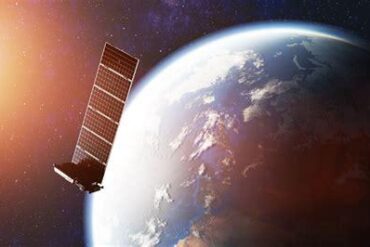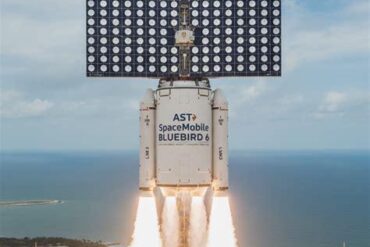
The idea of artificial intelligence infrastructure leaving Earth once belonged to speculative fiction, filed somewhere between orbital factories and self-aware satellites. That boundary has collapsed. China has now placed space-based AI data centers firmly on its national agenda, signaling that the competition for technological dominance is no longer limited to silicon fabs and cloud campuses, but extends into low Earth orbit and beyond.
This push represents a convergence of two strategic obsessions: space superiority and AI compute leadership. Together, they form a new kind of race, one defined not by astronauts or flags, but by autonomous machines quietly processing data above the planet, powered by sunlight and insulated from terrestrial constraints.
China’s timeline is aggressive. Within five years, the country intends to have its first operational orbital AI data center, a goal that transforms what was previously a private-sector experiment into a state-backed priority. The implications are vast, touching energy economics, military resilience, and the future geography of computation itself.
China’s Orbital AI Strategy Takes Shape
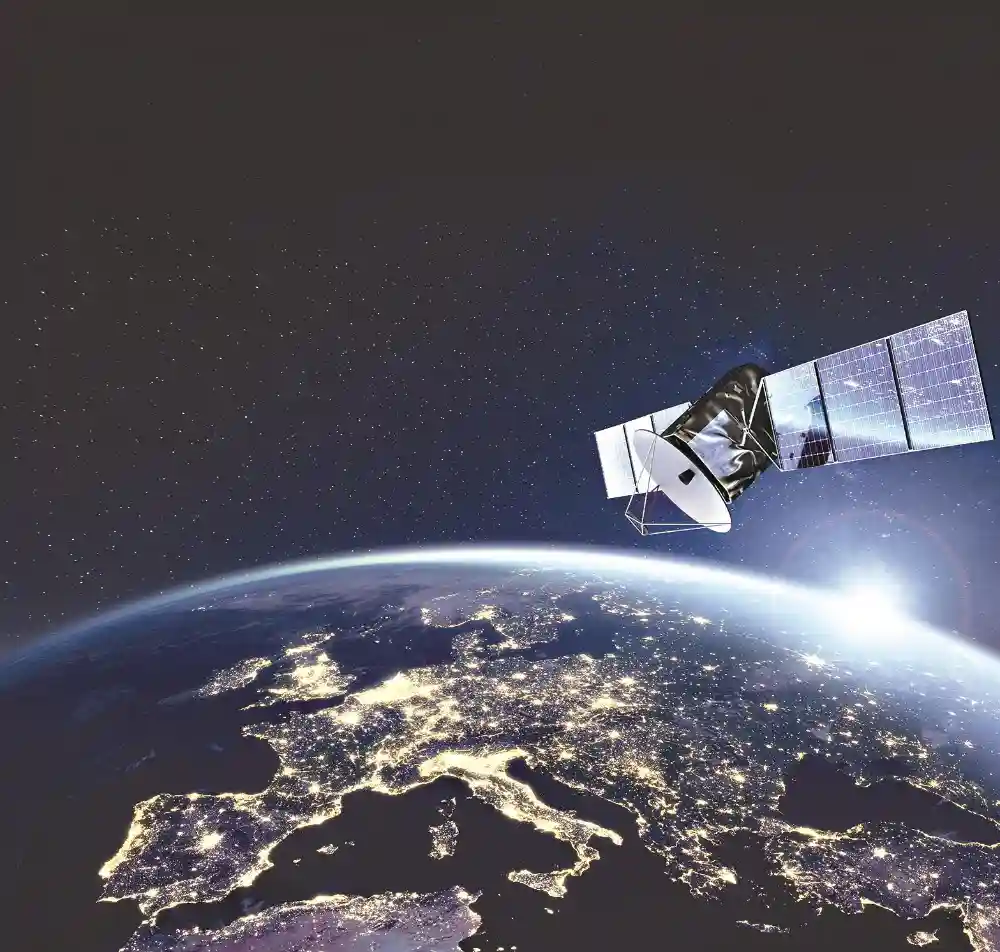
In 2024, private aerospace firm ADA Space launched 12 satellites as part of its Three-Body Computing Constellation, a project designed to test distributed AI processing in orbit. The long-term plan is audacious: scaling that constellation to 2,800 satellites, each contributing compute power in a coordinated network above Earth. This was not a publicity stunt. It was a proof of intent.
The real signal arrived when the Chinese government incorporated space-based computing into its 15th Five-Year Plan, elevating orbital AI from experimental curiosity to national objective. Five-year plans have historically been blunt instruments, but they reveal priorities with unusual clarity. In this case, China is betting that skipping intermediate stages of infrastructure development can deliver strategic leapfrogging, the same playbook it used in electric vehicles and renewable energy.
Bloomberg-quoted researcher Sylwia M. Gorska framed the move as an attempt to bypass legacy constraints entirely, establishing leadership in next-generation computational domains rather than competing head-to-head on Earth-bound infrastructure.
Why Put AI Data Centers in Space at All
The logic behind orbital data centers is not science fiction bravado. Space offers conditions that Earth cannot. Solar energy is continuous, unconstrained by weather or night cycles. Heat dissipation, one of AI’s greatest bottlenecks, can theoretically be managed through radiative cooling into the vacuum of space. Physical isolation also reduces vulnerability to cyber-physical attacks on ground facilities.
There is also a geopolitical angle. Space-based compute nodes could support real-time satellite intelligence processing, reducing latency for surveillance, navigation, and military decision systems. In an era where AI inference speed matters as much as model quality, processing data at the source, in orbit, is strategically seductive.
Still, ambition does not erase physics. Radiation hardening, fault tolerance, and maintenance remain daunting engineering challenges. Large-scale satellite formation flying has never been demonstrated at the density these concepts require, making the project as risky as it is visionary.
The American, Market-Driven Countermove
The United States is approaching orbital AI from the opposite direction. There is no unified national plan, but corporate experimentation is accelerating. Google’s Project Suncatcher is exploring formation-flight constellations designed specifically for AI workloads in space, focusing on modular scalability rather than centralized platforms.
Elon Musk has been characteristically vocal, suggesting that space-based AI compute could become cheaper than terrestrial alternatives within two or three years, particularly if SpaceX and his AI ventures converge. The statement is provocative, but not entirely implausible given launch cost reductions and rapid satellite iteration cycles.

In December, startup Starcloud trained an AI model aboard an orbiting satellite using an Nvidia GPU, a technical first. The model reportedly learned English from Shakespeare’s complete works, a demonstration less about literary ambition than about feasibility. Training in space is no longer theoretical.
Feasibility, Power, and the Shape of the Race Ahead
Despite these breakthroughs, orbital AI data centers remain constrained by compute density, cooling reliability, and radiation exposure. Ground-based hyperscale facilities still outperform space systems by orders of magnitude. For now.
China’s advantage lies in state coordination and long-term patience. By embedding orbital AI into national planning, it can absorb failures, iterate rapidly, and align military, academic, and industrial resources toward a single objective. The United States, by contrast, is relying on market incentives and private risk tolerance to drive progress.
This divergence defines the emerging MechaSpace Race. It is not about who gets there first, but who can scale reliably, affordably, and strategically. The sky is no longer the limit. It is becoming the data center.