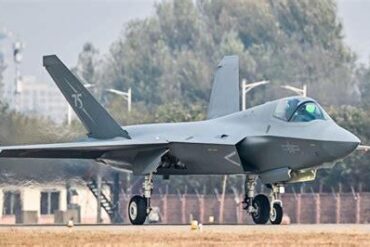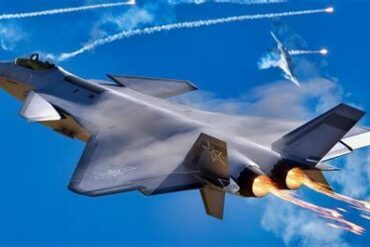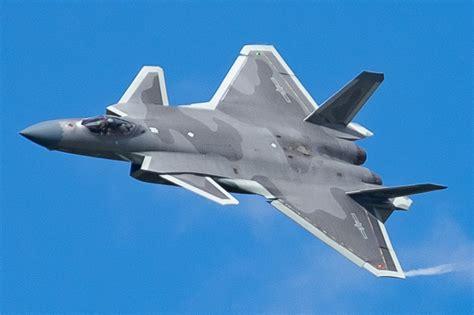
China’s J-20 ‘Mighty Dragon’ stealth fighter has evolved from an ambitious prototype unveiled in December 2010 to a cornerstone of the nation’s future air power strategy. As speculation mounts over just how many of these fifth-generation aircraft will ultimately be constructed, a growing number of defense analysts and military experts now suggest that China could produce well over 1,000 J-20s, a scale of production unseen in the post-Cold War era for any advanced fighter jet.
The unprecedented scale of J-20 production breaks sharply with global trends. In contrast to the dramatic post-Cold War decline in fighter production — especially for large, twin-engine jets — China appears to be building toward a fighter fleet that could dominate Asia’s skies for decades. The United States and Russia, once dominant in this field, have largely leaned on export markets to justify continued fighter production. China, by contrast, has kept the J-20 off the export market, yet is still producing it at a pace that rivals Cold War-era manufacturing.
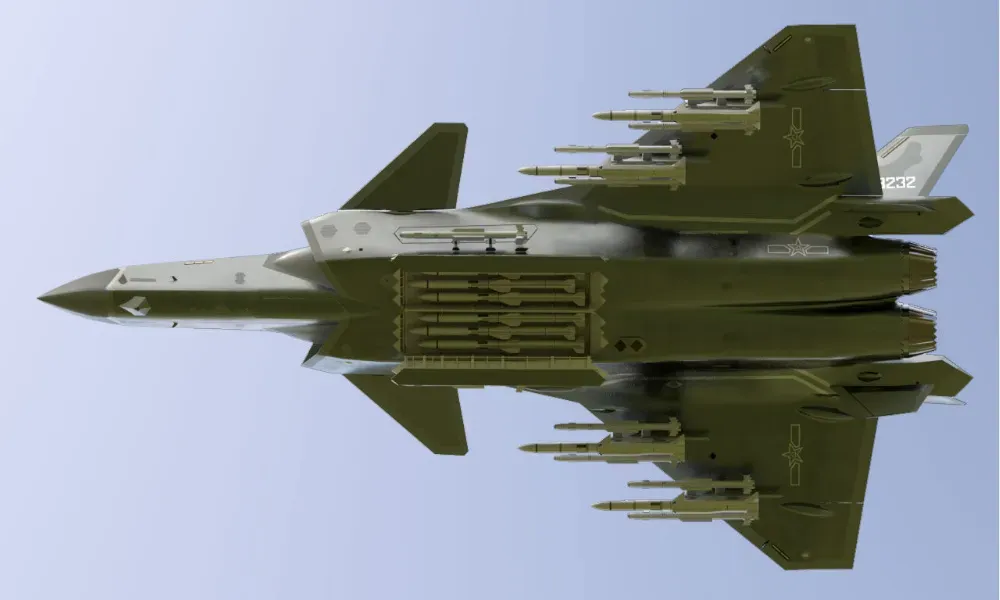
The Origins of the Mighty Dragon and China’s Fifth-Generation Ambitions
The J-20’s journey began with a technology demonstrator revealed in late 2010, marking China’s serious entry into the elite club of fifth-generation fighter developers. At a time when only the U.S. fielded such platforms, the appearance of the J-20 stunned many observers. Yet even then, the aircraft’s sheer size, design philosophy, and heavyweight airframe suggested an ambitious agenda.
Analysts originally speculated that China might adopt a conservative production strategy, producing only a few hundred aircraft to maintain air superiority near its borders. However, senior experts testifying before the U.S. House Intelligence Committee in 2018 suggested that up to 500 J-20s could eventually be produced. The scale was surprising — not just for China’s growing aerospace capacity, but for the implications it had regarding Beijing’s long-term strategic planning.
Rapid Production Expansion and Industrial Mobilization
The most striking development came in the early 2020s, when J-20 production accelerated beyond expectations. According to multiple defense industry sources, by 2023, the annual output had surged to between 100 and 120 aircraft per year — a pace unmatched by any twin-engine stealth fighter program globally.
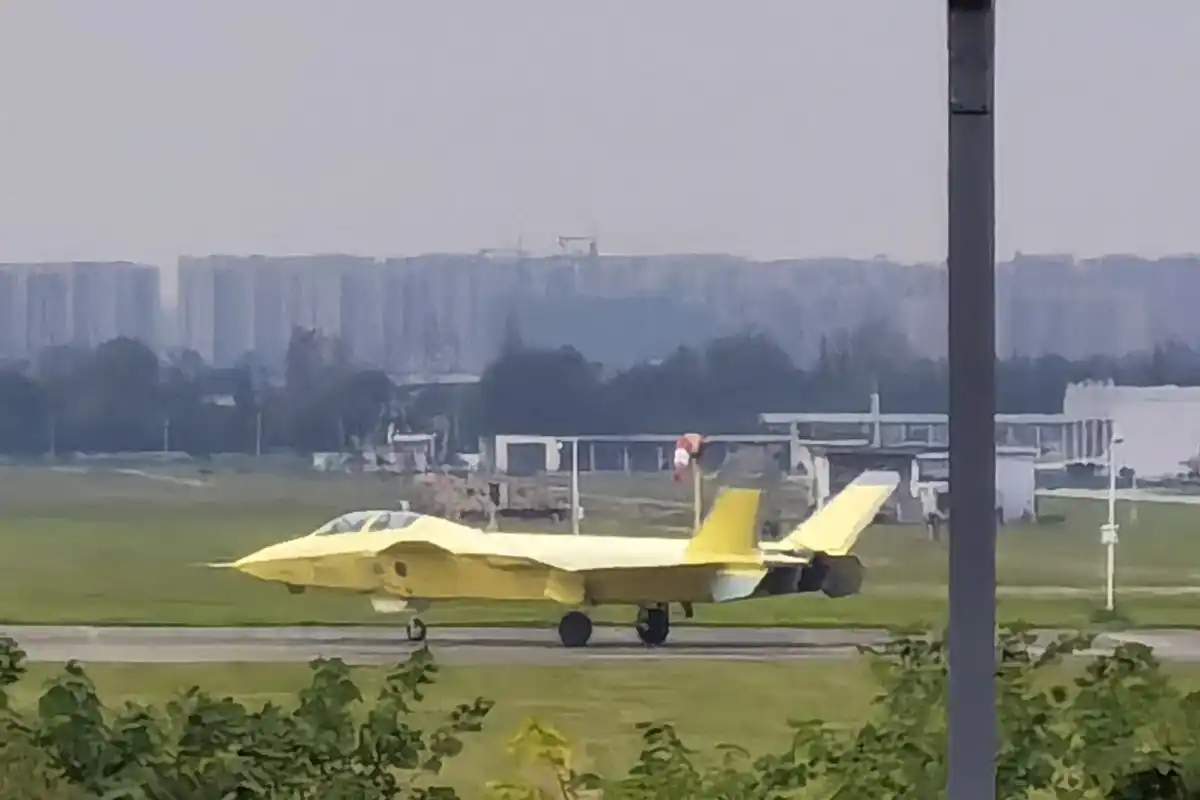
This production rhythm is not merely symbolic. It speaks to a deliberate and coordinated expansion of China’s military aviation industrial base, particularly around Chengdu Aircraft Industry Group (CAIG), the manufacturer of the J-20. Abraham Abrams, author of China’s Stealth Fighter: The J-20 ‘Mighty Dragon’ and the Growing Challenge to Western Air Dominance, has emphasized the scale of this effort, calling it a clear signal of China’s intention to rely heavily on the J-20 for both defensive and offensive air operations.
Strategic Motivation: Outpacing the F-35 Threat
What is motivating such large-scale production? One answer lies in the massive deployment of the F-35 Lightning II by China’s potential adversaries, particularly the United States and its allies in the Asia-Pacific. The U.S. aims to deploy over 2,000 F-35s, backed by hundreds more across NATO, Japan, South Korea, and Australia. For Beijing, matching this with older fourth-generation fighters like the J-10 or J-16 would be futile.
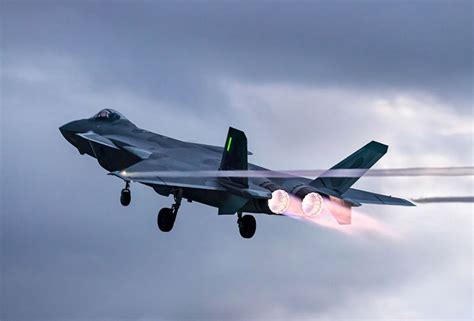
The J-20, therefore, serves not only as a technological counterweight to the F-35 but as a core pillar in China’s ability to assert air superiority across critical theaters such as the South China Sea, Taiwan Strait, and East China Sea. With each new airframe delivered, China inches closer to parity — or even superiority — in regional air power.
Filling the Role Once Held by the J-6: A Historical Parallel
The scale of J-20 procurement becomes even more significant when viewed through the lens of Chinese aviation history. In the 1980s, the J-6 — a license-built MiG-19 — accounted for nearly three-quarters of China’s fighter fleet. Lightweight and inexpensive, the J-6 filled out the PLAAF in massive numbers, though it lacked sophistication.
Today, the J-20 appears poised to play a similar role, though at a far higher level of capability. As Abrams notes, “The J-20’s massive production scale indicated that it could be intended to similarly equip close to half, if not a majority of Chinese fighter units.”
This is a dramatic shift from the late Cold War doctrine, where multiple fighter classes were fielded to handle different roles. Instead, the J-20 may soon become the workhorse across a range of missions, from long-range intercepts to strike missions deep into contested airspace.
The Versatility and Cost Efficiency Driving Expansion
What enables such ambitious procurement isn’t just industrial scale — it’s also performance and cost effectiveness. Despite being a stealth jet, the J-20 is reportedly more affordable to manufacture and operate than comparable U.S. platforms, particularly the F-22. Furthermore, the J-20 benefits from a modular design philosophy, allowing newer variants and upgrades to enter the production line without halting or redesigning the platform entirely.
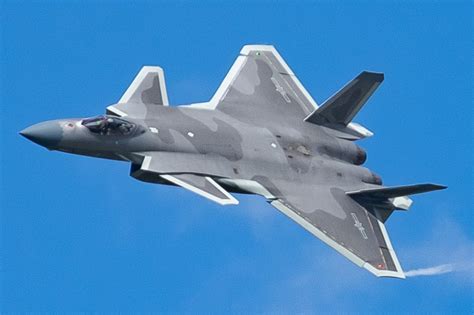
Moreover, the aircraft’s latest variants reportedly include indigenous WS-15 engines, granting supercruise capability and drastically improving reliability and maneuverability. These improvements have made the J-20 not just a stealth platform, but a genuine multi-role heavyweight fighter optimized for modern electronic warfare and beyond-visual-range engagements.
Projections and Global Impact of a 1,000+ J-20 Fleet
If projections hold and China fields over 1,000 J-20 fighters, the implications are enormous. No other nation in the world — not even the U.S. — fields such numbers of a fifth-generation twin-engine stealth aircraft. While the U.S. F-22 fleet was capped at 187 units due to cost and complexity, China seems ready to move well beyond that with an airframe that is cheaper, newer, and more adaptable.
This could reshape the military balance in East Asia and undermine the current dominance of the U.S. and its allies. Carrier groups, forward air bases, and even stealth bombers would face a stealth adversary deployed at scale and across multiple regions. In such a scenario, China wouldn’t just be contesting air superiority — it would be asserting it.
Conclusion: The J-20’s Role in China’s Vision of Air Dominance
The world is watching as China redefines what is possible in post-Cold War fighter production. Far from being a boutique platform or elite squadron asset, the J-20 is on track to become the bedrock of Chinese air power, much as the F-35 is for the U.S. But unlike the F-35, which has faced numerous cost overruns, interoperability issues, and political hurdles, the J-20 is advancing with quiet speed and formidable purpose.
With more than 1000 units potentially in service by the early 2030s, the J-20 will not only serve as a deterrent — it will likely shift doctrines, rewrite air strategy, and establish China’s place as a peer competitor to the United States in aerospace technology and power projection. The Mighty Dragon is no longer an emerging force — it is becoming a dominant reality.