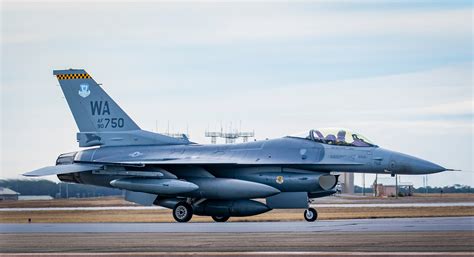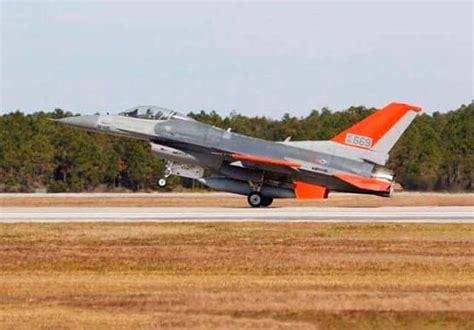
The United States Air Force has officially tasked Boeing Defense, Space & Security with converting retired Lockheed Martin F-16 jet fighters into advanced QF-16 full-scale aerial target (FSAT) drones. Under a recently issued $10.2 million contract modification, this initiative continues the Air Force’s long-standing strategy of repurposing legacy fighter jets for modern weapons testing and training scenarios.
The order, managed by the Air Force Life Cycle Management Center at Eglin Air Force Base, Florida, increases the cumulative value of Boeing’s QF-16 conversion program to approximately $318.7 million. The mission is clear: provide cutting-edge, recoverable drone platforms that simulate high-speed adversary aircraft in live-fire exercises.
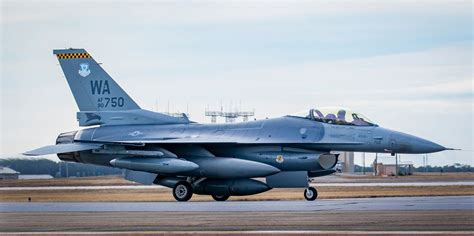
The Evolution from QF-4 to QF-16: A Leap in Aerial Realism
The transition from QF-4 Phantom-based drones to QF-16s represents a major leap forward in the Air Force’s target drone capabilities. The QF-4, built from McDonnell Douglas F-4 Phantom fighters, served faithfully until being retired due to age, limitations in speed, maneuverability, and outdated avionics. In contrast, the F-16 Fighting Falcon is a highly agile, fourth-generation fighter that provides a far more realistic adversary simulation.
By integrating QF-16 drones into missile testing and electronic warfare (EW) evaluations, the Air Force can stress-test modern weapons against faster, more maneuverable threats that reflect contemporary battlefield conditions. This realism is essential as the U.S. military prepares for potential conflict environments where air superiority cannot be taken for granted.
Boeing’s Conversion Process: From Cockpit to Command Console
The QF-16 conversion is an engineering feat. Boeing begins by stripping retired F-16 Block 25 and Block 30 aircraft of unnecessary systems, including the 20mm M61 Vulcan cannon and outdated radar units such as the APG-66 and APG-68. These aircraft, once frontline fighters, are then reconfigured to operate either with or without a pilot.
Key upgrades include:
- Flight Termination Systems (FTS): These enable remote detonation of the drone should it deviate from flight plans or lose control.
- Command Telemetry Systems: Ground operators can fully control the drone’s flight path, altitude, and maneuvers from remote stations.
- Missile Scoring Systems: These sensors calculate proximity of missile detonations to determine successful hits, allowing many drones to survive testing engagements.
- Avionics Overhauls: Advanced systems ensure the aircraft can execute complex missions uncrewed.
Historical Context: From Starfighters to Supersonic Ghosts
This is not the first time the Air Force has converted manned fighters into unmanned drones. As far back as the 1960s, it turned Lockheed F-104 Starfighters into flying targets. Later efforts included the F-100 Super Sabre, F-102 Delta Dagger, F-106 Delta Dart, and of course, the F-4 Phantom.
These earlier target drones served well in their respective eras, but their relatively low speeds and older airframe designs limited their use against newer missile and EW systems. The QF-16 addresses those limitations by presenting a supersonic, highly maneuverable, radar-significant target capable of mimicking real-world threats, including aircraft fielded by peer adversaries.
Enhancing Weapons Testing and Combat Readiness
Modern warfare demands advanced test platforms. QF-16s enable the Air Force to:
- Evaluate missile seeker effectiveness under real-world conditions.
- Test radar-guided and infrared-guided munitions against fast-moving targets.
- Conduct jamming and electronic countermeasure drills to refine EW systems.
- Train pilots and missile operators in high-stakes, realistic environments.
These capabilities are increasingly critical as the U.S. faces rapidly modernizing air forces abroad, including near-peer powers such as China and Russia. The QF-16 drones allow for tactical experimentation and validation without risking human life or squandering new aircraft.
Unmanned but Not Unmanned Alone: Piloted Flexibility
Despite their classification as drones, QF-16s retain dual-use functionality. Each converted aircraft can still be flown by a human pilot. This flexibility is essential during initial testing and ferry flights, allowing manned control when needed and drone operation during combat simulation.
The first manned QF-16 flight occurred in May 2012, followed by the first fully unmanned sortie in September 2013. This dual-mode capability makes the QF-16 fleet highly adaptable for both logistics and mission-readiness roles.
Strategic Locations and Future Production Timeline
All current conversion work for this latest contract will take place at Boeing’s facility in Jacksonville, Florida. The project is scheduled for completion by December 2026. Boeing is expected to produce a total of 210 QF-16s, providing the Air Force with a robust, sustainable fleet for the foreseeable future.
The program’s scale is justified by both operational necessity and fiscal efficiency. Repurposing legacy fighters into target drones reduces waste and maximizes lifecycle utility, while ensuring that U.S. forces can remain agile and informed in the face of evolving air combat dynamics.
Engineering Resilience: Survivable, Scorable, Sophisticated
Unlike older drones which were often destroyed during tests, QF-16s are designed to survive engagements. The onboard missile scoring system uses sensor arrays and telemetry algorithms to detect and assess simulated “kills,” enabling weapon performance evaluations without requiring physical destruction of the platform.
This survivability not only saves costs but allows multiple test cycles per airframe. In a climate where defense budgets face scrutiny, such cost-efficient reuse is highly valuable.
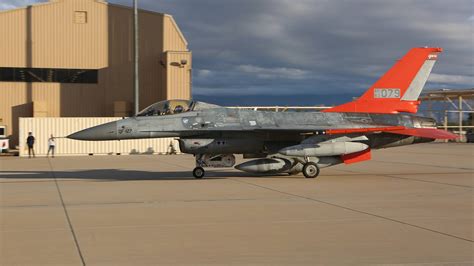
The Implications for Future Air Combat Training
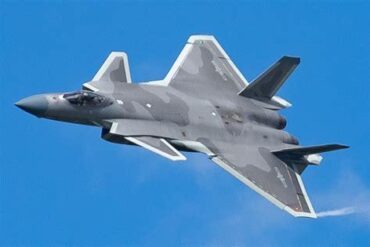
As the air threat landscape becomes increasingly complex, the QF-16 drone represents more than just a target — it’s a dynamic training tool. By simulating Chinese J-10s or Russian MiG-29s, QF-16s let U.S. pilots and defense systems practice engagements that mirror tomorrow’s conflicts.
Moreover, these drones facilitate testing of next-generation weapons, including the AIM-260 Joint Advanced Tactical Missile (JATM) and sophisticated electronic countermeasures such as the AN/ALQ-249 Next Gen Jammer.
The future of aerial warfare will be won through preparedness, adaptability, and data-driven testing — all of which hinge on platforms like the QF-16.
Conclusion: A Fighter’s Second Life as a National Asset
The QF-16 drone program is not merely a technological marvel; it’s a powerful example of strategic recycling. By converting retired warplanes into modern training and testing assets, the Air Force and Boeing are bridging the gap between past and future.
Each QF-16 takes to the skies not as a relic, but as an essential tool in the preservation of American air dominance. As adversaries advance and weapons evolve, the role of these ghostly fighters — once piloted by human hands, now directed by satellite and algorithm — becomes ever more critical to the survival and supremacy of U.S. airpower.