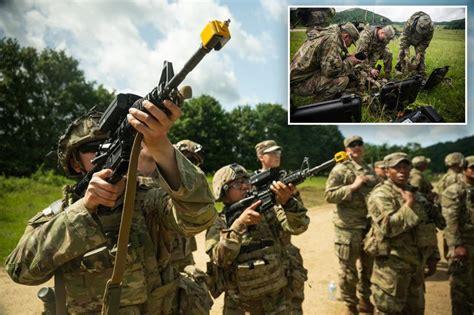
The battlefield is evolving rapidly, and the US Army is meeting the threat head-on with a groundbreaking technological leap: the deployment of the SMASH 2000L smart rifle scope, a $13 million investment into precision targeting and drone defense. Designed to automatically track, lock on, and eliminate aerial threats, the smart scope provides soldiers with cutting-edge firepower against the growing menace of combat drones.
Revolutionizing Combat with Smart Fire Control Systems
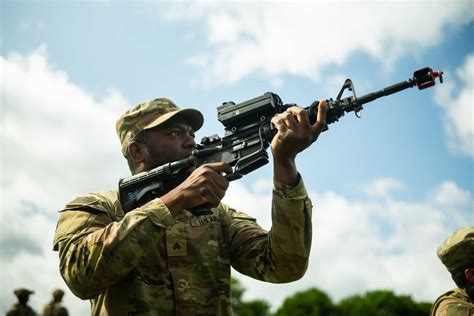
In a live-fire training event on June 6 in Germany, a member of the 3rd Squadron, 2nd Cavalry Regiment demonstrated the SMASH 2000L’s capabilities. As part of Project Flytrap, this multinational exercise showcased how artificial intelligence and precision optics are being fused directly into standard infantry weapons, specifically the M4A1 rifle. This event not only served as a proof of concept but marked a pivotal point in modern warfare doctrine.
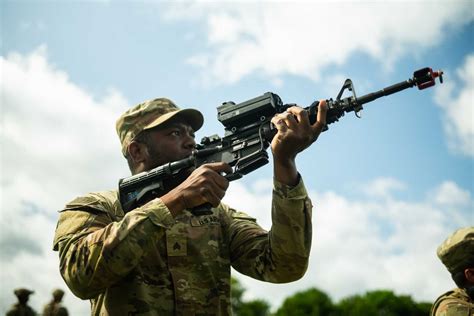
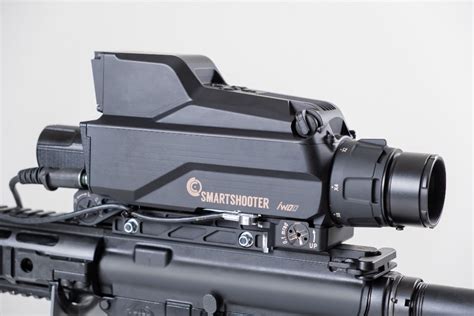
The smart scope, developed by Smart Shooter Ltd., an Israeli defense technology company, is far from a traditional optical sight. It employs an integrated suite of cameras, real-time sensors, and machine vision algorithms to identify aerial threats, lock onto them, and determine the precise moment a successful hit can be made. Once a target, such as a fast-moving quadcopter, is locked in, the scope controls the rifle’s trigger mechanism and only allows a shot when the system calculates near-certain accuracy.
Combat-Proven and Operationally Validated
The SMASH 2000L isn’t an experimental prototype—it’s a combat-tested platform. Already deployed by NATO forces and utilized in live combat scenarios, the scope’s performance in complex environments has been validated repeatedly. In current conflicts like the Russia-Ukraine war, where both sides deploy small, cheap drones to drop explosives or conduct reconnaissance, such anti-drone capabilities have become mission-critical. Similarly, in Israeli border operations, terrorist groups have flown drones directly into defensive positions, prompting the need for rapid-response, man-portable countermeasures.
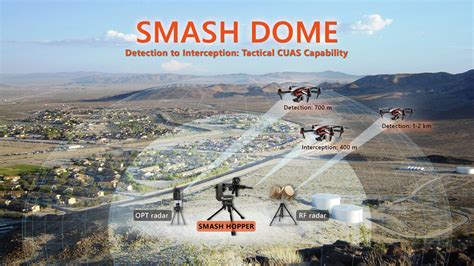
These compact, stealthy drones present a unique challenge to traditional counter-drone systems, which often involve bulky radar arrays, missile systems, or electronic warfare suites. The SMASH scope replaces complexity with simplicity, enabling every infantry soldier to become a mobile drone defense platform.
Anatomy of the SMASH 2000L Smart Scope
The SMASH 2000L is designed for ease of use, compatibility, and maximum battlefield impact. Key specifications include:
- Weight: Approximately 2.5 pounds, maintaining soldier mobility
- Mounting: Compatible with standard Picatinny rail systems used on most NATO rifles
- Targeting System: Combines computer vision, motion tracking, and ballistic calculation
- Trigger Mechanism: Electronically controls trigger for “fire only when hit is guaranteed” accuracy
- Range & Accuracy: Optimized for short- to medium-range drone interception, including small quadcopters
By integrating seamlessly with existing weapon platforms, the SMASH 2000L ensures no additional burden or need for weapon-specific training. Instead, soldiers can train directly on the scope, reducing the tech learning curve and accelerating deployment.
The $13 Million Investment: A Strategic Pivot
In May, the U.S. Army awarded Smart Shooter Ltd. a $13 million contract under the Transformation In Contact (TIC) 2.0 program. This initiative is designed to rapidly equip frontline troops with mission-enhancing technologies, cutting through bureaucratic delays that historically slowed innovation on the battlefield.
The TIC 2.0 program emphasizes field-driven requirements, meaning the tools soldiers need—like anti-drone scopes—are developed and delivered at the pace of modern conflict. With drone warfare increasingly democratized by commercial quadcopters and off-the-shelf technology, the military must remain agile and innovative.
From Defense to Offense: Empowering the Modern Soldier
What makes the SMASH scope revolutionary is not just its technical sophistication, but its strategic reorientation of infantry roles. Instead of relying solely on centralized air defense systems, each soldier becomes a point-of-defense node capable of autonomous aerial threat neutralization.
This decentralization of drone defense mirrors how insurgent groups and near-peer adversaries use distributed swarm tactics with unmanned aerial vehicles (UAVs). By meeting that threat with an equally distributed network of smart rifles, the Army closes a critical capability gap in real-time.
Operational Scenarios: How SMASH Performs Under Pressure
Imagine a forward operating unit deployed in rugged terrain. A surveillance drone buzzes overhead—silent, swift, potentially armed. With conventional tools, the unit would either ignore the drone, attempt radio jamming, or wait for higher command to deploy drone countermeasures. With the SMASH 2000L, a trained soldier lifts his rifle, lets the system lock on, and pulls the trigger. A single, electronically calibrated shot takes the drone down, preventing enemy eyes—or worse, payloads—from reaching the unit.
This is not theoretical. Scenarios like these are becoming common in Ukraine, Syria, and along global flashpoints. The time between drone detection and neutralization can determine mission success or failure, life or death.
AI-Driven Precision in the Fog of War
A critical component of the SMASH 2000L is its AI-driven decision engine. Using real-time visual data and motion analysis, the scope can detect erratic flight patterns, distinguish between birds and drones, and filter environmental noise such as fog, smoke, or wind-blown debris.
Where a human shooter might hesitate or misjudge the range, the AI calculates ballistics trajectory, target speed, and probability of kill, all within fractions of a second. The soldier simply aligns, waits for the cue, and fires. In essence, the scope augments human decision-making with machine precision.
Ethical and Tactical Considerations
As with all smart weaponry, the use of AI in direct-fire applications raises ethical and tactical concerns. However, the SMASH 2000L does not fire autonomously—it still requires human initiation. The system acts as a fire control enhancer, ensuring the shot lands only when effectiveness is virtually certain. This distinction is crucial in avoiding collateral damage or unintended engagements.
Additionally, by enabling greater accuracy, the scope helps prevent wasted ammunition, reduces the risk of alerting enemies with missed shots, and minimizes civilian exposure in mixed-use environments.
The Future: Expanding Capabilities Beyond Drones
While currently optimized for small drone interception, the underlying technology behind the SMASH platform has wider applications. The same AI vision systems can potentially identify enemy snipers, incoming rockets, or vehicle threats. Integration with night vision, thermal imaging, and target sharing via battlefield networks may be on the horizon.
Smart Shooter Ltd. is already exploring modular enhancements that could allow software updates or plug-in capabilities, expanding the scope’s role beyond its current niche. As drone warfare continues to evolve, so too will the tools designed to counter it.
Conclusion: The Era of Smart Infantry Has Arrived
The deployment of the SMASH 2000L marks a paradigm shift in modern infantry warfare. It blends AI, optics, and fire control into a single soldier-wielded unit, fundamentally altering how threats are engaged on the battlefield. For $13 million, the Army has not just bought scopes—it has invested in the future of precision warfare, giving soldiers a tool that levels the technological playing field against drone-enabled adversaries.
From the streets of urban combat zones to open-field engagements in Eastern Europe, the smart scope is already proving to be more than just a gadget—it’s a tactical equalizer. As global militaries race to adapt to drone threats, the U.S. Army has taken a decisive step forward with the SMASH 2000L.