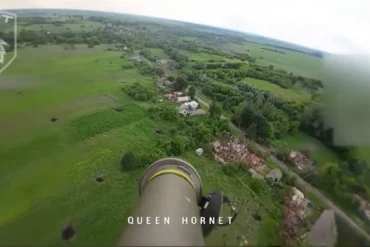
Modern warfare has entered an era where unmanned aerial vehicles (UAVs), more commonly known as drones, have become as decisive as tanks or missiles. As demonstrated with striking clarity in the Russo-Ukrainian conflict, the tactical and strategic use of drones is transforming the battlefield. Nations that once enjoyed air superiority are now confronted with fleets of low-cost drones capable of reconnaissance, sabotage, and direct attack. Germany, observing the rapidly evolving landscape, has begun to act — placing a strategic bet on the Rheinmetall Skyranger air defense turret to counter the drone threat.
The Rise of the Drone Battlefield: A Wake-Up Call for Germany
The battlefield of the 21st century is dominated by speed, automation, and intelligence-gathering. The effectiveness of drones in Ukraine — both for offensive airstrikes and real-time surveillance — has reshaped global military doctrines. Germany, like many NATO allies, found itself behind the curve in drone warfare. While other nations had already deployed armed and autonomous UAVs, Germany’s defense establishment was still weighing ethical and legal considerations.
But with drone incursions over European airspace, including sensitive zones like military installations and civilian airports, Germany had to evolve — fast. The once-cautious Bundeswehr is now pivoting to a multi-layered, technologically robust air defense strategy, with the Rheinmetall Skyranger at its core.
Rheinmetall Skyranger: The Centerpiece of Germany’s Anti-Drone Doctrine
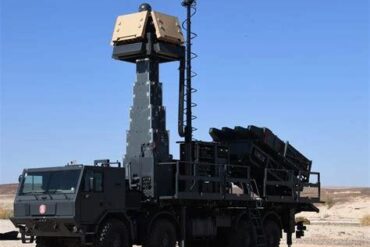
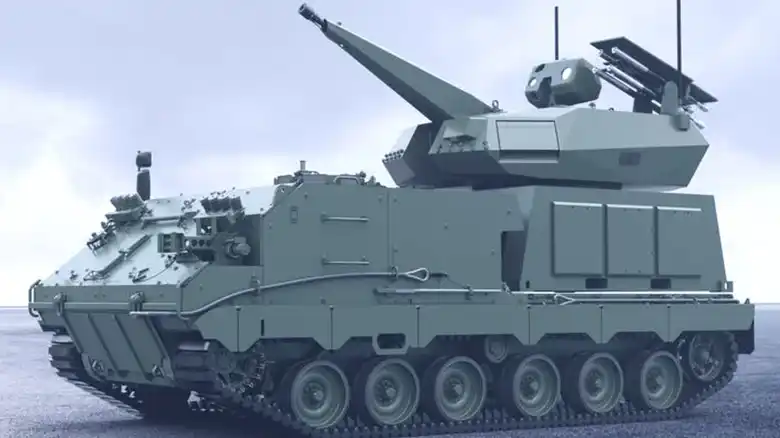
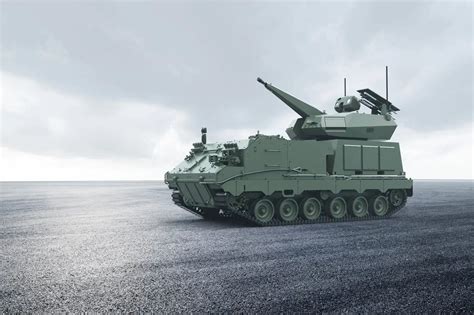
The Skyranger is not just a turret — it is a mobile, intelligent, and modular defense system tailored for a battlefield where drones roam freely. Unlike traditional anti-air platforms, the Skyranger focuses on short- and very-short-range aerial threats, making it a perfect countermeasure against swarms of drones.
At the heart of the Skyranger is the 35mm Oerlikon Revolver Gun, engineered for precise bursts of programmable ammunition. This allows the turret to not only detect but destroy drones mid-air with calculated airburst detonations.
Its key features include:
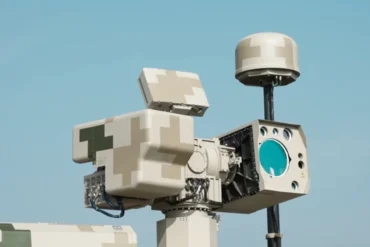
- 360° detection coverage via advanced radar and electro-optical sensors
- Airburst-capable programmable munitions
- Mountable on tracked and wheeled vehicles for rapid deployment
- Integrated missile systems, including “Cheetah” and equivalents to the U.S. Stinger
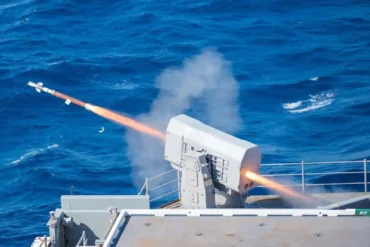
- C-RAM (Counter Rocket, Artillery, and Mortar) capabilities similar to naval Phalanx CIWS systems
This is not a theoretical capability — Germany has already ordered 19 Skyrangers, with full deployment expected by 2027. These systems are not confined to military bases but are intended to be fielded across a range of platforms to support dynamic battlefield needs.
Why the Gepard Had to Go — And What It Means for the Bundeswehr
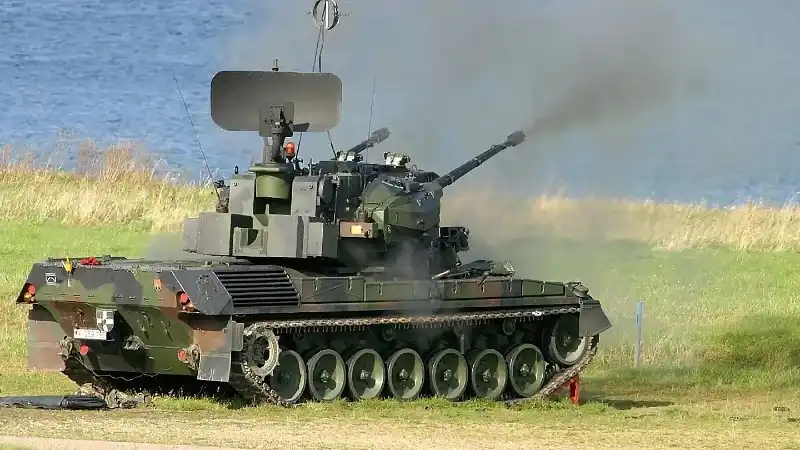
Germany once relied on the Gepard anti-aircraft tank, a Cold War-era relic repurposed for modern threats. The Gepard was remarkably effective against Russian drones in Ukraine. So effective, in fact, that Germany donated much of its remaining stock to Ukraine’s defense forces.
This left a capability vacuum within the Bundeswehr. The Skyranger is designed not only to fill this gap but to leapfrog into a new generation of intelligent, modular, and agile air defense solutions.
Modular Deployment: Skyranger Is Not a Tank
It’s crucial to understand that the Skyranger system isn’t a vehicle — it’s a turret and sensor suite that can be mounted onto various mobile platforms. From armored personnel carriers to light tactical trucks, the Skyranger can be adapted to different mission profiles, giving the Bundeswehr maximum flexibility and speed.
This adaptability makes it a critical asset for counter-drone operations in both urban zones and combat theaters. Its sensors provide persistent situational awareness, and its weapons systems are programmed for airburst precision — a necessity for eliminating small, fast-moving drones before they reach their targets.
Training the Force: Anti-Drone Combat at Every Level
Recognizing the pervasive nature of drone threats, Germany is embedding drone defense training across all military branches. From frontline infantry units to rear logistics teams, the Bundeswehr is undergoing a doctrinal shift to treat drone defense as a basic combat competency, not a specialist skill.
This includes:
- Tactical responses to drone sightings
- Use of portable jamming devices and electronic warfare tactics
- Training on interceptor drones and ground-based sensor integration
Dronecatcher and Interceptor Drones: A Net-Based Defense Layer
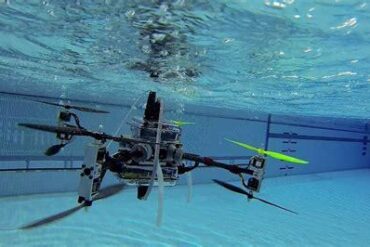
While high-tech systems like the Skyranger dominate headlines, Germany is also deploying low-cost, innovative solutions to round out its drone defense capabilities. One such system is the Dronecatcher — a UAV designed to capture enemy drones using net-based projectiles.
These interceptor drones are launched quickly, fly toward the target, and fire a net to entangle and disable the adversary drone. In some models, a parachute system is activated post-capture, safely lowering the captured drone to the ground for intelligence exploitation.
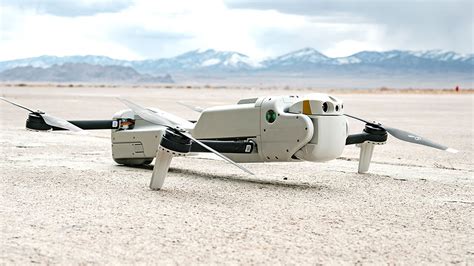
This solution is particularly effective in urban environments, where kinetic countermeasures may pose collateral risks. It’s also favored for defending airports, government buildings, and sports arenas, where the presence of civilians requires non-destructive interception.
Domestic Security: Police and Military Cooperation Against Drones
Due to legal constraints, the Bundeswehr cannot operate freely within German territory. To circumvent this, Germany is developing civil-military operational frameworks where local police units are empowered to shoot down or intercept rogue drones.
In October 2025, Germany officially authorized police forces to engage rogue drones, expanding their use of both firearms and signal-jamming equipment. This represents a major policy shift and ensures that key civilian infrastructure — such as airports, embassies, and energy plants — can be defended without the delay of waiting for military deployment.
Looking ahead, integration between the police and Bundeswehr is expected to deepen. Future defense protocols may see shared sensor networks, common response procedures, and even joint drone-interception operations.
Germany’s Drone Doctrine: A Vision of Multi-Layered Defense
Germany’s drone defense strategy is not reliant on any single technology. Instead, the country is deploying a multi-tiered system where every drone threat — from small quadcopters to larger surveillance UAVs — is met with an appropriate and proportionate response.
Key layers include:
- Electronic warfare and jamming for signal disruption
- Dronecatchers and net-based interceptors
- Police firearm engagement in civilian zones
- Skyranger-based kinetic defense systems for mobile military deployment
- Intelligence coordination with NATO allies
A Strategic Pivot: Germany’s Path Forward in Drone Warfare
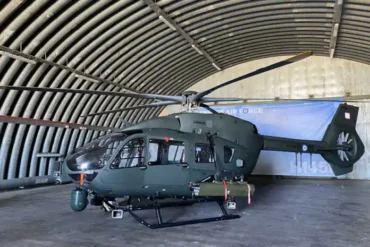
In 2022, Germany began arming its own reconnaissance drones, a notable shift from its previous stance on armed UAVs. This development reflects an emerging consensus in Berlin: if drones are the future of warfare, Germany must not only defend against them — it must wield them.
Expect Germany to:
- Invest heavily in indigenous drone research and development
- Build out offensive UAV squadrons for battlefield support
- Cooperate with NATO on standardized drone defense protocols
- Expand its civilian protection frameworks with drone detection systems in public spaces
Conclusion: The Skyranger Is Just the Beginning
As the lines between civilian safety and military readiness blur in the age of drones, Germany is evolving rapidly. The Skyranger turret, with its smart munitions and adaptable platform, is the backbone of this transformation, but it is far from the only component. From net-equipped interceptor drones to inter-agency cooperation between police and army units, Germany’s drone problem is being met with a layered, future-proof response.
In a world where drone warfare is no longer futuristic speculation but a clear and present danger, Germany’s strategic investments show that it is no longer playing catch-up — it is laying the groundwork for dominance in a drone-saturated battlespace.