As the character of modern warfare continues to evolve, Project Flytrap has emerged as a transatlantic initiative designed to counter one of the most disruptive tools on today’s battlefield: the drone. Spearheaded by the United States and the United Kingdom, the project brings together NATO partners at a military training facility in Germany, aiming to test and refine the latest counter-unmanned aerial system (C-UAS) technologies. The operational urgency stems from the widespread and effective use of cheap drones in the Russia–Ukraine war, a dynamic that has redefined both offensive capabilities and defensive vulnerabilities.
The Rise of the Drone Threat in Modern Warfare
The military relevance of drones has shifted dramatically in recent years. From reconnaissance to direct strike operations, commercial-grade UAVs have demonstrated that warfare no longer belongs exclusively to large, expensive platforms. Instead, low-cost, rapidly deployable drones are now capable of knocking out multi-million-dollar armored vehicles, making them a priority threat on the modern battlefield.
In this context, Project Flytrap is not merely an experimental exercise — it’s a critical step toward building a resilient, responsive infantry force capable of detecting, jamming, and neutralizing enemy drones before damage is inflicted. The initiative reflects a strategic shift by NATO: preparing to fight the next war, not the last.
Project Flytrap’s Tactical Arsenal: Layered Defense Through Innovation
The systems tested under Project Flytrap combine multinational technology inputs with battlefield adaptability. While much of the equipment originates from outside the United States, the integrated framework is tailored to NATO’s joint operational needs.
At the heart of the project is the Wingman detection system, developed by Danish defense company MyDefence. This portable sensor suite scans the electromagnetic spectrum for drone signals. Once identified, it transmits real-time alerts to operators through earpieces, allowing for immediate action.
Upon detection, operators deploy the Pitbull jamming system, also supplied by MyDefence. This man-portable radio frequency jammer disrupts both control and video signals of enemy UAVs within a range of approximately 1,000 meters. The combined use of Wingman and Pitbull creates a first line of response, designed for rapid reaction by foot soldiers.
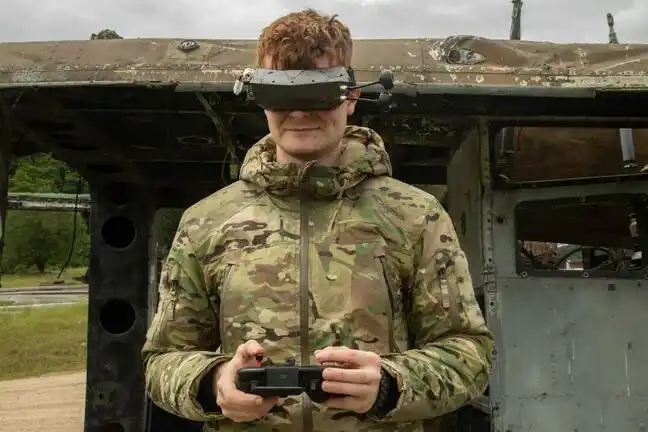
“Every single soldier needs to be a counter-UAS expert,” said First Lieutenant Jake Licht of the 5th Battalion, 4th Air Defense Artillery Regiment, who is actively participating in the exercise. His comments underscore the new doctrine emerging from this experience — anti-drone warfare is no longer the sole domain of specialized units. It must now become core training for all infantry personnel.
Smartshooter: Precision Targeting in Real-Time
The tactical depth of Project Flytrap is enhanced by another innovation: the Smartshooter optical sight system. Developed in Israel, Smartshooter is a bolt-on upgrade to conventional rifles that uses AI-driven predictive software to help soldiers hit moving aerial targets.
These sights are designed to correct human aiming errors by locking onto the target and calculating optimal shot timing. The U.S. Army has already invested $13 million in Smartshooter, indicating strong confidence in its ability to turn infantry rifles into drone-killing platforms.
The integration of Smartshooter with other detection and jamming systems gives soldiers a full engagement spectrum: detect, jam, aim, and destroy. It’s a strategy rooted in flexibility and speed, essential qualities in the face of fast, erratic UAVs.
American Tech Joins the Battlefield Network
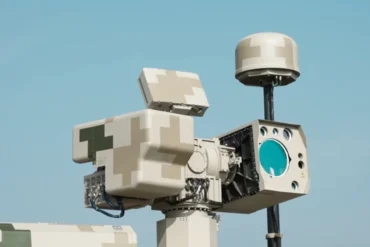
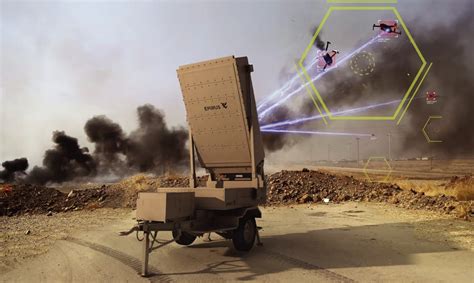
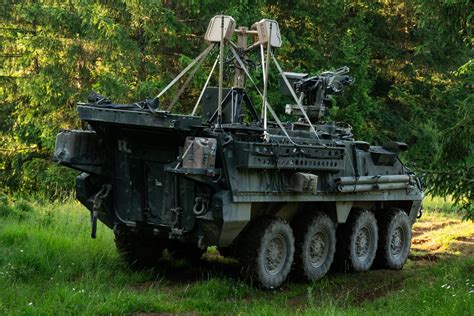
While much of the Project Flytrap gear is international, U.S. technology has not been sidelined. The American-made EchoShield radar system, developed by a startup based in Washington State, is also being trialed. Mounted on vehicles, EchoShield boasts the ability to detect:
- Small drones up to 1.5 km (0.9 miles)
- Larger, payload-equipped drones up to 3 km (1.9 miles)
Although effective, its lack of portability highlights the continued need for soldier-deployed, wearable C-UAS solutions. EchoShield works best in layered defense, identifying threats from a distance while frontline units employ jamming and direct fire tools.
Interoperability and Vendor Synergy: A Complex but Critical Challenge
Project Flytrap is not only a field test of counter-drone technology — it is also a real-time experiment in interoperability among NATO allies and vendors. As First Lieutenant Licht noted, the challenge lies not just in having advanced hardware, but in integrating multiple systems into a seamless operational workflow.
“Each of these vendors comes up with great ideas. They’re all super smart. But when it comes to us, the warfighters, we have to incorporate a lot of different technology, a lot of different vendors, all in one space — usually for the first time.”
This comment captures a key operational dilemma: the greater the technological variety, the higher the demand for harmonized training, logistics, and mission planning. Flytrap’s role is as much about shaping doctrine as it is about testing gear.
Geopolitical Timing: Project Flytrap’s Strategic Urgency
Though the immediate testing ground is Germany, the lessons from Ukraine and the increasing use of drones by Iran-backed militias across the Middle East give Project Flytrap geopolitical urgency. As the US and UK retool their infantry forces, their eyes are not only on Europe but also on conflict zones like Syria, Iraq, and the Red Sea corridor, where drone swarms are increasingly used by state and non-state actors alike.

“The goal is to either jam it or knock something out of the sky before we have to blow it up,” said Alex Miller, the US Army’s Chief Technology Officer. His remark reflects the cost-benefit analysis driving this effort. The ability to neutralize threats cheaply and effectively before resorting to missile or artillery response is central to battlefield sustainability.
A Future-Ready NATO: Project Flytrap’s Broader Implications
Set to run until August, Project Flytrap is more than a military exercise — it’s a glimpse into the future of NATO infantry operations. By deploying portable, smart, and decentralized anti-drone systems, NATO hopes to eliminate the vulnerability gap exposed by the Ukraine conflict.
As more drone technologies fall into the hands of asymmetric forces, and as peer-state rivals refine UAV warfare strategies, the only path forward is a proactive, tech-integrated soldier. That soldier must be trained not just in shooting or maneuvering, but in electronic warfare, radar awareness, and precision shooting augmented by AI.
Project Flytrap is shaping that soldier. And by extension, it’s shaping the battlefields of the 2030s.