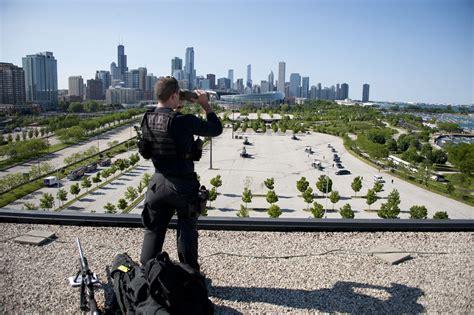
Chicago’s Secret Service Field Office recently spearheaded a groundbreaking event at Soldier Field, bringing together over 50 local and state law enforcement agencies from across the Midwest to explore the latest advancements in drone technology. This high-level gathering underscored the rapid evolution of aerial surveillance and tactical capabilities, aiming to foster unprecedented cooperation between federal, state, and local entities. Against a backdrop of rising global drone conflicts, including Ukraine’s drone strikes on Russian military assets, the event spotlighted the urgent need for U.S. agencies to stay ahead of emerging threats.
Assistant Special Agent in Charge Joel Heffernan emphasized the dual nature of drone innovations—impressive yet intimidating—and the importance of proactive adaptation. “Highlighting what just occurred in Russia… it’s amazing and at the same time, it’s scary. And we need to make sure that we’re leaning forward on what we can do to address it,” Heffernan stated, referencing the destructive potential of unmanned aerial vehicles (UAVs) when weaponized. The forum aimed to ensure that U.S. law enforcement is not caught off guard by similar tactics that could target domestic assets.
The Soldier Field session represented a significant stride in airspace security coordination, focusing on drone threat prevention, surveillance strategies, and inter-agency communication protocols. In light of the communication breakdown during the attempted assassination of President Trump in Pennsylvania—where the absence of surveillance drones and malfunctioning detection equipment were heavily criticized—the Chicago event served as a call to action. Agencies discussed integrating drones seamlessly into major event security plans, ensuring that tools are in place to detect, identify, and neutralize airborne threats swiftly.
Law enforcement officials from Illinois, Wisconsin, and beyond exchanged insights on real-world applications of drones in public safety. The Aurora Police Department, for example, shared compelling body camera footage illustrating how drones can expedite responses in life-threatening scenarios. In a recent case, drone operators were able to guide officers directly to a missing, armed man experiencing a mental health crisis, avoiding potential escalation and harm. According to Sgt. Ronald Miller, infrared-equipped drones significantly enhanced night operations. “We can pick up their heat signatures and locate them a little faster than we would with the naked eye,” Miller explained, highlighting the technology’s invaluable role in modern policing.
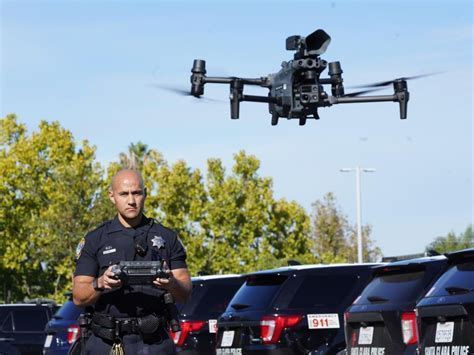
Beyond emergency response, drones are being embraced across departments of all sizes—not just by large metropolitan forces, but increasingly by smaller agencies seeking to bolster their operational capabilities. The shift reflects a broader recognition of UAVs as essential components in public safety infrastructure, particularly for planning and securing major gatherings. Heffernan noted, “I think this is something that is going to continue to evolve for law enforcement, also for planning, for public safety, too, for major events.” The event at Soldier Field exemplified the growing consensus that collaboration and technology integration are key to safeguarding communities against both conventional and unconventional threats.
While the potential of drones to enhance security is clear, privacy advocates continue to raise concerns about the erosion of civil liberties. Illinois, known for having some of the strictest drone laws in the nation, remains at the center of this debate. Critics argue that without stronger protections, the expansion of drone surveillance could lead to governmental overreach and unjustified intrusions into personal privacy. Law enforcement officials counter that stringent policies and oversight are in place to balance security needs with individual rights. Nevertheless, the tension between innovation and privacy remains a defining challenge in the drone discourse.
The Chicago Secret Service Field Office clarified that none of its drone assets or personnel would be engaged in imminent ICE deportation operations, addressing concerns about potential misuse of technology for unrelated enforcement activities. This distinction was crucial in maintaining public trust and focusing the narrative on public safety and national security priorities rather than controversial immigration enforcement practices.
As drone technology continues to evolve at a breakneck pace, the need for robust training, equipment standardization, and shared intelligence frameworks has never been greater. The Soldier Field showcase marked a pivotal moment in advancing these objectives, laying the groundwork for a future where drones are seamlessly integrated into the nation’s law enforcement toolkit. The event demonstrated that technological readiness, inter-agency cooperation, and community transparency are not optional—they are essential pillars in the quest to protect the public in an increasingly complex security landscape.