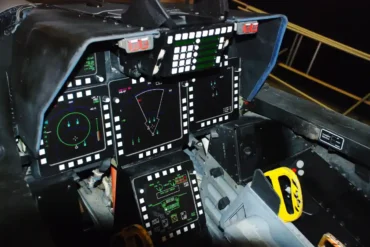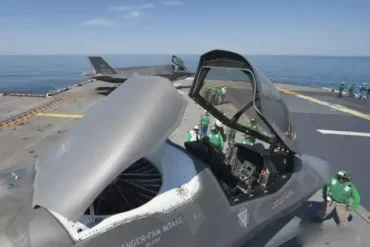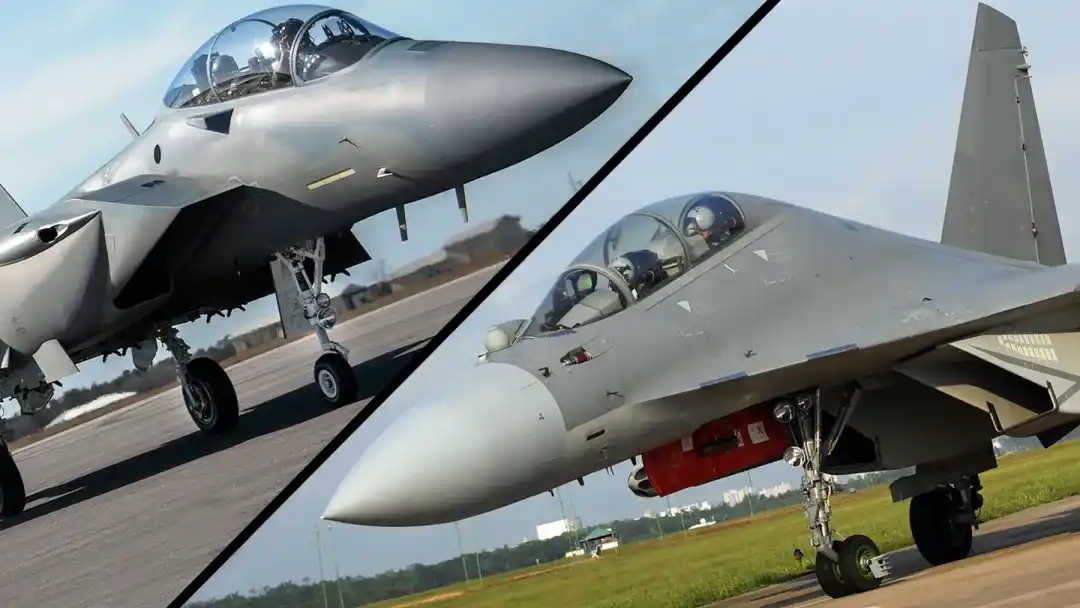
The F-15EX “Eagle II” represents the most advanced evolution of the legendary F-15 series, blending proven airframe durability with cutting-edge digital systems. At the heart of its operational superiority lies the highly sophisticated cockpit, designed for enhanced situational awareness, mission adaptability, and combat survivability. With a dual-seat configuration, advanced glass cockpit displays, and AI-powered integration, the F-15EX cockpit stands as a pinnacle of modern fighter jet design.
Dual-Crew Configuration: A Platform for Future Expansion
The F-15EX retains the two-seat layout derived from the F-15E Strike Eagle. While current U.S. Air Force (USAF) plans do not actively use the rear cockpit, proposals suggest leveraging it for enhanced command and control roles.
Potential Roles for the Rear Seat
- Air Mission Commanding Officer (AMCO): The second crew member could oversee unmanned wingmen like the XQ-58 Valkyrie and manage network-centric warfare operations.
- Multi-Domain Coordination: The rear seat could facilitate data fusion from multiple sources, enhancing real-time battlefield awareness.
- Electronic Warfare Management: Given the increasing reliance on electromagnetic spectrum warfare, the second seat could focus on jamming and countermeasures.
Glass Cockpit and Advanced Human-Machine Interface
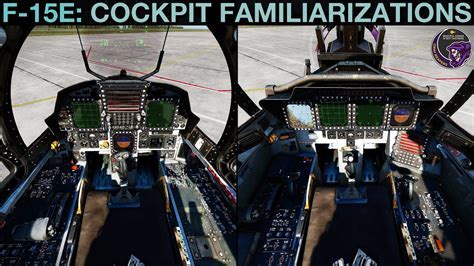
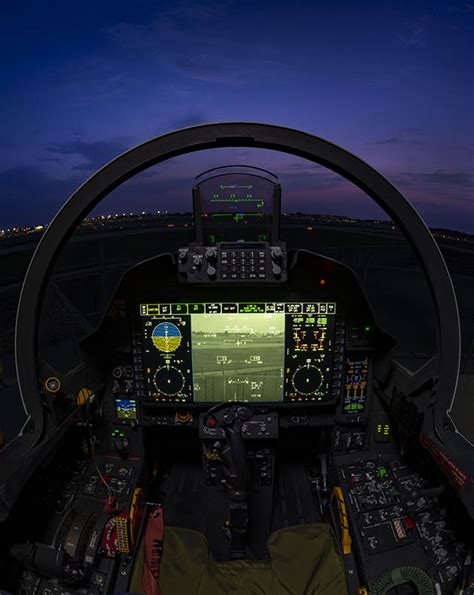
The F-15EX cockpit integrates a next-generation “glass cockpit” design, significantly improving pilot efficiency and mission execution. At its core is a massive 10×19-inch touchscreen display, offering real-time sensor fusion and AI-driven assistance.
Key Features:
- JHMCS II Helmet-Mounted Display: The Joint Helmet Mounted Cueing System II enables real-time target acquisition and rapid engagement by displaying critical flight data directly on the visor.
- AI-Driven Sensor Fusion: Information from multiple sources, including the AN/APG-82(V)1 AESA radar, EPAWSS electronic warfare suite, and IRST (Infrared Search and Track) system, is consolidated into a single, intuitive tactical display.
- Open Mission Systems (OMS) Architecture: The F-15EX cockpit supports rapid software upgrades, allowing seamless integration of emerging technologies such as autonomous drone control and directed-energy weapons.
Survivability and Electronic Warfare Capabilities
The Eagle Passive/Active Warning and Survivability System (EPAWSS) is a cornerstone of the F-15EX’s defensive capabilities, enhancing survivability in contested airspace.
Key Defensive Features:
- Advanced Radar Warning and Geolocation: The cockpit receives real-time alerts on enemy radar threats, providing pilots with crucial reaction time.
- Adaptive Electronic Countermeasures: The EPAWSS employs dynamic jamming techniques to disrupt enemy radar locks and spoof incoming missiles.
- Proven Combat Effectiveness: Simulated exercises demonstrated a 90% survival rate for EPAWSS-equipped F-15EX jets in high-threat environments.
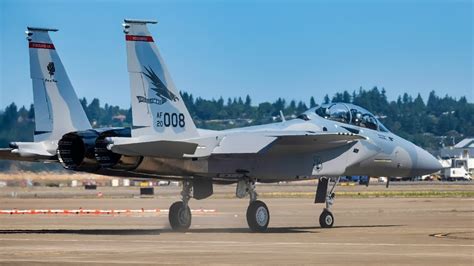
Rear Cockpit: Unused Potential with Expansive Future Roles
While the rear seat remains vacant in current USAF doctrine, its design allows for future mission expansion. Possible future roles for the second crew member include:
- Commanding Unmanned Systems: Directing loyal wingman drones in coordinated attacks.
- Multi-Domain Operations Management: Enhancing coordination between F-15EX, F-35, and F-22 platforms.
- High-Volume Sensor Processing: Managing ISR (Intelligence, Surveillance, and Reconnaissance) data from multiple sources.
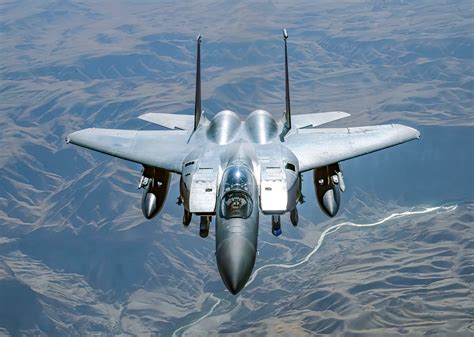
Interoperability and Strategic Role
The F-15EX cockpit is designed for seamless integration with fifth-generation platforms and emerging technologies, making it a vital asset in multi-domain operations.
Sensor-Shooter Synergy:
- The F-15EX can receive targeting data from stealth aircraft like the F-35 and launch long-range missiles (AIM-260, JASSM-ER) beyond enemy radar detection.
- MADL (Multifunction Advanced Data Link) Compatibility: Enables secure real-time communication with F-22 Raptors and future assets.
- Open-Source Software Framework: Ensures compatibility with AI-assisted mission planning, autonomous flight support, and cloud-based warfare tactics.
Conclusion
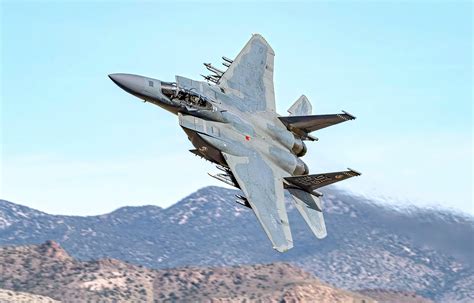
The F-15EX cockpit represents a technological leap in fighter aircraft design, blending combat-proven reliability with cutting-edge digital enhancements. While its rear seat remains underutilized, the platform’s modular architecture offers extensive opportunities for manned-unmanned teaming, electronic warfare dominance, and multi-domain command operations. The F-15EX’s role as a bridge between fourth and fifth-generation fighters ensures its long-term relevance in modern air combat scenarios.
Frequently Asked Questions (FAQ)
1. What makes the F-15EX cockpit superior to previous F-15 models?
The F-15EX cockpit features a 10×19-inch touchscreen display, JHMCS II helmet-mounted targeting system, AI-driven sensor fusion, and OMS architecture, significantly improving pilot situational awareness and mission flexibility compared to older F-15 variants.
2. How does the F-15EX integrate with modern fighter platforms like the F-35?
The F-15EX utilizes MADL-compatible communication systems, sensor fusion, and advanced network connectivity, allowing seamless coordination with F-35 and F-22 fighters for integrated battlefield operations.
3. What future roles could the rear cockpit fulfill?
Potential future uses include commanding unmanned wingmen, managing electronic warfare operations, processing high-volume ISR data, and enhancing multi-domain battle coordination.
The F-15EX cockpit represents the future of air dominance, integrating next-generation avionics, AI-powered decision-making, and seamless interoperability, ensuring its continued superiority in modern aerial warfare.