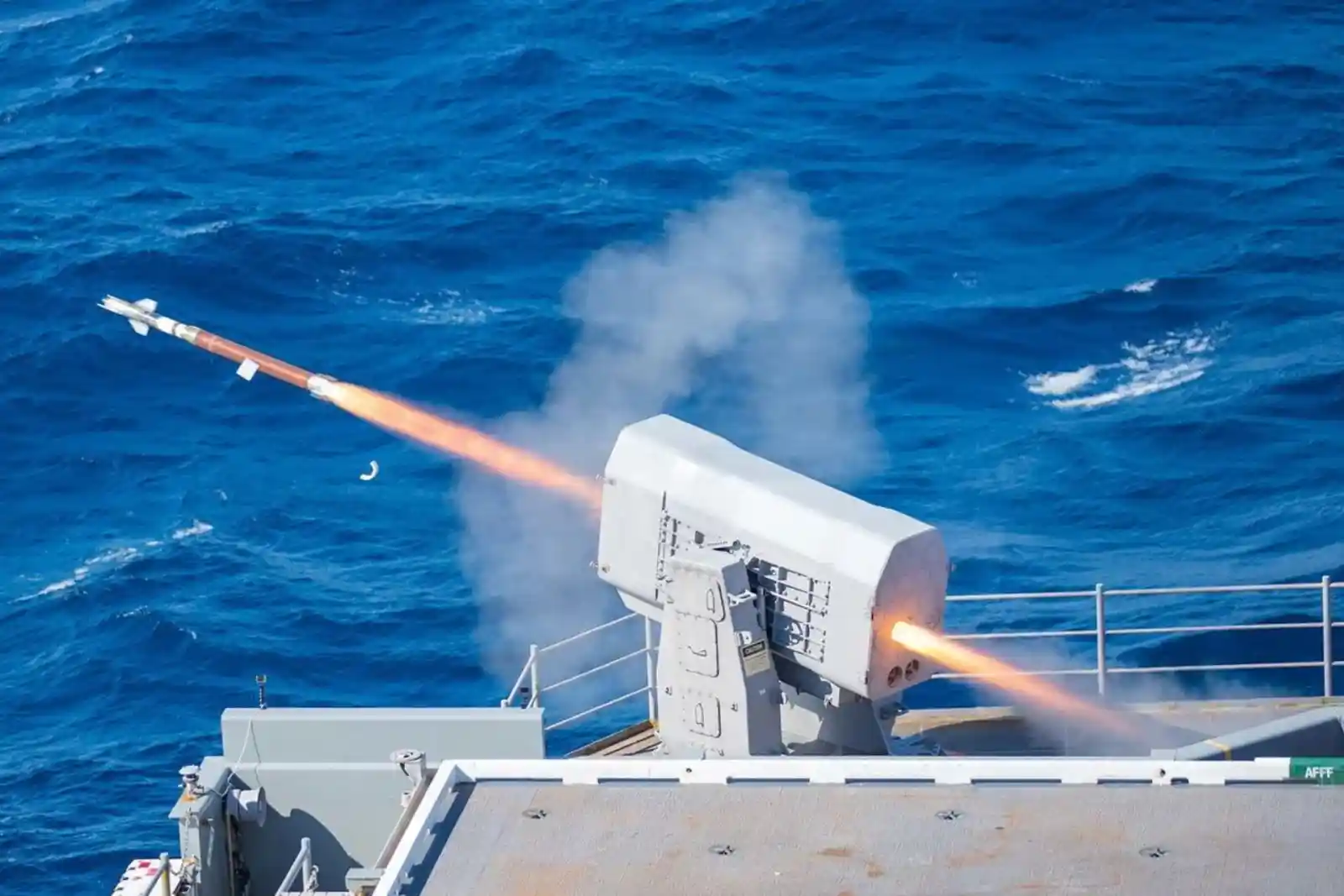
The United States Navy has taken a decisive step toward fortifying its surface fleet by awarding a significant $74 million contract to Raytheon, a subsidiary of RTX, to supply and modernize its Rolling Airframe Missile (RAM) launching systems. As the frequency and sophistication of aerial threats grow—particularly in contested maritime environments—the Navy’s commitment to reinforcing close-in ship defenses signals a robust shift in strategic priorities. This move not only updates legacy platforms but also scales the RAM system’s deployment across future vessels.
RAM: The Vanguard of Close-In Naval Defense
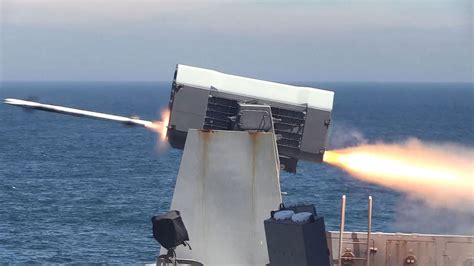
The Rolling Airframe Missile system is considered the most advanced short-range self-defense solution available to modern navies. Originally developed through a bilateral initiative between the United States and Germany, the system has matured over nearly five decades, marking its 50th anniversary in 2026. Designed as a last line of defense, the RAM system protects naval platforms from threats such as anti-ship cruise missiles, enemy aircraft, attack helicopters, and fast inshore attack craft (FIACs).
Central to RAM’s effectiveness is its supersonic, fire-and-forget missile guided by both passive radio frequency (RF) and infrared (IR) tracking. This dual-mode guidance allows the system to simultaneously engage multiple high-speed, low-flying threats without further human intervention post-launch. The RAM is often described as “a smart bullet,” capable of autonomously reacting to dynamically shifting threat profiles even under complex engagement scenarios.
Unprecedented Contract Reflects Escalating Global Threats
The latest procurement is the largest RAM launcher order by the U.S. Navy in more than twenty years, a milestone that underscores the system’s strategic value in current and future conflicts. The contract scope includes not just new launch systems, but also:
- Refurbishment of aging launchers to extend their operational life.
- Upgrades to align legacy systems with the current Block 2 capabilities.
- Spare parts and associated hardware to support long-term sustainability.
Barbara Borgonovi, President of Raytheon’s Naval Power Division, emphasized that the contract supports both the protection of American naval assets and the continued modernization of U.S. missile defense manufacturing infrastructure. “This investment enables us to meet rising global demand for the most capable close-in defense solution available today,” she stated.
Technological Edge: RAM Block 2 Capabilities
The RAM Block 2 variant incorporates significant performance enhancements that make it particularly well-suited to confront evolving missile threats. Block 2 offers:
- Enhanced maneuverability through improved kinematic performance.
- Greater range and speed for extended threat engagement envelopes.
- Upgraded guidance algorithms to track faster, evasive, or stealth-enhanced targets.
These advancements make RAM Block 2 especially critical in countering next-generation weapons, including those deployed by China, Russia, and Iran, where hypersonic, sea-skimming, and stealth cruise missile technology is being rapidly matured and proliferated.
Scalable Launch Platforms: MK49 GMLS and SeaRAM
The flexibility of the RAM system lies not just in the missile itself but in its modular launch architecture. The missile can be fired from two primary platforms:
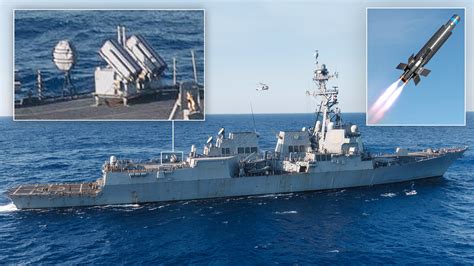
- MK49 Guided Missile Launching System (GMLS): A standard 21-cell launcher that integrates seamlessly with most existing shipboard systems.
- SeaRAM MK15 Mod 32: A hybrid platform that combines a RAM launcher with the sensor suite and fire control system of the Phalanx CIWS (Close-In Weapon System), offering fully autonomous operation.
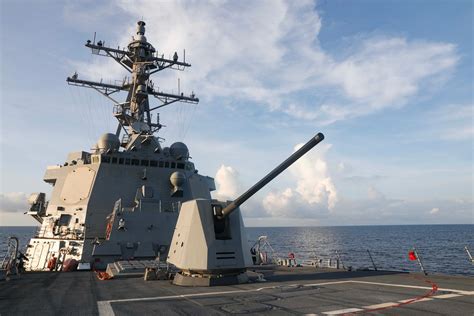
These systems can be installed on a range of platforms, from Arleigh Burke-class destroyers to Littoral Combat Ships (LCS) and even auxiliary vessels. This makes RAM not just a tactical weapon, but a strategic asset capable of being standardized across the fleet.
Strategic Integration with New Naval Platforms
RAM is currently installed on over 165 warships in 11 countries, and its integration into newer U.S. Navy platforms underscores its growing importance. The missile is being deployed on:
- Flight IIA and III Arleigh Burke-class destroyers, providing a seamless layer of missile defense.
- Littoral Combat Ships, where space and crew limitations demand autonomous, compact systems.
- Future Constellation-class frigates, as part of a layered defense suite.
The Navy’s intention is to make RAM a cornerstone of its layered missile defense doctrine, enhancing synergy with longer-range systems like SM-2, SM-6, and ESSM (Evolved SeaSparrow Missile). RAM fills the short-range niche with high precision and responsiveness.
Enhancing Survivability in High-Threat Environments
The modern naval battlefield is evolving quickly. Today’s warships must navigate multi-axis saturation attacks, drone swarms, and hypersonic missile salvos. In such scenarios, close-in defense systems become the last—and often decisive—layer of protection. RAM’s “fire-and-forget” capability reduces cognitive burden on human operators, allowing crews to focus on broader battle management rather than micromanaging every threat.
Particularly in littoral zones, where reaction times are compressed due to geography and threat proximity, RAM provides a crucial buffer against threats that have slipped past longer-range interceptors or electronic countermeasures.
Bilateral Innovation: The U.S.–German RAM Partnership
The enduring cooperation between the United States and Germany has been central to RAM’s development and modernization. Germany’s RAMSYS GmbH, the system’s European co-developer, works closely with Raytheon to ensure transatlantic interoperability and technological continuity. This partnership strengthens NATO’s maritime capabilities and reinforces allied fleets with a shared, reliable defense solution.
Joint investment in research and production means that both nations benefit from sustained innovation cycles, ensuring RAM remains relevant even as adversaries improve their offensive technologies.
RAM’s Role in the Great Power Competition
As tensions mount in the South China Sea, the Persian Gulf, and other maritime flashpoints, the U.S. Navy is increasingly positioning itself for contested-domain operations. RAM’s role is not merely tactical—it is geopolitical. By ensuring that even smaller surface combatants can withstand missile attacks, RAM extends the Navy’s ability to project force and maintain presence across the globe.
In particular, RAM provides a critical layer of defense against the growing menace of hypersonic glide vehicles, which compress reaction windows to mere seconds. While not a direct counter to these advanced weapons, RAM complements the broader ecosystem of naval defense by intercepting slower, terminal-stage threats that would otherwise overwhelm conventional kinetic interceptors.
Production and Deployment Timeline
Much of the work covered under the current contract will take place at Raytheon’s Louisville, Kentucky facility, with deliveries expected to conclude by 2028. This long-term timeline ensures continuous support and availability as older systems reach the end of their lifecycle and as new vessels enter the fleet.
Moreover, Raytheon’s investment in its production capabilities will position it to meet not only U.S. Navy demand but also fulfill international export orders. Allied navies from Japan, South Korea, and Saudi Arabia, among others, are integrating RAM as a primary layer of defense for their frontline surface ships.
Conclusion: A Future-Proof Shield for Modern Warships
In an era where naval engagements are increasingly shaped by precision-guided munitions, drone incursions, and missile saturation tactics, the importance of systems like the Rolling Airframe Missile cannot be overstated. Its unmatched agility, autonomous operation, and ease of integration make it an indispensable asset for navies seeking resilience and adaptability.
Through this latest contract, the U.S. Navy not only affirms its confidence in the RAM system but also stakes a claim on the future of maritime warfare—where survivability, speed, and smart targeting will define who dominates the high seas.