In a bold move to address a surge in summer violence and strengthen public safety, the Cincinnati Police Department has officially launched its Drones as First Responders (DFR) program. This initiative represents a significant leap forward in how law enforcement responds to emergencies, with technology now providing a first-hand aerial perspective of potential crime scenes before officers even arrive on the ground.
Cincinnati Police Chief Teresa Theetge emphasized that the program’s primary goal is to enhance officer safety, reduce response times, and improve situational awareness during emergencies. “Instead of waiting for an officer to arrive by car or on foot, we can now launch a drone within seconds of a call. We can identify risks early, respond faster, and deploy resources more efficiently than ever before,” she stated, underscoring the transformative nature of the project.
How the Drones as First Responders Program Works
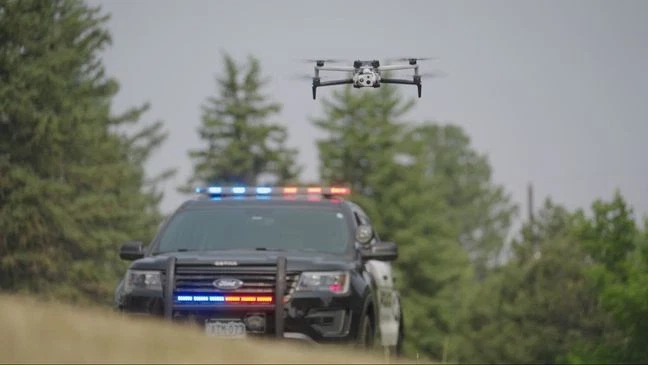
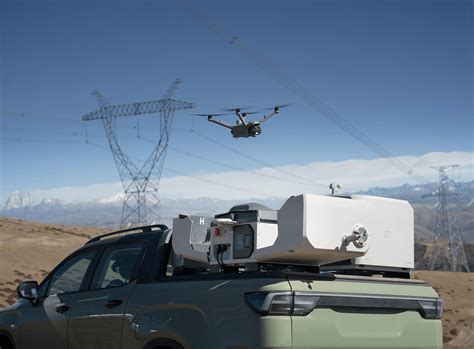
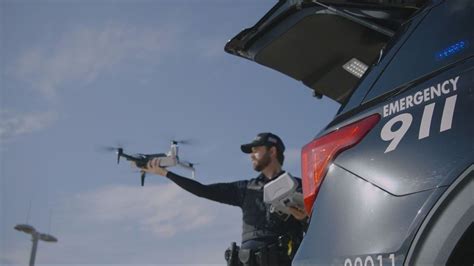
The DFR program involves deploying advanced drones equipped with sirens, speakers for two-way communication, and live video streaming capabilities. Unlike traditional patrol methods, these drones can be remotely launched within moments of a 911 call, arriving at a scene in a fraction of the time it would take a patrol car. This allows officers to assess threats in real time, gather visual evidence, and prepare for safe, effective engagement when they arrive on-site.
Permanent docking and launching stations are being set up in several key neighborhoods, including Over-the-Rhine (OTR), Queensgate, Price Hill, West End, Spring Grove Village, Northside, and the CUF (Clifton, University Heights, Fairview) area. Collectively, these locations cover approximately 40% of the city, with plans to expand that coverage to 90% by the end of the year.
A New Era of Policing: Balancing Technology and Community Concerns
While the program promises improved safety, it has sparked debates over privacy and civil liberties. Criminal defense attorney Clyde Bennett expressed his concerns about potential misuse. “There is an inherent danger of an invasion of privacy. I think it’s an inherent danger of unconstitutional searches and seizures of citizens. I also think it has a chilling effect on the right to free speech and the right to assemble,” he warned.
Police officials have acknowledged these concerns, with Sgt. Howard Grant clarifying the department’s approach: “You still have the right for us not to be invading your privacy, looking in the windows, anything like that. If we’re on an active investigation and it’s warranted, we can do it at that point but we also need to be mindful of search warrants and things like that.”
Community and Leadership Support for Innovation
Despite the criticism, city leaders have lauded the new program. Council member Scotty Johnson, a former police officer, shared his excitement about the technological leap. “The computers in the car. The first MDT’s in the car. When they put those in the car it was like ‘wow, we’re on our way.’ Now this is blowing me out of the box. I’m like an excited kid to see this type of innovation and technology in the city,” Johnson remarked.
For many in the community, the drone initiative represents a forward-thinking approach to public safety—one that aligns with the city’s broader goal of leveraging modern tools to curb crime while safeguarding officers and residents.
Drone Capabilities: More Than Just Cameras in the Sky
The drones used in the DFR program are far more than surveillance devices. They are equipped with high-definition cameras, thermal imaging capabilities, and onboard loudspeakers that allow real-time interaction with individuals at a scene. The sirens can serve as deterrents, while the loudspeakers enable communication between operators and individuals on the ground—an essential feature for managing tense situations or issuing emergency instructions.
These drones will also provide crucial data to officers before they engage, from identifying the number of individuals present at a scene to assessing whether weapons are visible. This preemptive intelligence is expected to significantly reduce risks to responding officers and civilians alike.
Addressing the Surge in Summer Violence
The deployment of drones comes at a critical time for Cincinnati, where calls from citizens and city leaders have amplified the need for swift, decisive action against rising summer crime. The real-time intelligence provided by the DFR program can drastically improve how quickly law enforcement addresses active incidents, from violent altercations to large-scale disturbances.
Chief Theetge believes this program will also enhance resource allocation, allowing officers to be deployed strategically rather than reactively. In practice, this means that instead of rushing blindly into a potentially volatile situation, officers can rely on aerial reconnaissance to craft a targeted, informed response.
Expanding Coverage and Future Goals
Currently, the seven initial neighborhoods with drone docking stations account for about 40% of Cincinnati’s geographic footprint. But the department has ambitious plans: by the end of the year, it aims to increase coverage to 90% of the city, ensuring that nearly every resident can benefit from this rapid-response technology.
The long-term vision involves integrating these drones into all major emergency response strategies, working in tandem with patrol officers, specialized units, and even community-based programs to create a comprehensive public safety framework.

Weighing Privacy vs. Security: The Ongoing Debate
Despite its potential, the program faces a critical challenge—gaining and maintaining public trust. The idea of drones hovering over neighborhoods naturally raises concerns about constant surveillance and the potential for misuse. To address this, police leaders stress the importance of strict adherence to search warrants, privacy protections, and transparent policies governing drone use.
This balance—between leveraging cutting-edge technology for safety and preserving constitutional rights—will likely remain a central theme in community discussions as the program expands. Ongoing engagement with residents, advocacy groups, and civil rights organizations will be crucial in shaping the future of the initiative.
A Glimpse Into the Future of Law Enforcement
The DFR program marks a pivotal step toward the modernization of urban policing. By integrating drones into emergency response, the Cincinnati Police Department is aligning with a broader national trend where law enforcement agencies are adopting unmanned aerial systems (UAS) to address complex safety challenges.
For a city grappling with rising crime rates, this innovation offers not only immediate tactical advantages but also a foundation for future advancements in data-driven policing. As Cincinnati moves toward its goal of near-total citywide drone coverage, it may well become a model for other metropolitan areas seeking to merge cutting-edge technology with community-centered public safety strategies.
The coming months will reveal how effectively these drones can deliver on their promise of faster response, improved officer safety, and reduced crime. But one thing is clear: with this initiative, Cincinnati is stepping boldly into the next era of law enforcement.