Modern warfare is undergoing a paradigm shift, and nowhere is that more apparent than within the ranks of US Special Operations Forces (SOF). At the forefront of this transformation is a push to integrate drones deeply into the tactical fabric of military operations. For these elite soldiers, the appeal of drones is not rooted solely in novelty or technological fascination — it’s about survival, adaptability, and lethality.
The simple truth is this: a drone can be sacrificed, a human cannot. And in a future conflict against peer-level adversaries, where speed and precision define victory, drones offer an edge that no soldier, however skilled, can match.
War Without First Contact: The Strategic Vision
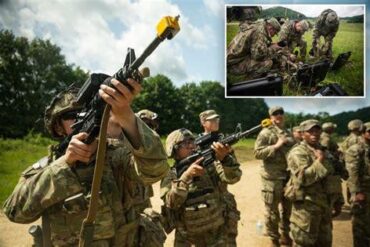
Inside the grounds of Fort Liberty’s Capabilities Exercise (CAPEX), the air buzzes with quadcopters and the ground trembles under the agile steps of robot dogs. The US Army Special Operations Command (USASOC) is not just showcasing its tech — it’s broadcasting a new doctrine.
As Bryan Boyea, the ground robotics capabilities manager at USASOC, put it, the goal is stark and urgent: “eliminate first contact ever being a human being.”
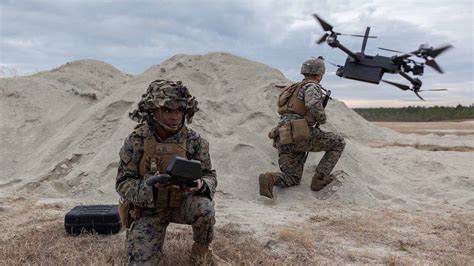
This vision is materializing through diverse classes of drones, each tailored to handle reconnaissance, assault, and logistical tasks. The key advantage is clear — extending the operator’s perception beyond line-of-sight and into lethal territory before risking a life.
Ground Drones: Eyes, Ears, and Shields on Wheels
At CAPEX, multiple types of uncrewed ground vehicles (UGVs) were deployed in simulated urban environments. From wheeled platforms to low-profile crawlers, each design served a unique purpose. Some carried small payloads. Others operated cameras and sensors for real-time intelligence gathering in confined or subterranean environments.
Weighing approximately 30 pounds, these drones are light enough for dismounted teams to carry, yet rugged enough to scout and probe danger zones. For missions involving hostage rescue or tunnel infiltration, sending a human in first is increasingly seen as unnecessary and reckless.
One special operator emphasized that such machines are “force multipliers”, especially when paired with night vision, thermal, and acoustic sensors. These features transform a $20,000 drone into a forward-deployed scout, sensor, and sometimes even saboteur.
FPV Quadcopters: Precision in Flight, Payloads in Play
Sitting atop a black tactical table were first-person-view (FPV) quadcopters — smaller, lightweight drones that are fast, agile, and increasingly versatile. Originally the darlings of drone racing, these machines have been weaponized and adapted for the battlefield.
What makes FPVs especially desirable is their modularity. Operators can switch out cameras for IR sensors, payload containers, or even small explosives. Their adaptability gives them tactical flexibility to gather intelligence, drop grenades, or even crash into targets in kamikaze-style strikes.
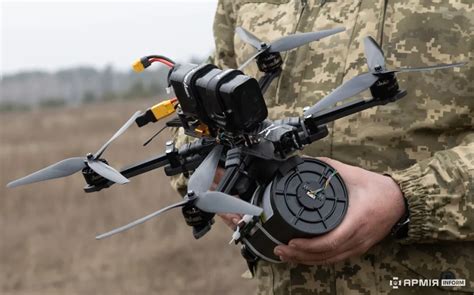
Operators at the event noted the growing role of FPVs in both urban warfare and open terrain. They’re fast to deploy, hard to track, and if one is lost, it’s a manageable cost — especially compared to a life.
Drone Swarms and Interoperability: A Digital Phalanx
The future of drone warfare isn’t about a single flying machine — it’s about many. Swarms of FPVs acting in concert, coordinated by a central system or pre-programmed flight path, represent a nightmare for enemy defenses. They can overwhelm air defenses, saturate an area with surveillance, or execute distributed attacks.
However, challenges abound. A senior operator pointed out that the integration of different drone platforms from multiple manufacturers remains a critical hurdle. If each drone runs on different software, the team risks losing cohesion during a mission.
To mitigate this, USASOC is working closely with defense contractors to build software bridges and unified control interfaces. Seamless communication across aerial and ground platforms isn’t just an upgrade — it’s a combat necessity.
Loitering Munitions: The Waiting Death
Loitering munitions, like UVision’s Hero series and AeroVironment’s Switchblade, take the drone concept further. These are single-use drones armed with explosives, designed to hover until a target appears — and then strike with lethal precision.
The Hero family includes lightweight options for small units and larger models requiring a dedicated launch system. The Switchblade, in service for over a decade, gained widespread use during Middle East operations and continues to evolve. Its compact design and man-portable launcher make it ideal for quick reaction forces and recon teams.
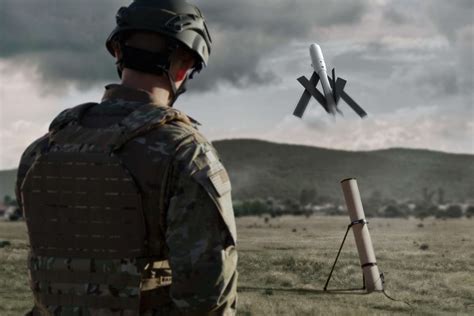
Unlike traditional missiles, loitering munitions allow a wait-and-see strategy. Operators can abort attacks, reposition, or even switch targets. It adds a layer of tactical fluidity and human judgment that aligns perfectly with SOF’s mission doctrine.
Robot Dogs: Reconnaissance Meets Robotic Mobility
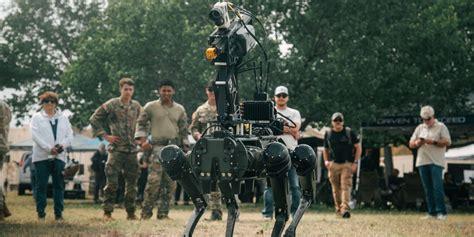
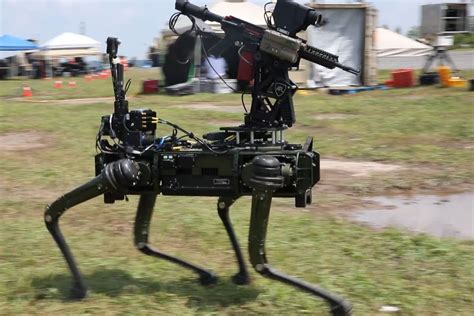
At CAPEX, several robot dogs from Ghost Robotics patrolled simulated battle zones. One, with a rifle mounted on its back, drew immediate attention. These quadrupeds are designed for terrain agility, remote observation, and — if necessary — armed intervention.
While early models focused solely on mobility, newer units now feature autonomous navigation, facial recognition, and weapon mounting systems. More importantly, they free human soldiers from the most dangerous reconnaissance roles.
Controlled via handheld tablets, these robotic dogs can enter rooms, identify threats, and even draw fire, allowing teams to plan entry or avoidance strategies. As one operator said, “If it gets shot, we download the data, repair it, and send it back.”
The Human-Machine Interface: A New Warfighter Skillset
Though drones offer unprecedented capabilities, they also demand a completely new layer of operator training. Gone are the days when technical skills were confined to communications or demolitions. Now, flying a quadcopter or operating a loitering munition is as critical as marksmanship.
Some operators argue that drone piloting should be a specialized job. Others maintain it must be a core skill set for all warfighters. In practice, the line is drawn based on complexity. Basic drones can be operated with minimal training. But advanced systems — FPVs, loitering munitions, and UGVs — require dedicated practice, maintenance, and battlefield integration knowledge.
One operator emphasized the point: “Give me a simple ground scout drone, and I’ll have it running in 20 seconds. But a payload-carrying FPV or Hero munition? That’s a whole profession.”
Tactical Evolution in Great-Power Conflict
The embrace of drones reflects more than battlefield innovation — it signals a broader shift toward great-power competition. Unlike previous asymmetric conflicts, potential future wars against peer adversaries like Russia or China will involve dense airspace, electronic warfare, and rapid escalation.
Special operators understand this reality. Drones give them options. They allow for deep reconnaissance without risking lives, electronic decoys, fast-strike capabilities, and swarm tactics that confuse and delay enemy responses.
Training at places like CAPEX now includes electronic jamming, counter-drone tactics, and multi-platform synchronization. It’s not about preparing for a war that might come — it’s about fighting the next war that’s already arriving.
Conclusion: When the Machine Meets the Enemy First
The rise of drones within special operations is not a trend — it’s doctrine in the making. With each passing year, the capabilities grow, the integration deepens, and the tactical value becomes harder to ignore. From low-flying FPVs to ground-crawling scouts and loitering bombs, uncrewed systems are changing what it means to be on the frontlines.
In a world where speed, intelligence, and survivability define success, drones offer all three — and the price is no longer prohibitive. As one operator succinctly stated: “Let the machine meet the enemy first. Always.”