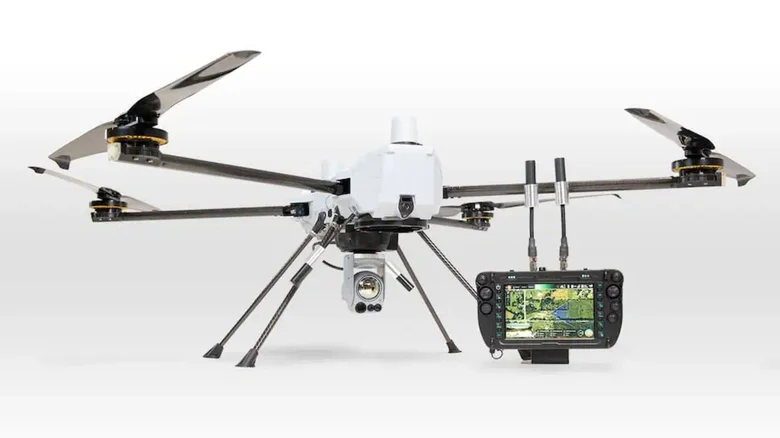
Laser designation has long been among the most perilous roles undertaken by soldiers in ground combat, particularly by elite Special Forces teams. Traditionally performed at dangerously close range to enemy positions, the act of “painting” a target with lasers requires stealth, precision, and unwavering nerves. But the evolution of military drone technology, most notably the introduction of the C100 drone by Performance Drone Works (PDW), is on the cusp of transforming this high-risk mission into a remote, low-exposure operation, dramatically increasing both efficiency and survivability.
The High-Stakes Nature of Traditional Laser Targeting
In the modern battlefield, few tasks are as hazardous and tactically critical as laser-guided target designation. When Special Forces operatives operate behind enemy lines to mark buildings, convoys, or infrastructure for precision strikes, they must remain dangerously close to the action. This proximity ensures the laser remains fixed on the target until ordnance makes contact — a window of extreme vulnerability. Often, these missions are conducted in hostile terrain, far from reinforcements, with zero margin for error.
While airborne platforms like the AH-64 Apache or MH-60 Black Hawk helicopters can also perform target designation, they are extremely costly, limited by logistics, and still pose considerable risk to pilots and crew. That’s where the innovation of drone-enabled laser targeting comes in.
The Emergence of the C100 Drone: Compact, Capable, and Combat-Ready
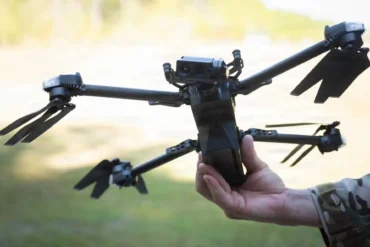
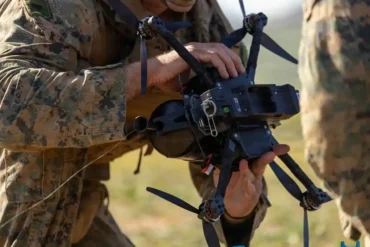
Manufactured by Performance Drone Works, the C100 drone is a backpack-deployable UAV equipped with a laser designator, designed specifically to offload this dangerous job from human operators. This compact system represents a significant milestone for the US Army, as it replaces soldier exposure with autonomous capability.
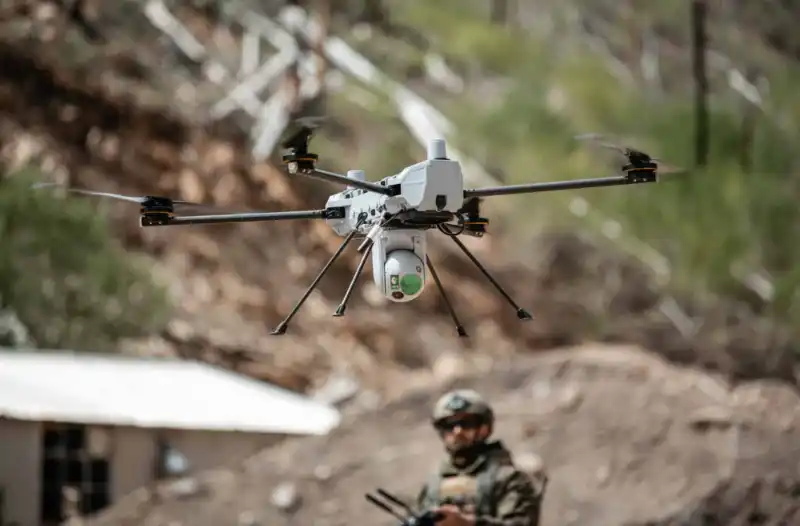
Between 2024 and 2025, PDW secured two procurement contracts with the US Army totaling $36.2 million, signaling strong institutional confidence in the system’s potential. Weighing under 15 pounds and compact enough to fit in a single rucksack, the C100 is easily carried and deployed by individual infantry or special ops units.
Key operational specifications of the C100 include:
- Range: Up to 6 miles
- Speed: 40 mph (top speed)
- Endurance: 74 minutes
- Ceiling Altitude: 12,000 feet
These capabilities give warfighters the ability to launch, mark a target, and extract — all without entering enemy sightlines.
Tactical Advantages Over Traditional Platforms
While a $400,000–$500,000 price tag per drone may seem steep at first glance, the comparative savings are monumental. A single AH-64 Apache attack helicopter costs around $30 million, excluding the cost of fuel, crew, and maintenance. Even more critically, the loss of a drone in combat is vastly more acceptable than the loss of a trained pilot or soldier.
This cost-benefit ratio, combined with operational flexibility, makes the C100 a clear force multiplier. Ground units can carry it as part of their standard kit, deploy it autonomously or via remote control, and leave it to handle the most dangerous phase of an airstrike — target marking.
Furthermore, drone usage eliminates radar signatures and audible presence common to manned aircraft, making it an ideal choice for covert or low-intensity conflict scenarios. As a result, US Army teams can retain the element of surprise, a crucial factor in successful operations.
Broader Strategic Implications for Military Doctrine
The integration of unmanned aerial vehicles (UAVs) into frontline operations is not new. However, the C100 stands apart due to its specialization in laser designation, a task previously reserved for aircraft or exposed ground personnel. This shift not only enhances the tactical agility of small units but also reflects broader changes in military doctrine.
Modern combat increasingly favors decentralized operations, where small, highly mobile units act with minimal logistical overhead. In such a model, modular technologies like the C100 are invaluable. With nothing more than a drone and a controller, soldiers gain access to airstrike coordination capability once exclusive to large-scale combined arms units.
Expanding Beyond U.S. Borders: Interest from NATO Allies
PDW’s ambitions for the C100 extend well beyond the United States. In 2025, the company demonstrated the drone to the United Kingdom’s Ministry of Defense, underscoring its potential to become a standardized solution among NATO forces. Given the ongoing need for precision strikes in asymmetric warfare scenarios — such as those seen in Eastern Europe and the Middle East — interest in such adaptable, high-impact tools is expected to surge.
This international outreach suggests that the C100 may play a pivotal role in unifying allied forces under a common operational technology, simplifying coordination, and enabling joint targeting missions with fewer variables. As interoperability becomes a strategic priority for Western militaries, platforms like the C100 provide a plug-and-play solution that fits seamlessly into existing mission frameworks.
Operational Scenarios and Use Cases
The real-world utility of the C100 is best understood through plausible deployment scenarios:
- Urban Warfare: In dense city environments, soldiers can deploy the C100 from cover to designate rooftop snipers or fortified positions without revealing their location.
- Mountainous Terrain: Where line-of-sight is limited, the drone’s 12,000-foot ceiling offers an unobstructed vantage point to illuminate high-value targets.
- Night Operations: Equipped with infrared capabilities, the drone can paint targets under cover of darkness, enabling nighttime strikes without infrared spillover.
- Special Operations Raids: Elite units can carry the drone into enemy territory, set up target designations remotely, and retreat before air support arrives, reducing risk of engagement.
Challenges and Future Improvements
Despite its impressive capabilities, the C100 is not without challenges. Harsh environmental conditions, electronic warfare, and signal interference could affect its performance. Battery life and operational duration are also limiting factors in long-duration missions.
However, PDW is reportedly exploring improvements, including:
- Swappable battery packs for extended missions
- Enhanced GPS resistance to counter jamming
- AI-assisted autonomous targeting for rapid acquisition
As these features mature, we expect the C100 platform to evolve into a more resilient and intelligent system, potentially integrating directly into networked battlefield ecosystems supported by satellite and ground relay assets.
Conclusion: The C100 as a Harbinger of Next-Gen Warfare
The advent of laser-equipped backpack drones marks a critical turning point in military operations, especially for the US Army and its allies. By offloading one of the most dangerous jobs in combat — laser target designation — to a lightweight, expendable, and efficient platform, the C100 promises not only to save lives but also to redefine battlefield engagement protocols.
As drone warfare moves from strategic strikes to tactical force enablers, innovations like the C100 are set to become indispensable. With proven procurement, demonstrated international interest, and active development for further capability enhancements, PDW’s C100 is poised to become a cornerstone of modern military doctrine in the 21st-century battlespace.