If you’re gearing up for your FAA exam but feeling unsure about where to take it or how much it’ll cost, don’t worry—we’ve got everything covered. Whether you’re aiming for a Part 107 certification or any other type of aviation license, your first step is to locate an FAA-authorized testing center.
This guide walks you through:
- Finding a nearby FAA test center
- Registering for your exam
- Knowing what to bring and expect on test day
Once you’re familiar with the PSI locator and the checklist for exam day, you’ll be ready to go.
Take a deep breath—we’re diving into your FAA test prep.
Key Takeaways
- Use the PSI website to find a nearby FAA testing center by entering your postal code and exam type.
- You’ll need an FAA Tracking Number (FTN) from IACRA to schedule your exam on the PSI platform.
- You can cancel or reschedule your exam up to 24 hours in advance for a refund or free rescheduling.
- Active military members can take advantage of benefits like financial aid and more flexible scheduling.
Using the PSI Testing Center Locator
Wondering where FAA testing centers are located near you? With the PSI locator tool, it’s pretty simple to find one.
Start by going to the PSI website. On the homepage, click on “Find a Test Center”. That’ll take you to the Testing Center Locator page.
There, you’ll need to enter:
- Your postal code
- Your country
- How far you’re willing to travel (search radius)
- The type of FAA exam you want to take
Click Search, and a list of test centers in your area will appear.
Each result will show:
- Test site name
- Distance from your location
- Full address (with a Google Maps link)
- Driving directions and extra reminders
Pick the center that works best for you.
Not sure what your exam requires? Head back to the PSI homepage and click “View Test Authorization Requirements”. This opens up the FAA Knowledge Test Matrix.
The matrix includes:
- Test code
- Number of questions
- Minimum age to take the test
- Time limit
- Passing score required
You’ll also find a checklist of required documents and other key details. Be sure to review your test’s requirements in advance.
Registering for Your FAA Exam
Once you’ve chosen a testing center, the next step is to register for your knowledge test.
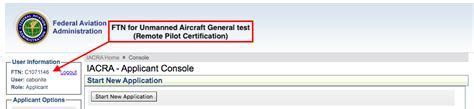
Step 1: Get Your FAA Tracking Number (FTN)
Start by visiting the IACRA website. Click “Register” and complete the signup process.
You’ll need to enter some personal information:
- Full name
- Date of birth
- Gender
- Email address
If you already have an Airman Certificate Number, include it. If not, leave that blank.
Once you finish, your FTN will be generated immediately. Take a screenshot if you like—it’ll also be sent to your email.
Step 2: Create a PSI Account
Now head back to the PSI site. With your FTN ready, click “Create an Account” and fill in:
- Your FAA Tracking Number
- Full name
- Email address
- Username and password for your PSI login
You’ll get a verification email from [email protected]. Click the link to continue registration.
Next, add some additional details:
- Date of birth
- Full legal name (including suffix, if any)
- Phone number
- City, state, postal code, and country
- Citizenship
- Military status (select Yes or No)
If you’re military or a dependent/retiree/DoD or DHS civilian, specify which category applies.
Click “Register” to complete your PSI account setup.
Scheduling Your FAA Exam
With your account ready, it’s time to schedule your test.
You’ll see a list of FAA exams, covering everything from Private Pilot to Aircraft Dispatcher certifications.
Don’t get overwhelmed—there might be multiple exams under similar titles. For instance, “Private Pilot” includes several versions depending on aircraft type. Read carefully and pick the correct one.
Once you’ve picked your exam, you may need to fill in extra info:
- Pilot school name, country, and state (if you trained at one)
- Graduation or completion date (as shown on your certificate)
- Type of authorization (endorsement, graduation certificate, etc.)
If you need accommodations like extra time or a left-handed mouse, this is the time to request them.
From the scheduling page, search for centers by:
- Country and postal code
- How far you’re willing to travel
- Preferred dates for the exam
You’ll get a list showing:
- Name of each testing site
- Distance from your location
- Address with a Google Maps link
- Available exam dates and time slots
Review each option, and once you’ve found the right spot, lock in your date and time.
Double-check everything before confirming—this will help you avoid last-minute issues or rescheduling.
FAA Knowledge Exam Costs
When it’s time to take your FAA knowledge test, you’ll need to budget for the testing fee. Most FAA exams scheduled through PSI fall between $175 and $200, depending on which test you’re taking.
If you’re registering for common exams like Private Pilot (PPL), Commercial Pilot (CPL), or Instrument Rating (IR), expect to pay about $175. The Flight Instructor (CFI) test carries the same cost. For the Airline Transport Pilot (ATP) exam, the fee typically ranges from $175 to $200.
Drone pilots taking the Part 107 certification test will also pay around $175.
That said, prices can vary slightly based on the testing center and the specific exam. You can pay using a credit card or voucher. Just enter your billing info, complete the payment, and you’re good to go!
Preparing for Your Exam: What to Bring
Once your exam is booked, your focus should shift to preparation. But before heading to the testing site, it’s important to know exactly what to bring. Start by checking the FAA Knowledge Test Matrix for the specific requirements of your exam.
Everyone taking a test must have an FTN (FAA Tracking Number), which you should already have. You’ll also need a valid ID that clearly shows the following:
- Your full legal name
- A recent photograph
- Date of birth
- Signature
- Physical residential address
If you’re a U.S. citizen or resident alien, you can use a state-issued driver’s license, government-issued ID, or military ID. You can also use a passport or alien residency card.
Non-U.S. citizens should bring their passport plus either a state-issued driver’s license or another government-issued ID.
If you’re under 18 and don’t have an ID, a parent or legal guardian must go with you to the test center. They’ll need to bring their own ID and confirm your identity.
You’ll also have to bring documents specific to your exam. For example, the Private Pilot Airplane (PAR) test might require:
- A graduation certificate from your pilot school
- A signed statement or logbook entry from an instructor verifying you’re ready for the test
You might also need basic supplies like a pen, non-programmable calculator, E6B flight computer, or plotter. Bringing a printed copy of your test confirmation or payment receipt is a smart move, too.
Be aware of what’s not allowed in the testing room. You’ll need to leave things like phones, tablets, backpacks, notes, books, food, and drinks outside. Programmable calculators are also off-limits. If you need scratch paper, the testing center usually provides it.
If you have reading or learning disabilities, the FAA does offer testing accommodations. You’ll need to check the specific process for requesting those adjustments.
Each testing center may have different policies and rules. To be safe, check your email for reminders or contact the center directly to avoid any surprises.
What Happens if You Fail the Test?
No one wants to fail, but if it happens, there’s a clear path forward. Unless the FAA Knowledge Test Matrix says otherwise, you can retake the test after waiting 14 days. Use this time to review your study materials and prepare better.
You won’t see exactly which questions you missed, but you will receive your score and a breakdown of how you performed by subject area. This should give you insight into what to focus on next.
In some cases, you may need additional instruction from a certified instructor before retaking the test.
To retake the Private Pilot Airplane (PAR) exam, for example, you’ll need:
- Your failed Airman Knowledge Test Report (AKTR), even if it’s expired
- An endorsement from a qualified instructor confirming you’re now ready
The cost to retake the test is the same as the first time—typically between $175 and $200. There’s no limit to how many times you can retake the test, but you’ll pay the fee each time.
How to Cancel or Reschedule Your Exam
Need to cancel or reschedule your exam? PSI makes it simple.
Log into your PSI account and go to the “Overview” section. Click on “View My Tests” to see your scheduled exam. From there, you can either click “Cancel” to cancel your test or choose “Re-Book” to reschedule it.
You’re eligible for a refund if:
- You cancel at least 24 hours before your appointment
- You paid within the last 12 months
Once canceled, a receipt will be sent to your email and the refund should show up within a few days. If you cancel too late, though, you’ll lose the test fee.
To reschedule, simply follow the steps to select a new date and test center. As long as you do this more than 24 hours before your test, there are no extra charges. But if you miss the deadline, you’ll have to pay again.
Keep in mind that testing spots can fill up quickly, especially in certain areas. So if you plan to change your schedule, don’t wait too long.
Special Considerations for Military FAA Tests
If you’re serving in the military, there’s good news—your experience can give you a head start in civilian aviation.
Through the Military Competency Non-Category (MCN) and Military Competency Instructor (MCI) exams, your training can count toward civilian pilot certificates. These exams let you skip certain standard requirements, like getting an instructor endorsement or other forms of written authorization. It’s a faster, more direct path for those with military flight backgrounds.
Staying current is also easier. Many FAA-approved testing centers are conveniently located on military bases, which means less travel and more flexibility when it comes time for recurrent exams.
There’s also financial help. Active duty personnel and veterans can tap into benefits like the GI Bill, which may cover testing costs through reimbursements or direct fee waivers. This support reduces the pressure of paying out-of-pocket while working toward or maintaining your FAA certifications.
The FAA recognizes the unique demands of military life. If you’re deployed or dealing with an unpredictable schedule, you’ll find that exam scheduling is flexible. These accommodations are designed to help you stay qualified without adding stress.
Booking Your Test with PSI
Registering for your FAA test is now quicker and more convenient, thanks to PSI. Their online system lets you search for testing centers and book your appointment without the old hassles.
Make sure you have your FAA Tracking Number (FTN) before you start. On test day, bring a valid ID and any required materials with you.
Need to reschedule or cancel? No problem—as long as you do it at least 24 hours in advance. That way, you avoid penalties and keep your options open.
Whether it’s your first time testing or you’re renewing an existing certification, things go smoothly if you follow the right steps and come prepared.