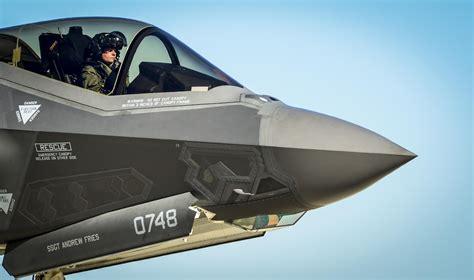
Switzerland is preparing a two-phase procurement plan for the U.S. F-35A Lightning II, a shift that reshapes one of Europe’s most closely watched fighter-acquisition programs. The government’s objective is straightforward yet politically delicate: safeguard the 6-billion-franc spending cap approved in the narrow 2020 referendum while still initiating the overdue renewal of the Swiss Air Force. The revised proposal centers on ordering 30 aircraft upfront, with an option for up to 10 additional jets once Washington finalizes updated cost structures and tariff implications.
This approach, championed by Defence Minister Martin Pfister, reflects growing financial tension inside the Federal Department of Defence. U.S. officials have already warned that the original fixed price for 36 aircraft can no longer be guaranteed due to inflationary pressures, global supply chain strain, and new American tariffs affecting Foreign Military Sales. Early assessments in Bern indicate potential overruns ranging from 750 million to over one billion francs, making any request to exceed the referendum ceiling politically explosive in a landscape where skepticism toward fifth-generation fighters remains strong.
Behind the scenes, the decision also responds to changing expectations within the military aviation community. Even with a reduced initial batch, Switzerland would gain earlier access to the region’s signature fifth-generation platform, positioning its forces inside a rapidly evolving Western air-combat ecosystem.
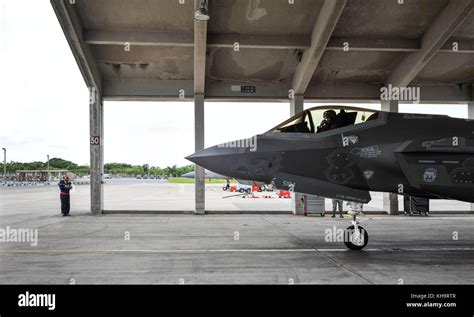
Swiss Budget Politics Drive a New Procurement Path
The F-35A saga has exposed a central dilemma for Swiss policymakers: the necessity of modern air defense versus the political fragility of its defense expenditure. The 2020 referendum passed by the slimmest of margins, locking in a fixed financial envelope that now struggles to match the rising costs of U.S. defense production. Officials acknowledge that the financial projections presented to the public no longer match the reality of today’s FMS environment, where price instability is now the norm.
Pfister’s staged-acquisition model offers political cover while maintaining operational momentum. Rather than risk a parliamentary deadlock over budget expansion, or face another referendum challenge, Bern aims to demonstrate fiscal discipline while ensuring that air-policing capability is not degraded in the coming decade. The plan provides flexibility: if U.S. costs stabilize, Switzerland can exercise its option for the final 10 jets without reopening the political battlefield.
What the Revised Package Still Includes
Even with the initial fleet reduced from 36 to 30 aircraft, the first tranche retains the core components of the original agreement. It includes the airframes, engines, initial logistics, training systems, infrastructure investments, and a limited set of guided munitions. These capabilities are fundamental for reaching full operational readiness before the current F/A-18 fleet ages out.
Yet the restructuring also highlights a deeper issue: the referendum defined a maximum spend, not a minimum capability. As U.S. costs move beyond earlier projections, Switzerland must constantly weigh whether its budget ceiling dictates fleet size, or vice versa. For now, Pfister has clearly aligned with the former.
Inside the F-35A: Capabilities Switzerland Cannot Ignore
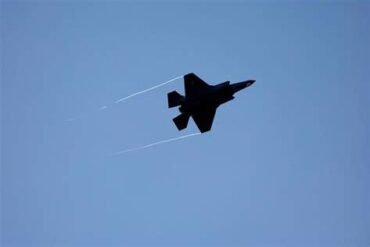
The F-35A Lightning II stands at the center of a global shift toward sensor-rich, highly connected, low-observable fighters. Its combination of stealth shaping, advanced sensors, and unified data fusion makes it a force multiplier in even small air forces.
The aircraft integrates the AN/APG-81 AESA radar, the Electro-Optical Targeting System, and the Distributed Aperture System, providing pilots with seamless 360-degree situational awareness. A pilot’s Helmet-Mounted Display System replaces the traditional cockpit display, projecting real-time fused data directly onto the visor. Its 20 mm M61A2 cannon, internal weapons bays, and long-range AIM-120 AMRAAM capability maintain full lethality while ensuring a low-observable signature.
From a performance standpoint, the aircraft’s P&W F135 engine delivers 43,000 pounds of thrust, enabling speeds up to Mach 1.6 and operations above 50,000 feet. These metrics comfortably cover Swiss airspace, including rapid-reaction assignments originating from central bases.
Strategic Implications for Switzerland and Europe
Switzerland’s decision fits into a broader European trend. Key NATO states—Germany, Finland, Italy, Belgium, Norway, Poland—and several partners are converging around the F-35A as their standard platform. By joining this ecosystem, Switzerland positions itself within a shared tactical infrastructure capable of near-real-time data exchange, collaborative targeting, and integrated air defense.
This direction, however, carries political sensitivities. For a state rooted in armed neutrality, closer alignment with Western defense networks raises questions about technological dependence, data-sharing obligations, and the interpretation of neutrality in the 21st century. The F-35A is not just a fighter; it is a node within a larger combat cloud. Integrating it into Swiss doctrine transforms the country’s role in the European security architecture, intentionally or otherwise.
A Calculated Move to Preserve Capability and Credibility
The staged-purchase plan demonstrates a careful balancing act. It reduces immediate financial exposure while safeguarding Switzerland’s long-term military relevance. It placates domestic skeptics without compromising the ability to field a genuine next-generation air-defense solution. And it signals to European partners that Switzerland remains committed to interoperable defense—even if it prefers to move cautiously.
The coming months will determine whether U.S. cost adjustments make the second tranche feasible. Regardless of the final fleet size, Switzerland’s embrace of the F-35A marks a decisive shift in its strategic posture, one that will influence its defense planning, diplomacy, and industrial alignment for decades. The story now becomes not just about the number of jets, but about the deeper transformation of Swiss airpower in an increasingly turbulent European theater.