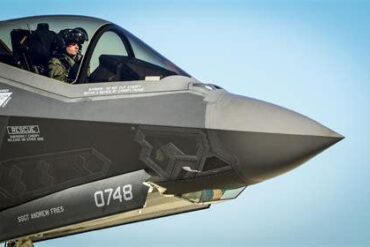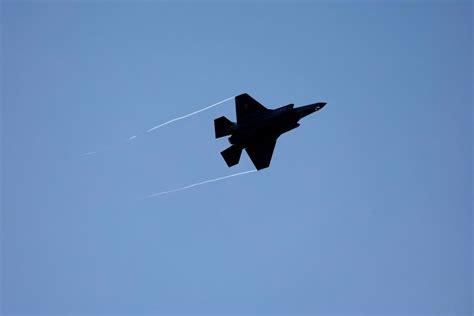
Switzerland’s ambitions to modernize its air defense capabilities with 36 F-35A Lightning II fighter jets have collided with the hard wall of rising costs and political friction. On December 12, 2025, the Swiss Federal Council announced that it will not be able to purchase all 36 aircraft initially agreed upon, due to budgetary constraints driven by cost escalations under the U.S. Foreign Military Sales (FMS) framework.
The original CHF 6 billion ($7.22 billion) budget—approved by a narrow public referendum in 2020—has been overwhelmed by unexpected price increases, inflationary pressures in the U.S., and evolving international trade dynamics. According to the Swiss government, these factors have added as much as CHF 1.3 billion ($1.56 billion) to the deal, pushing the total estimated cost beyond the allowable ceiling.
A Strategic Vision Collides with Fiscal Reality
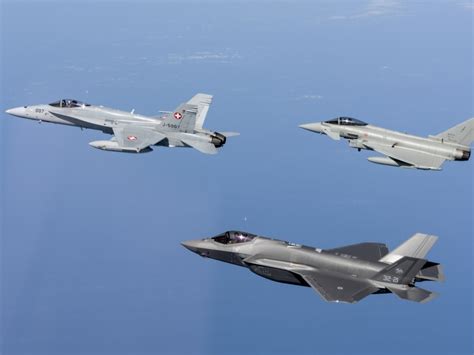
Switzerland’s decision to adopt the F-35A platform was rooted in its broader Air2030 program—an initiative aimed at replacing the aging F/A-18 Hornets and F-5 Tigers, while strengthening ground-based air defenses. The Federal Council selected the Lockheed Martin F-35A in June 2021, following a comprehensive evaluation of four candidates: the F-35A, Rafale, Eurofighter Typhoon, and F/A-18E/F Super Hornet.
The F-35A emerged as the frontrunner for its superior sensor fusion, stealth capabilities, interoperability with NATO, and long-term lifecycle support. However, this technically sound choice has become politically sensitive, especially since the original vote passed by only 50.1%. That razor-thin margin underscores the vulnerability of the program to shifting fiscal and public sentiment.
U.S. Tariffs and Foreign Military Sales: Cost Drivers Emerge
The FMS framework has proved to be a double-edged sword for Switzerland. While it guarantees interoperability and access to U.S. military technology, it does not allow for fixed long-term pricing. Pricing is determined by production lot, and the U.S. inflation surge, higher raw material costs, and new tariff structures have magnified cost volatility.
The imposition of a 39% U.S. tariff on Swiss exports in July 2025 further soured bilateral relations and added fuel to the fire. Negotiations between Bern and Washington over a clearer fixed-price arrangement broke down in August 2025, ending without consensus. This left Switzerland facing an inflexible contract with rising costs and limited wiggle room.
Procurement Prioritization and Strategic Shortfalls
Faced with a financial ceiling it cannot breach, the Federal Council has instructed the Defence Ministry to reevaluate its priorities and present a new procurement strategy by January 2026. The government confirmed that it will now acquire the maximum number of F-35As possible within the CHF 6 billion limit, effectively scaling down the original 36-aircraft plan.
While the F-35 program will proceed, authorities clarified they are not seeking an immediate additional credit. Any move to secure further aircraft beyond the reduced number would require new parliamentary authorization and potentially another public vote.
The Gap Between Immediate Procurement and Strategic Vision
The 36-jet acquisition was always just a starting point. The 2017 “Air Defence of the Future” baseline projected a strategic need for 55–70 modern fighters to ensure credible defense and air policing across Swiss airspace. With the new cutback, a structural gap has emerged, threatening to leave the Swiss Air Force short of operational strength.
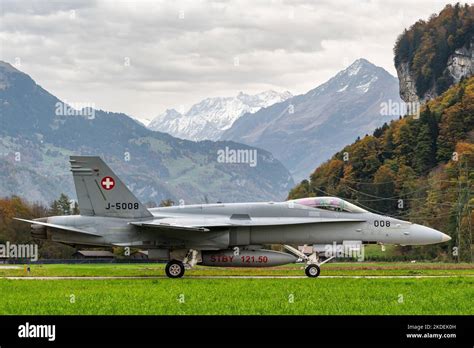
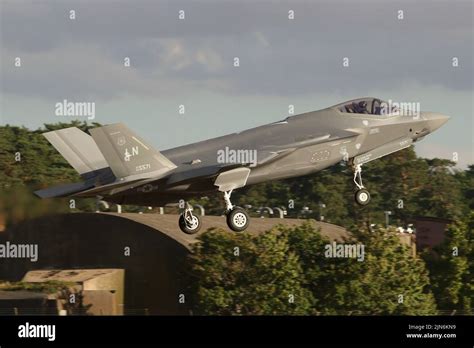
This is further complicated by the fact that the F/A-18 Hornets and F-5 Tigers are nearing retirement. Deliveries of F-35As were initially planned between 2027 and 2030, with basing strategies mapped out for Payerne, Emmen, and Meiringen to provide nationwide coverage. Now, with fewer jets, maintaining that coverage might become a challenge.
Cost Overruns and Delayed Capabilities
Switzerland’s F-35s were expected to be delivered with Technology Refresh 3 (TR-3) hardware to support Block 4 software enhancements. This combination was marketed as enabling a future-proof platform with increased processing power, improved cooling systems, advanced weapons, and sensor upgrades. However, the Block 4 upgrade path has encountered delays and integration issues, pushing development timelines and increasing costs.
Adding to the complexity, lifecycle cost estimates now project a CHF 15.5 billion ($18.65 billion) expenditure over 30 years—more than double the initial procurement budget. The program has already consumed CHF 700 million ($842 million), with a further CHF 300 million ($361 million) due shortly. These sunk costs make withdrawal from the program nearly impossible without incurring substantial penalties.
Domestic Industry Involvement and Offset Deals
Despite the procurement headaches, Swiss industry stands to benefit from offset obligations embedded in the F-35 deal. Companies such as RUAG, Kugler Bimetal SA, and Suprem SA are contributing to the program in varying capacities:
- RUAG, under the RIGI project, has received approval to assemble and test four Swiss F-35A aircraft with assistance from Lockheed Martin.
- Kugler Bimetal SA is supplying high-precision metallic and bimetallic parts used in hydraulics and actuation systems.
- Suprem SA collaborates with Northrop Grumman to deliver cutting-edge thermoplastic composites for aerospace structures.
Additionally, at least 15 other Swiss firms are participating in offset-related manufacturing across domains like sensors, composites, electronics, software, and mission systems.
Weapons Stocks and Operational Readiness Concerns
Even if the revised F-35 fleet arrives on schedule, another looming issue is weapons availability. Reports suggest that initial deliveries may include limited munitions, requiring Switzerland to spend several hundred million francs more to reach full operational capability. The Defence Department has insisted that the CHF 6 billion covers mission equipment, but uncertainty remains around the full loadout, especially for future operations and training.
A Fraught Future: Political and Operational Ramifications
The reduction of the F-35 fleet below the originally planned 36 aircraft is more than a budget issue—it’s a national security challenge wrapped in a geopolitical dilemma. Switzerland now faces a paradox: having selected a cutting-edge platform based on long-term defense needs, it now lacks the resources to fully realize that capability.
The Federal Council’s refusal to seek new funding—at least for now—suggests caution ahead of potential electoral or parliamentary backlash. But this conservatism comes at a cost. Delaying full implementation risks degrading Switzerland’s air defense posture precisely at a time when airspace sovereignty and readiness are becoming more crucial in a globally volatile security landscape.
Conclusion: Scaling Down in an Era That Demands Scaling Up
Switzerland’s F-35A fighter jet procurement is no longer just a military acquisition—it has become a case study in the unpredictable intersection of global economics, defense strategy, and domestic politics. The inability to fund all 36 aircraft underscores the tension between national ambition and fiscal conservatism.
While the program continues in a truncated form, the underlying dilemma remains: how can Switzerland ensure comprehensive, technologically advanced air defense with limited assets? If new funding is not secured soon, the country could face a future where its skies are patrolled by too few aircraft, burdened by too much cost, and constrained by too little flexibility.