The Unusual Financial Dispute Behind Switzerland’s F-35 Lightning II Purchase
Switzerland’s ambitious plan to modernize its air force with the Lockheed Martin F-35A Lightning II has entered one of the most complicated defense procurement disputes in recent years. What began as a straightforward effort to replace the aging Boeing F/A-18 Hornet fleet has evolved into a broader confrontation involving missile shortages, foreign military sales rules, rising costs, and growing concerns about dependence on the United States.
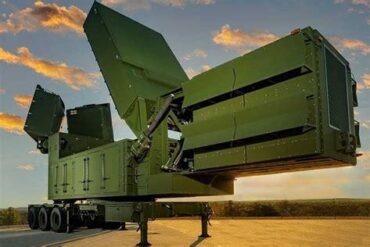
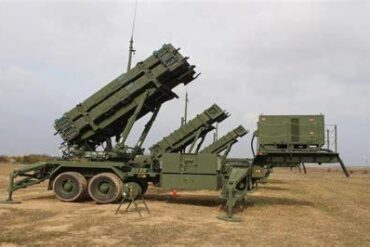
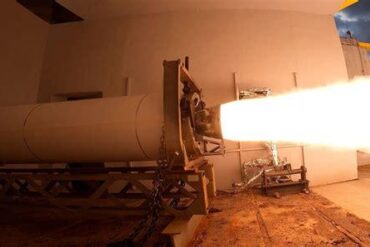
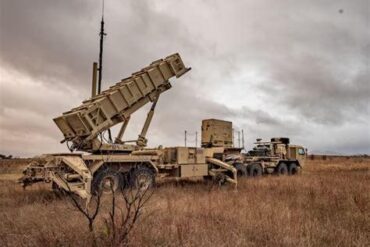
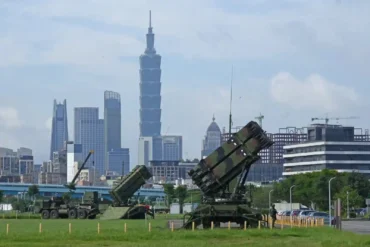
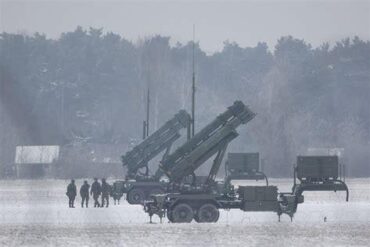
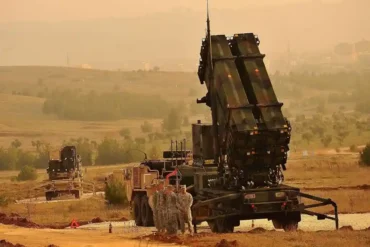
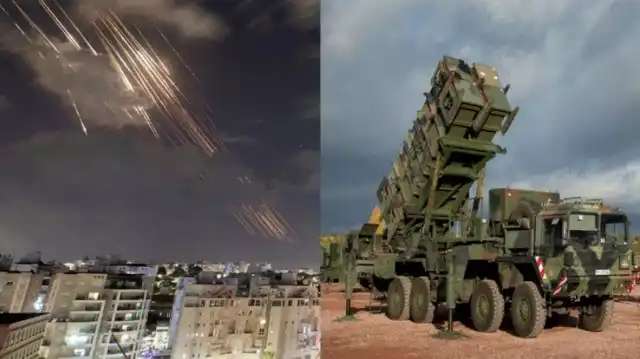
The controversy centers on an unexpected financial move by Washington. After the United States paused deliveries of Raytheon Patriot missiles to Switzerland due to competing demands from Ukraine and American stockpile requirements, Swiss officials stopped payments connected to the missile program. However, under the terms of the US Foreign Military Sales (FMS) system, Washington was able to redirect money from another Swiss defense account — including funds originally allocated for the F-35 fighter jet purchase.
The decision immediately created tension in Bern. Switzerland had already committed billions of dollars to secure its position in the F-35 production line, making the fighter acquisition one of the country’s largest defense investments ever. Instead of becoming a bargaining tool in negotiations over Patriot missile deliveries, the frozen missile account became linked directly to the future of Switzerland’s next-generation fighter fleet.
The dispute highlights a rarely discussed reality of international defense purchases: buying advanced military equipment from another country often involves complex financial arrangements that extend far beyond the aircraft, missile, or weapons system itself.
Why Washington Redirected Swiss F-35 Funds for Patriot Missiles
The Patriot missile issue emerged as the United States faced increasing pressure on its strategic missile inventory. The global demand for air defense systems increased sharply after Russia’s invasion of Ukraine, with Washington prioritizing deliveries to Kyiv while also attempting to rebuild its own depleted reserves.
Switzerland had signed agreements to acquire the Patriot air defense system through the US Foreign Military Sales program. When deliveries were delayed, the Swiss government responded by halting further payments. However, the FMS framework contains provisions that allow the United States government to manage funds across different defense programs connected to the same customer.
According to the agreement terms, Washington could access available Swiss defense program funds when another project faced financial shortages. As a result, more than 100 million Swiss francs, roughly equivalent to $126 million, was reportedly transferred from funds connected to the F-35 program.
From Washington’s perspective, the move followed contractual procedures designed to ensure that defense programs continue operating despite financial disruptions. From Switzerland’s perspective, however, it represented a serious challenge to its expectations of procurement stability.
The situation created a difficult political problem for Swiss officials. The country had approved the F-35 purchase through a democratic process, with voters supporting the Air2030 modernization plan. The fighter acquisition was based on assumptions about predictable costs and delivery schedules. The sudden movement of funds introduced uncertainty into a program that was already facing inflation, production delays, and supply chain pressures.
The F-35 Price Dispute Forces Switzerland to Reduce Its Order
The financial dispute became even more complicated when the United States argued that the original F-35 agreement could no longer be maintained at the expected price level. Rising production costs, inflation, and supply chain challenges pushed Washington to request additional payments from Switzerland.
The additional cost demand reportedly ranged between $760 million and $1.5 billion, creating a major political challenge for the Swiss government. Switzerland operates under strict defense spending limits, and officials faced growing pressure to avoid exceeding the approved budget.
Rather than accepting the higher costs, Switzerland chose to reduce its planned purchase. The original order for 36 F-35A fighters was cut by approximately 20 percent, leaving a final order of 30 aircraft.
The reduction allowed Bern to preserve the core modernization program while limiting additional financial exposure. However, it also raised questions about whether a smaller fleet would provide enough capability for Switzerland’s unique security requirements.
Unlike large countries that operate hundreds of fighters, Switzerland relies on a relatively small number of aircraft to conduct air policing missions, protect national airspace, and respond quickly to emergencies. Losing six fighters represents a meaningful reduction in operational flexibility.
Growing Concerns Over US Dependence and F-35 Control
The dispute has triggered a wider debate inside Switzerland about the long-term consequences of relying heavily on American defense technology.
Swiss officials have questioned whether the United States remains a predictable security partner and whether future military purchases could face similar challenges. The concerns are not limited to financial issues. They also involve software control, maintenance requirements, spare parts availability, and operational independence.
The F-35 is one of the world’s most advanced stealth fighters, but it is also one of the most interconnected military platforms ever developed. Operators depend on the United States and international supply chains for upgrades, software improvements, and many maintenance elements.
A US Government Accountability Office assessment added another layer of uncertainty by confirming that early Swiss F-35 aircraft will initially arrive with a limited version of the Block 4 software configuration. The full modernization package is not expected to be completed until at least 2031.
For Switzerland, this creates a capability gap. The country will receive a highly advanced aircraft, but the earliest deliveries will not immediately provide the complete capabilities originally envisioned.
Swiss F-35 Deliveries Continue Despite Political Tensions
Despite the controversy, the F-35 program itself has continued moving forward because of contractual commitments and the difficulty of reversing such a major defense acquisition.
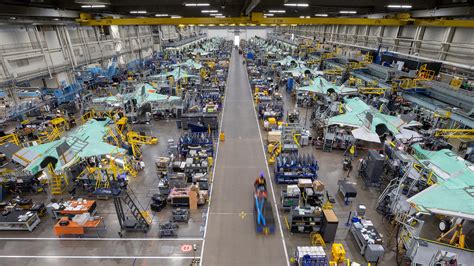
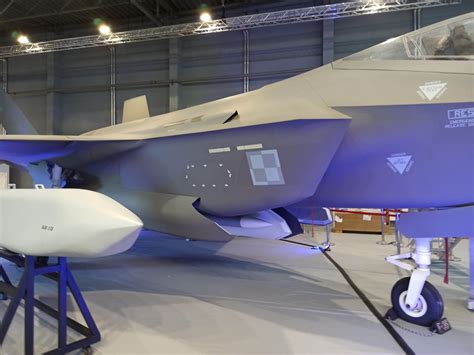
The first Swiss F-35A aircraft entered the main assembly process at Lockheed Martin’s facility in Marietta, Georgia. Swiss pilots are expected to begin training on the first aircraft at Ebbing Air National Guard Base in Arkansas, with initial training operations planned before the aircraft arrive in Switzerland.
Physical deliveries to Switzerland are expected to begin later, with the first aircraft scheduled to arrive around 2028. After initial production in the United States, additional Swiss aircraft will undergo final assembly and testing at the European F-35 production facility in Cameri, Italy.
However, the delays have forced Switzerland to rethink how it manages its existing fighter fleet. The country cannot simply retire its older aircraft while waiting for the F-35 transition to complete.
The result is a costly extension of the F/A-18 Hornet service life, creating another financial burden for Swiss defense planners.
Keeping the Hornets Flying: Switzerland’s Difficult Backup Plan
Switzerland’s aging F/A-18 fleet has become an essential bridge between the current generation of fighters and the future F-35 force.
The original Hornet modernization program included upgrades for all 30 aircraft, but financial pressure forced Switzerland to scale back the planned improvements. Only half of the fleet will receive the full package of radar upgrades, communication improvements, and advanced mission systems.
Although all 30 aircraft received structural refurbishment, only 15 will receive the complete combat capability upgrades originally planned.
This creates a mixed Hornet fleet. Some aircraft will have extended structural life but outdated sensors and electronic systems, while others will be better equipped for modern operations.
The challenge is particularly significant because Switzerland’s air force operates in one of Europe’s most demanding environments. Its aircraft conduct high-performance missions through narrow Alpine valleys, requiring reliable systems and strong maneuverability.
Officials are now considering whether some F/A-18 aircraft may need to remain in service beyond 2030, potentially approaching or exceeding their original structural limits.
Switzerland also expects to continue operating the older Northrop F-5 Tiger aircraft into the end of the decade, despite their limited usefulness against modern threats.
Could Switzerland Choose European Fighter Alternatives?
The F-35 dispute has encouraged Swiss policymakers to reconsider whether future fighter purchases should rely exclusively on American technology.
The Swiss government has stated that any future decision to expand the fighter fleet beyond 30 aircraft will be evaluated independently of aircraft type. This opens the possibility of creating a mixed fleet combining F-35 fighters with European-built aircraft.
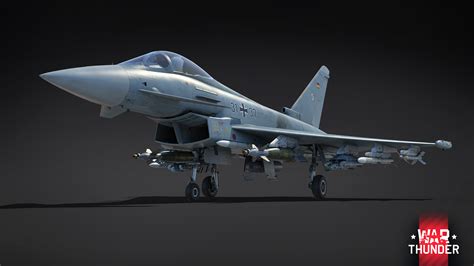
Several alternatives could fit Switzerland’s requirements. The Eurofighter Typhoon, Dassault Rafale, and Saab Gripen E remain potential candidates.
The Eurofighter could appeal to Switzerland because of its strong high-altitude interception capability, which matches the country’s traditional air-policing mission. Its European supply chain could also reduce Swiss dependence on Washington.
The Rafale offers another attractive option. Switzerland previously evaluated the French fighter during its original competition before selecting the F-35. A Rafale acquisition could strengthen cooperation with neighboring France and simplify regional logistics.
The Gripen E represents a lower-cost alternative. Saab’s fighter has significantly lower operating costs compared with the F-35, making it potentially suitable for routine peacetime missions while the F-35 focuses on advanced combat operations.
The Future of Switzerland’s Fighter Fleet Remains Uncertain
Switzerland’s F-35 controversy has become more than a disagreement over invoices and missile deliveries. It has become a strategic discussion about sovereignty, affordability, and the risks of depending on a foreign defense supplier.
The F-35 remains a highly capable aircraft and provides Switzerland with access to one of the world’s most advanced combat aviation networks. However, the financial dispute has changed the political environment surrounding the purchase.
Bern must now balance several competing priorities: maintaining air defense capability, controlling costs, preserving relations with Washington, and ensuring long-term independence.
A future Swiss air force could eventually consist of a smaller F-35 fleet supported by European fighters, advanced drones, or future-generation aircraft. While sixth-generation programs such as the Global Combat Air Programme (GCAP) offer a possible long-term path, their expected cost makes them difficult for a country with Switzerland’s defense budget.
For now, Switzerland remains committed to the F-35 transition, but the experience has left a lasting impact. The dispute demonstrated that modern fighter purchases are not only about aircraft performance — they are also about contracts, politics, industrial supply chains, and national control.
The next decade will determine whether Switzerland views the F-35 as the foundation of its future air power or as the beginning of a broader strategy to reduce reliance on any single defense partner.