India has officially submitted a letter of request to the United States to obtain authorization for the co-production of Javelin anti-tank guided missiles on Indian soil. This strategic initiative is part of India’s ‘Make in India’ program, aimed at enhancing the country’s defense production capabilities and reducing dependence on foreign suppliers. The request reflects India’s desire to improve its operational readiness in the face of evolving regional threats, particularly from neighboring China.
Background of the Javelin Missile System
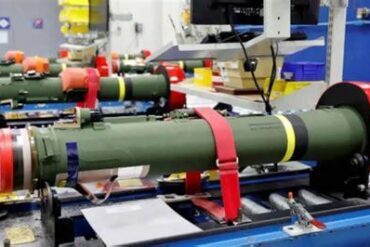
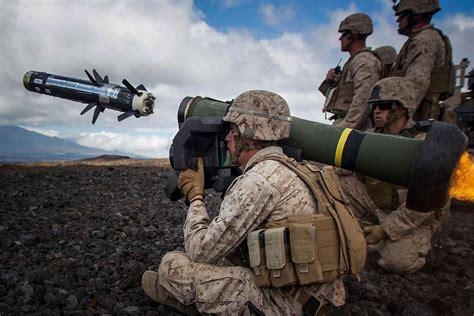
The Javelin missile, specifically the FGM-148 model, is a third-generation infrared-guided anti-tank missile that has been widely regarded for its cutting-edge technology. Jointly developed by American defense giants Raytheon and Lockheed Martin, the Javelin is a man-portable, fire-and-forget system designed to be operated by a single soldier. Its ability to be fired from confined spaces, such as buildings or armored vehicles, makes it an essential tool for modern military operations.
Weighing 11.8 kg, the missile measures 1.08 meters in length and 126 mm in diameter. It offers an operational range between 2,500 and 4,750 meters, depending on the configuration. The Javelin’s warhead is equipped with a tandem-shaped charge capable of penetrating up to 800 mm of Rolled Homogeneous Armor (RHA), including reactive armor. This capability makes it highly effective against modern tanks, which often feature advanced defensive measures.
Why India Needs the Javelin Missile
India’s decision to pursue the co-production of Javelin missiles comes as part of a broader strategy to modernize its military. The need to counter Chinese armored threats along the Himalayan border has driven India to accelerate its defense upgrades. The Javelin missile, with its lightweight and portable nature, is particularly suited for India’s defense requirements, where difficult terrain and rapid deployment capabilities are crucial.
The Javelin’s fire-and-forget mechanism allows soldiers to fire the missile and immediately take cover or relocate, a significant tactical advantage in the unpredictable and dangerous environments of high-altitude warfare. India, which faces both conventional and asymmetrical threats, believes that the Javelin’s precision strike capabilities can help neutralize enemy tanks and fortified positions more effectively.
A Strategic Move to Strengthen US-India Defense Relations
The move to co-produce the Javelin missile is not just a tactical decision but also a strategic one. By co-producing this missile, India seeks to deepen its defense ties with the United States, which has been an important partner in countering regional threats, particularly from China and Pakistan. In recent weeks, Indian Defense Minister Rajnath Singh held a crucial telephonic conversation with US Defense Secretary Pete Hegseth, discussing ongoing defense cooperation and the prospect of future collaboration.
The talks, part of broader efforts to strengthen the US-India defense partnership, are expected to lead to the signing of a decade-long defense cooperation framework. This agreement will cover various aspects, including joint production, technology sharing, and military exercises. The collaboration would allow India to access advanced American defense technologies, enabling the Indian armed forces to stay competitive against regional adversaries.
India’s Push for Defense Autonomy
India’s drive to produce the Javelin missile locally is consistent with its goal of achieving defense self-reliance. While the country has long relied on foreign defense equipment, recent developments in India’s defense procurement policies have emphasized the need to build a robust domestic defense industry. The co-production of the Javelin missile will significantly boost India’s manufacturing capabilities in the defense sector, providing a substantial economic and technological boost to local industries.
The ‘Make in India’ initiative, launched by Prime Minister Narendra Modi, aims to turn India into a global hub for defense manufacturing. The success of the Javelin co-production project would mark a major milestone in this endeavor, positioning India as a key player in the production of advanced missile systems in the region. This move would also reduce India’s reliance on external sources for crucial defense technologies, a critical factor given the volatile nature of international defense supply chains.
The Broader Implications for Indian Defense
The acquisition of Javelin missiles and the co-production agreement with the United States align with India’s broader military modernization strategy. India has been investing heavily in upgrading its defense systems, with a particular focus on advanced missile systems, artillery, and air defense. The Javelin will complement other advanced systems being procured, such as the Rafale fighter jets, S-400 air defense systems, and various indigenous missile systems under development by the Indian Ministry of Defence.
Moreover, the presence of indigenous defense manufacturing would give India a strategic advantage in terms of operational readiness. With the Javelin being produced locally, India will be able to quickly ramp up its missile stockpiles and reduce the delays associated with importing foreign military hardware. This would be crucial in the event of an escalation with China, as India would need to swiftly respond to any armored threats along the border.
Conclusion: India’s Pursuit of Enhanced Security
India’s efforts to co-produce Javelin missiles mark a significant step in its long-term strategy to enhance its defense capabilities and achieve greater autonomy in its defense production. The ongoing negotiations with the United States are a testament to the strengthening defense ties between the two nations and highlight India’s growing importance in global defense dynamics. By securing the Javelin missile locally, India is not only bolstering its anti-tank capabilities but also cementing its role as a regional defense leader in the face of mounting threats from China and Pakistan.