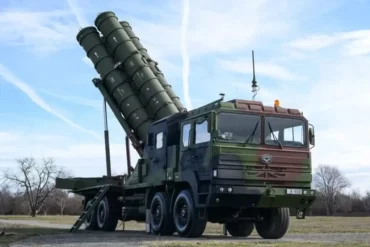
Egypt has officially confirmed the deployment of the Chinese HQ-9B long-range surface-to-air missile system, marking a significant transformation in its air defense strategy and geopolitical alignment. The revelation, made public by retired Major General Samir Farag during a televised interview, closes years of speculation and underscores Cairo’s intent to diversify its strategic military suppliers beyond the traditional Western sphere. The HQ-9B, developed by China’s CPMIEC, is seen as Beijing’s answer to the Russian S-400 and the American Patriot system, and is specifically engineered to detect and destroy stealth aircraft and precision-guided munitions.
Strategic Shift in Egypt’s Defense Doctrine
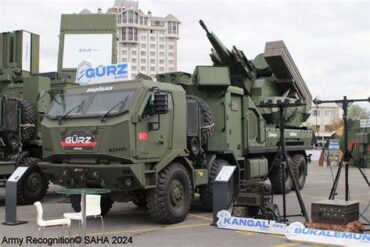
The official acknowledgment of the HQ-9B system’s deployment is more than a simple acquisition—it is a statement. For years, Egypt’s military doctrine was largely shaped by U.S. and Russian technologies, a balance that proved increasingly fragile amid Western arms restrictions. With the HQ-9B, Egypt introduces a powerful Chinese component into its integrated air defense structure, which already includes the Russian Tor-M2 and Buk-M2, and the German IRIS-T SLM. This creates a robust, multi-layered shield capable of countering diverse aerial threats across vast stretches of Egyptian airspace.
The timing of the announcement is also notable. Tensions in the region—ranging from Israeli military actions in Gaza, Turkish operations in Syria and Libya, and lingering mistrust of NATO’s 2011 intervention in Libya—have catalyzed Egypt’s push for self-reliance. In that context, the HQ-9B’s capacity to intercept low radar cross-section targets like stealth fighters offers a significant edge.
The Technical Backbone: HQ-9B Capabilities
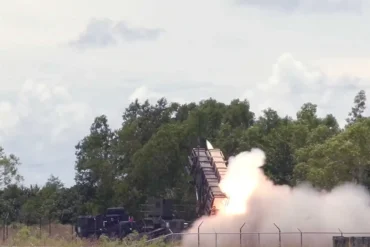
The HQ-9B is not merely a symbolic acquisition—it is a technologically advanced system capable of competing with top-tier Western and Russian equivalents. It is a two-stage missile guided by inertial navigation with datalink mid-course correction and terminal active radar homing. This allows it to track and engage stealth aircraft, cruise missiles, tactical ballistic missiles, and even UAVs.
The system’s capabilities include:
- Engagement range of up to 260 kilometers
- Intercept altitude exceeding 27 kilometers
- Maximum missile speed over Mach 4.2
- Phased-array radar capable of tracking 100 targets and engaging 6–8 targets simultaneously
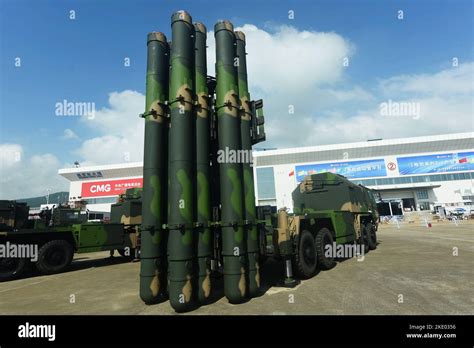
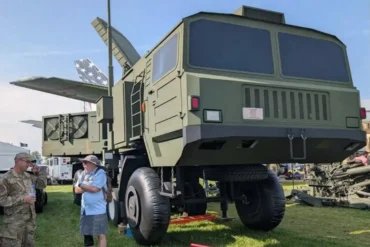
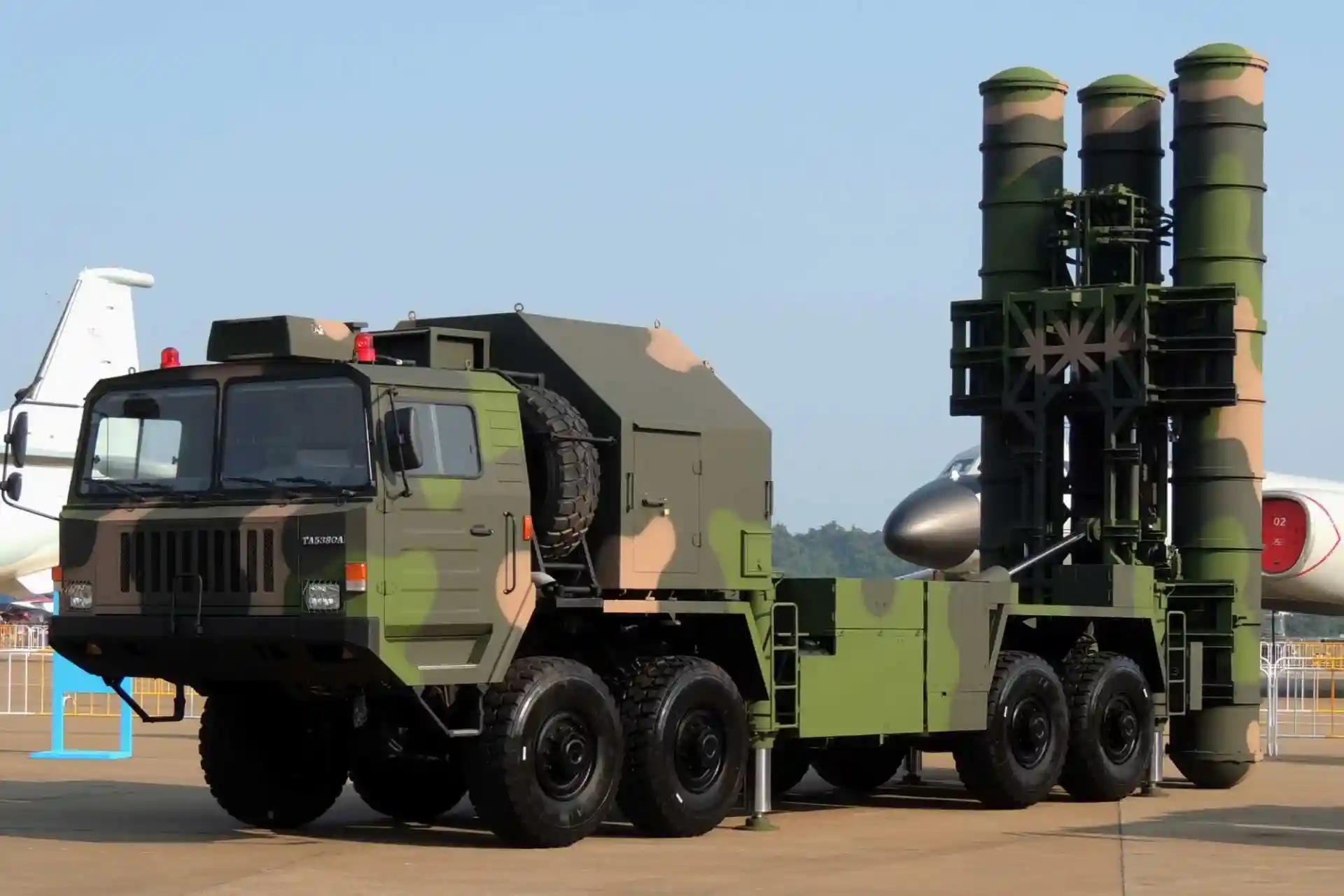
Each HQ-9B battery is mounted on highly mobile Taian 8×8 transporter-erector-launchers (TELs), making rapid redeployment possible in changing battlefield conditions. The system uses electronically scanned array (ESA) radar, which grants 360-degree engagement capability without the need for mechanical movement—a critical advantage in time-sensitive air defense scenarios.
Logistics and Procurement Timeline
Egypt’s interest in the HQ-9B dates back to at least the 2017 Egypt Defence Expo (EDEX), where conversations with Chinese representatives hinted at the beginning of procurement negotiations. The delivery trajectory became more apparent in July 2025, when Egyptian Il-76MF transport aircraft were tracked returning from China via Pakistan, likely ferrying the first batches of the system.
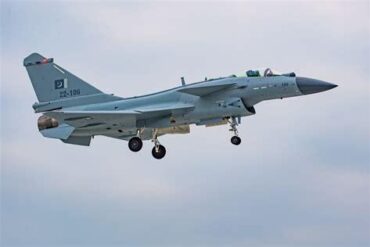
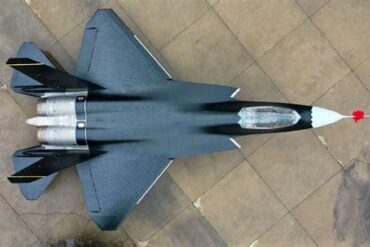
These movements were not isolated. Egypt had been gradually aligning itself with Beijing through a series of defense deals, including the acquisition of Wing Loong-1D armed drones and interest in advanced Chinese aircraft like the J-10C or even the stealthy J-31. This pivot away from Western dependency coincides with repeated frustrations over arms embargoes and export restrictions imposed by the U.S., France, and Germany.
The Western Arms Bottleneck
The HQ-9B’s deployment is partly a reaction to systemic roadblocks in Western arms procurement. Egypt’s fleet of F-16 fighters, for instance, remains limited to outdated AIM-7 Sparrow missiles due to U.S. export restrictions. France has refused to provide long-range MICA missiles for Egypt’s Rafales, and Germany delayed the delivery of IRIS-T SLM systems, redirecting them to Ukraine amid the Russia conflict.
These constraints have forced Cairo to explore non-traditional suppliers that offer modern technology without political strings attached. The HQ-9B system reportedly costs around $1.5 billion per regiment, significantly less than either the U.S. Patriot or Russian S-400. Moreover, it is sold without end-user restrictions, allowing Egypt complete autonomy in deployment, operation, and re-export—terms Western suppliers have typically been reluctant to offer.
Integration Into Egypt’s Multi-Layered Network
Egypt’s air defense network spans multiple generations and nations of origin. Systems like the Tor-M2, Buk-M2, and IRIS-T SLM form the short to medium-range layers, while radar infrastructure from the U.S., France, and Russia enables long-range detection. Assets such as the AN/TPS-78, Thales GM400, and 59N6E Protivnik-GE provide the early warning grid.
The HQ-9B fits seamlessly into this matrix. Its integration allows coverage of strategic zones such as the Suez Canal, Red Sea maritime corridors, and western Sinai, while remaining in compliance with Camp David Accord demilitarization provisions. The mobile nature of the system offers critical flexibility—missile launchers can be repositioned quickly in response to emergent threats, especially important given the evolving drone and missile tactics used in modern conflicts.
Chinese Influence and Regional Dynamics
The Egyptian procurement of HQ-9B is not occurring in a vacuum. Chinese arms exports have been increasing across the Middle East and Africa, filling strategic voids left by Western and Russian limitations. Turkmenistan, Uzbekistan, Pakistan, and Morocco have all opted for variants of the HQ-9, while Serbia procured the HQ-22.
China’s willingness to supply high-performance systems like the HQ-9B, along with surveillance drones and potentially stealth fighters, offers African and Middle Eastern countries an affordable, politically unobstructed alternative to NATO-aligned weaponry. Egypt, with its regional power status and historic ties to both the West and East, is a bellwether in this shift. Its acceptance and operational deployment of the HQ-9B could accelerate similar adoptions across the Arab world.
Limitations and Unknowns
Despite its impressive specifications and growing list of buyers, the HQ-9B system has not yet been tested in actual combat. Most of the available data stems from Chinese exercises and simulated engagements. These simulations have demonstrated the system’s ability to intercept stealth aircraft under heavy electronic warfare conditions, but such scenarios are constructed within controlled environments.
Operational effectiveness in a contested airspace against an adversary with sophisticated suppression-of-enemy-air-defense (SEAD) capabilities—such as Israel or NATO—remains speculative. That said, the system’s track record in procurement and deployment indicates a high level of confidence among its operators, and Egypt’s confirmation signals that it has passed internal benchmarks for reliability, effectiveness, and interoperability.
Conclusion: Redefining Egypt’s Military Landscape
The confirmed deployment of the HQ-9B marks a watershed moment in Egypt’s military modernization trajectory. It underscores Cairo’s commitment to sovereignty in defense policy, willingness to embrace multipolarity in arms procurement, and the tactical necessity of countering advanced aerial threats in one of the world’s most volatile regions.
This move is as much about defense as it is about diplomatic signaling. By integrating a high-end Chinese system into its operational order of battle, Egypt is making a clear statement: it will no longer accept limitations placed on its security calculus by traditional partners. Instead, it will pursue strategic autonomy through diversification—a lesson hard-learned from a decade of geopolitical turbulence.
As tensions continue to simmer across North Africa and the Levant, and as non-state actors acquire increasingly advanced airborne weapons, Egypt’s HQ-9B deployment provides a formidable countermeasure. Whether this system will evolve into a permanent staple of regional deterrence or simply serve as a bargaining chip with Western suppliers remains to be seen—but its arrival has already reshaped the defense dialogue across the Middle East.